



Silicone Neon Flex vs. Aluminum Profile + strip
Not two grades of the same thing. They differ on heat, curves, waterproofing and whether the strip can ever be replaced — the last decides most projects.
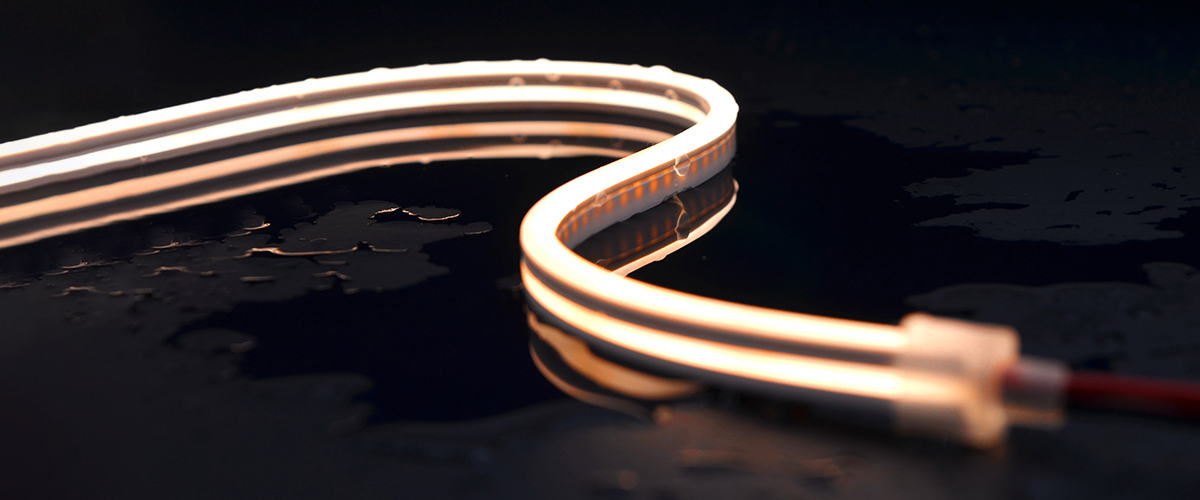
These are not two grades of the same product. A silicone neon is a finished light — strip, diffusion, and seal made as one body. An aluminum profile is a housing: you choose the section, put a strip inside, and add a cover. The difference that decides most projects is not brightness or appearance. The difference is that a neon strip can be pulled out and replaced, while a profile strip usually cannot.
What is actually different?
| Silicone neon | Aluminum profile + strip | |
|---|---|---|
| Form | A finished body, 6×6 mm to 30×20 mm | A housing; section from 8×9 mm up |
| Curves | Bends to a tight radius in one plane | Rigid; changes of direction need joints |
| Water resistance | Built in — IP65 to IP68 in our range | Created at assembly; the bare profile has none |
| Heat path | Silicone insulates, so output is limited | Aluminum conducts; supports higher output |
| Light quality | Fully diffuse, no dots at any distance | Depends on cover and cavity depth |
| Repair | Strip slides out of the sleeve | Strip is adhered; removal usually damages it |
| Where it lands | Signage, curves, exposed outdoor lines | Architectural lines, cabinets, ceilings |
Which one handles heat?
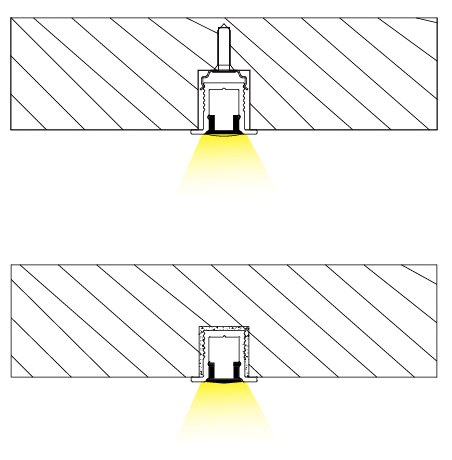
The aluminum one, by a wide margin, and this is the constraint that sets the power ceiling.
A silicone neon wraps the strip in a material that conducts heat poorly. That is fine at moderate output — our neon range is built for the loads it is sold at — but it means the format does not scale upward. Ask a neon to carry a high-output strip and the heat has nowhere to go.
An aluminum profile does the opposite: the strip sits against metal that spreads heat into a body with surface area. This is why the same strip that is comfortable in a deep profile may be marginal inside a 10 mm silicone sleeve.
The practical threshold that comes up repeatedly is around 12 W/m. Below it, both formats work and the choice is about shape and exposure. Above it, the aluminum profile is the only honest answer.
Which one can you repair?
This is the difference buyers ask about last and regret first.
A silicone neon is a sleeve. The strip inside can be pulled out — at any point in the future, without touching the fixing — and replaced or upgraded. The body stays where it is.
An aluminum profile with an adhered strip is effectively permanent. The adhesive is designed not to let go, and removing a strip from a narrow channel usually means scraping it out, damaging the cover groove, or both. On a recessed or plastered-in body, that is a ceiling repair rather than a strip swap.
So the question is not hypothetical: will this run ever need a new strip? If the answer is yes — a commercial space on a ten-year horizon, a color-temperature change, a driver upgrade requiring different voltage — the neon has an advantage that has nothing to do with light.
What about curves?
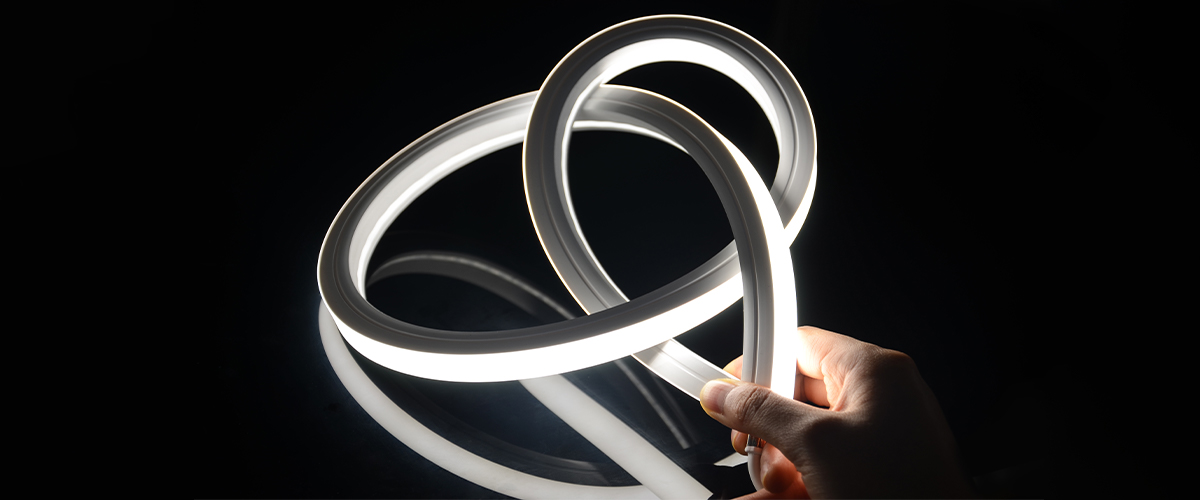
Only the neon bends. Extruded aluminum does not, and every change of direction in a profile run needs a joint: a miter cut, a corner piece, or a gap.
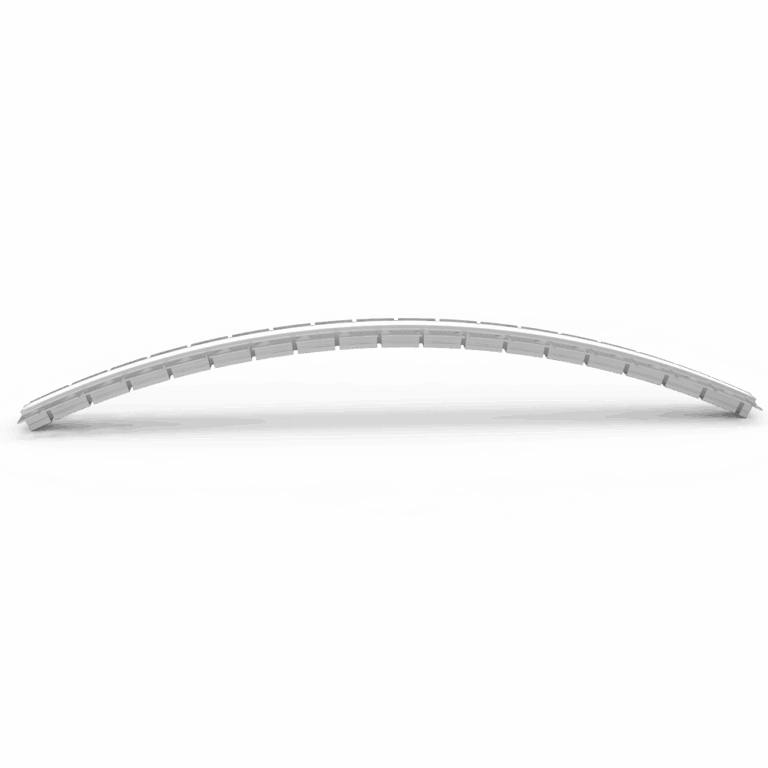
A neon follows a radius continuously, in one plane, with no seam at the bend. That single property is why signage, logo outlines, and curved reveals are almost always neon.
If a curve must be aluminum, the options are a flexible profile — we carry five, with a silicone body and an aluminum insert — or a segmented approach: short straight lengths mitered around the arc, which leaves visible joints unless the radius is generous.
What about water?
A neon is sealed at manufacture. Our neon range runs from IP65 to IP68, and the IP68 models are tested as complete assemblies, not as components.
An aluminum profile is an open channel. Its water resistance is created on site — cover seated, both ends capped, cable entry glanded — and it is only as good as that work. We do not claim an IP rating for any bare profile, because the rating belongs to the assembly.
For an exposed outdoor line, that difference matters: the neon arrives with the seal already made and tested; the profile arrives with the seal still to be built.
Where does each one fail?
Neon fails on: high output, long straight runs where the outlay is hard to justify, and any detail where a 10–30 mm round body is visually too heavy.
A profile fails on: curves, exposed wet locations where the sealing work is not controlled, and any run where the strip will need replacing inside a narrow channel.
Neither failure is a defect. Both are the format showing its shape.
What does a mixed installation look like?
Mixing the two is common, and it works, provided the transition is designed rather than improvised.
Three details decide whether the joint reads as intentional:
Body size. A 6 mm neon and a 15 mm profile do not meet cleanly. Either match the visual weight, or make the change deliberate — a visible step at a corner or a change of plane, where the eye accepts it as two systems.
Light level. Neon diffusion and profile output rarely match at the same strip wattage. Where the two meet, expect a step unless the neon run uses a brighter strip or the profile run uses a denser one.
Where the joint sits, put it at a corner, a change of surface, or behind a return — anywhere the eye already expects a break. A joint in the middle of a straight run is the one that looks like a mistake.
The pattern that works most often: neon on the curves and the exposed outdoor section, profile on the straight interior runs, with the change happening at a corner where both are already terminating.
How do you decide?
Three questions, in order:
- Is there a curve? If yes, neon — or a flexible profile if the run must also be aluminum.
- Is the load above about 12 W/m? If yes, aluminum profile.
- Will the strip ever be replaced? If yes, neon has the advantage; if the run is decorative and permanent, it does not matter.
If all three answers point the same way, the decision is made. If they conflict — a curved run at high output, for instance — the honest answer is usually to split the installation: neon on the curve, profile on the straight, with the transition designed rather than hidden.
Our neon range covers 37 bodies from 6×6 mm to 30×20 mm, and the profile range covers 219 sections. Neither is the default; the detail decides.
Is neon brighter than a profile?
No. Silicone diffuses by absorbing — a typical opal face transmits well under the raw output of the strip, while a clear profile cover transmits over 90%. Where neon wins is evenness, not brightness.
Can I get a dot-free line from an aluminum profile?
Yes, with the right combination: a dense strip or COB, a deep cavity, and an opal or milky cover. A shallow body plus a clear cover is the combination that shows dots.
Can a neon run be joined?
Yes, with a splice, but each splice breaks the sleeve and needs its own seal. A neon is normally supplied in long single runs to avoid that; a profile comes in bars and is joined with a connector or a miter, a mechanical joint rather than a sealed one.
Can neon be repaired on site?
The strip can be replaced by pulling it out of the sleeve. The sleeve itself is not repairable — a cut or a tear stays, and a damaged section is replaced rather than patched.
Can I mix both in one installation?
Yes, and it is common: neon where the run curves or is exposed, profile where it is straight and needs output. Plan the transition — a 6 mm neon and a 15 mm profile do not meet cleanly without a deliberate detail.

We design and supply LED aluminum profiles and linear lighting — over 200 profiles with matched diffusers and fittings, serving customers in more than 100 countries since 2007.
Translation and copy review — terminology, clarity and consistency of the English text.
Send the strip width, the run length and the destination — we will match the profile, the diffuser and the fittings, and quote within 1 business day.
Start your inquiry