



Custom Profile vs Standard Stock: Lead Time Trade-Off
Custom is not one decision but four, and only the last needs a new die. What each level adds in time, and what a die takes away in freedom to change.
"Custom" is usually presented as one choice against stock: perfect fit, longer wait. In practice, it is four different levels, and only the last one needs a new die. Most projects that ask for a custom profile are actually asking for level two or three, and can be supplied in days rather than weeks.
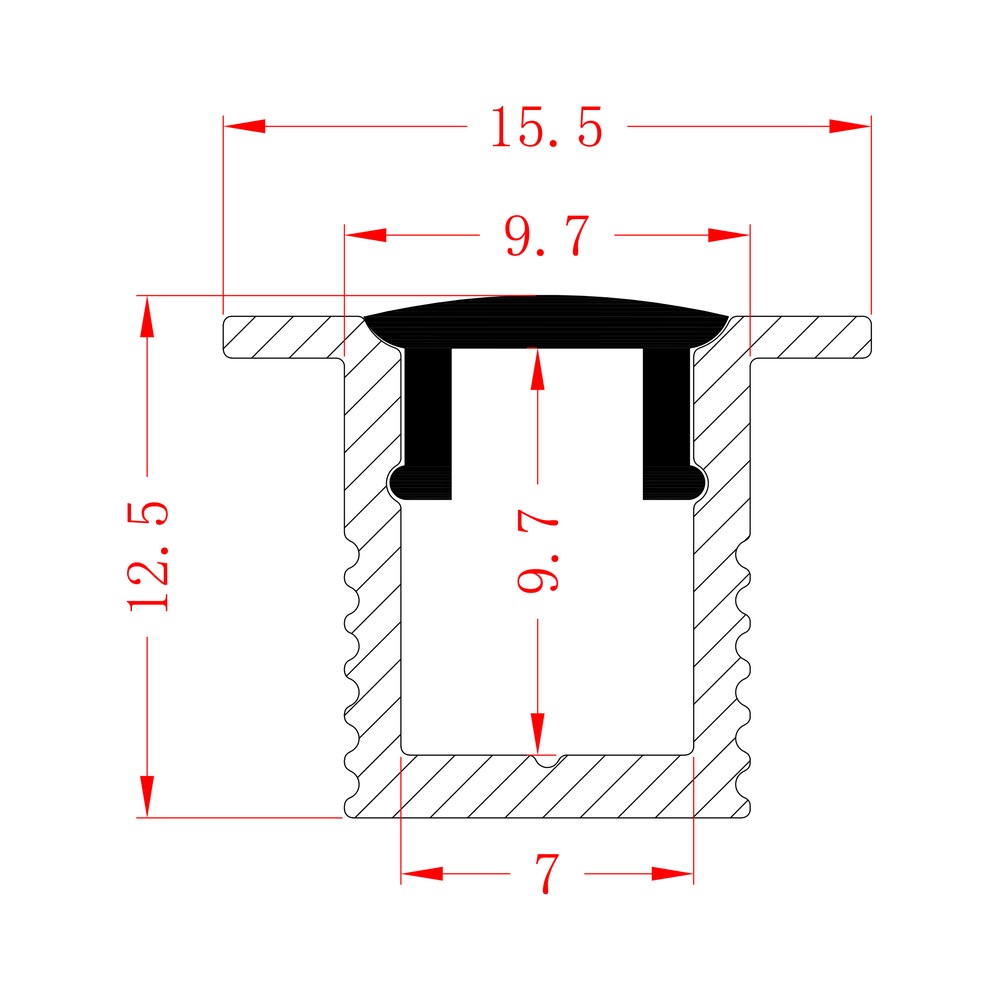
What actually counts as custom?
Four levels, ordered by how much they change:
| Level | What changes | Needs a new die? |
|---|---|---|
| 1. Cut to length | Nothing — the bar is cut | No |
| 2. Finish or cover | Anodize/powder coat, PC / PMMA / lens | No |
| 3. Modification of an existing section | Additional machining, holes, slots, a modified cover groove | No, or a die correction |
| 4. New section | Wall thickness, channel, aperture, geometry | Yes |
The confusion comes from quoting all four as "custom". A buyer asking for black powder coat and 1,730 mm lengths is not asking for a new die, and should not be quoted on a die timeline.
How much time does each level add?
This is where the trade is actually made, and the difference between levels is large.
Level 1 — cut to length. Stock profiles come in any length up to 4 m. Cutting is a day's work inside a normal order cycle; our stock items ship in about 3 to 5 days.
Level 2 — finish or cover. Anodizing and powder coating are batch processes, so the wait depends on when the next batch in that colour runs. A standard colour may add days; a non-standard one waits for a batch to accumulate.
Level 3 — modification. Machining an existing section is scheduled around production, not before it. It adds days rather than weeks, but it cannot be pulled forward without a reason.
Level 4 — new die. Die design, cutting, trial, correction and approval, then production. Our custom lead time is 15 to 30 working days depending on complexity.
The practical reading: levels 1–3 are measured in days, level 4 in weeks. If a project is in a schedule crunch, the useful question is not "how fast can you make a die" but "which level do we actually need".
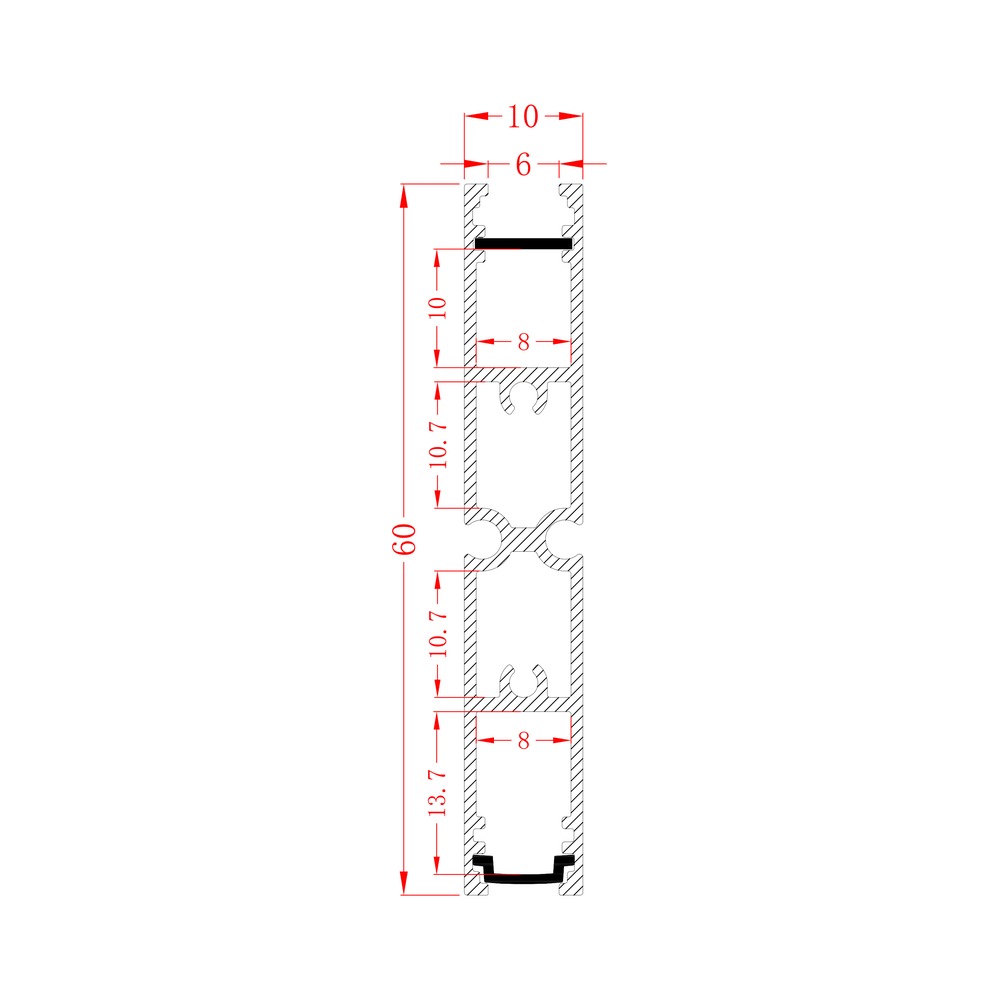
When is a new die worth it?
Three cases where it is the right answer rather than a reflex:
The section genuinely does not exist. A specific aperture, a wall thickness the catalogue does not offer, an integrated fixing feature. If the drawing cannot be satisfied by any existing profile, a die is the answer.
The volume justifies it. A die is a one-off tool carried by the order. On a repeat programme it fades into the unit; on a single small batch it is the whole item.
Part consolidation. A custom section that integrates a mounting flange, a cable channel, and a cover groove replaces three catalogue parts and the labour required to assemble them. That is often the real argument for a die, and it is about assembly time rather than the profile.
What does a die lock you into?
This is the part that does not appear in a lead-time discussion, and it is the more expensive one.
The section is fixed. Once the die exists, the geometry is what it is. A change to the channel or the aperture means a die correction, and a correction takes the same order of time as the original tool.
The supply is single-source. A custom section can only be made on that die, by whoever holds it. There is no second supplier to switch to if a schedule slips.
The specification hardens early. Everything downstream — cover, end caps, connectors, fixing — is designed around that section. Changing one of them later may mean changing all of them.
So a die is not just a longer lead time at the start. It is a narrower set of options for the rest of the project.
How do you avoid over-specifying?
The most common failure is not a wrong die — it is a die that was not needed.
Four questions before drawing anything new:
- Which existing section is closest? Start from the catalogue and work outward, not the reverse.
- What exactly is wrong with it? Often it is one dimension — the aperture is 2 mm narrow, or the wall is 0.2 mm thin. That may be a level-3 modification rather than a new die.
- Could the cover solve it? A different diffuser changes the light line more than a 1-mm change in aperture does.
- What is the real constraint — the section or the detail? Sometimes the profile is blamed for a slot that was cut to the wrong depth.
Every question that is answered "the existing section is fine" removes weeks from the programme.
What can be changed without a die?
More than most buyers assume:
- Comprimento — any cut length within the bar stock.
- Finish — anodized, powder coated, in standard or matched colours.
- Cover — clear, frosted, opal, prismatic, or a lens, where the section takes more than one.
- End caps and connectors — options within the accessory family for that section.
- Machining — holes, slots, cable entries, cutouts, drilled or milled after extrusion.
What cannot be changed without a die: the channel width, the aperture, the wall thickness, and the cover groove geometry. Those four are the section, and the section is the die.
What about covers and accessories on a custom section?
They follow the section, which is the point most schedules miss.
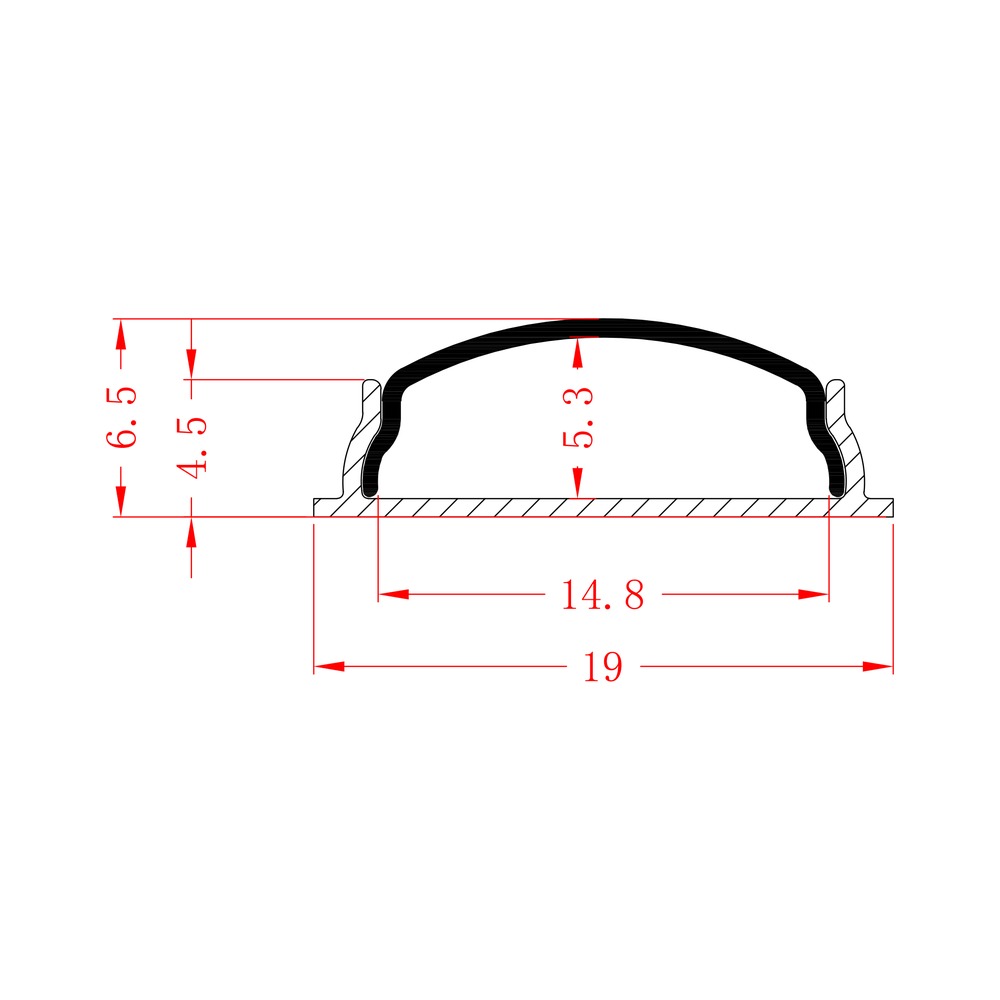
A new section needs its own cover profile — the groove geometry is part of the die, so an existing cover will not fit a new body unless the groove was drawn to match one. That means the cover is also a custom item, with its own trial.
End caps and connectors are tooled for the section too. On a stock profile they exist; on a new one they are made after the die is proven, which puts them behind the extrusion rather than in parallel with it.
The practical consequence: budget the accessories into the same schedule as the die. A project that plans for the extrusion and then asks for caps is a project that waits twice.
How do you brief it?
Send four things and the question of level usually answers itself:
- The drawing or a sketch with dimensions — channel width, aperture, wall thickness.
- The strip — PCB width and watts per meter.
- The fixing — how the body is held, and to what.
- The quantity and the date — because volume is what decides whether a die is economically sensible, and the date decides whether it is even possible.
Our range is 219 sections, which is a large starting point for step one. If none of them is close, the service process page sets out how a custom run proceeds.
Can a custom section be delivered faster than 15 days?
Sometimes, when the change is small enough to be a die correction rather than a new die, and the production queue allows it. It is worth asking rather than assuming, but it should not be planned for.
Is there a minimum order for a custom profile?
Yes, and it is set by the die rather than by the profile — a new die needs enough volume to be worth cutting. Discuss the quantity early, because it may move the answer from level four to level three.
Can I get samples before committing to a die?
For an existing section, yes — a cut length is a normal sample. For a new die, a trial length off the first run is the usual step, and it comes after the die is cut rather than before.
How does a custom profile affect repeat orders?
The second order carries no die work, so it moves on a normal production schedule. That is where a custom section becomes comparable to stock: the one-off sits on the first run, not on every run.
Can I mix stock and custom in one project?
Yes, and it is often the sensible answer: stock sections for the runs that are standard, a custom section only where the detail demands it. The schedule then depends solely on the custom item, which is easier to plan around.

We design and supply LED aluminum profiles and linear lighting — over 200 profiles with matched diffusers and fittings, serving customers in more than 100 countries since 2007.
Related reading


Send the strip width, the run length and the destination — we will match the profile, the diffuser and the fittings, and quote within 1 business day.
Start your inquiry