



Why Is Commercial Lighting So Important? The Triple Value Revolution: From Fixture Procurement to Strategic Investment
In the operation of commercial spaces, lighting was once merely seen as a "tool for environmental illumination". However, with the iteration of LED technology and the deepening of
In the operation of commercial spaces, lighting was once merely seen as a "tool for environmental illumination". However, with the iteration of LED technology and the deepening of green development concepts, its value has transcended basic functions and become a core strategic fulcrum for improving efficiency, optimizing experiences, and shaping brands. Driven by both cost pressures and experience demands, redefining the importance of commercial lighting is key to achieving high-return operations.
I. From "Energy Saving" to "Efficiency": The Reconstruction of Light Value
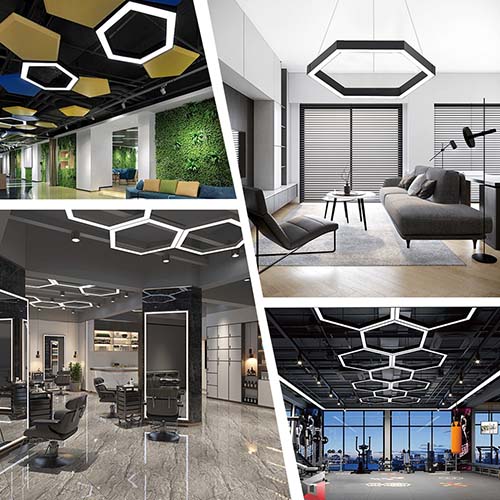
Au cours de la dernière décennie, la demande principale pour éclairage commercial has focused on "high luminous efficacy (lm/W)" and energy-saving rates. Yet, the simple pursuit of "brighter and more energy-efficient" can no longer meet the needs of complex commercial scenarios. Today, "scenario-adaptive luminous efficacy" has become the core of value — providing exactly the required light at the right time and place to achieve the dual goals of "experience enhancement" and "extreme energy conservation".
A typical transformation of an office building in a science and technology park shows: originally, 36W T8 fluorescent lamps were used, with an annual lighting energy consumption of 86,000 kWh, and full replacement was needed every 3 years. After switching to 18W full-spectrum LED panel lights (luminous efficacy 160lm/W, Ra95) paired with a dual-sensor system, "lights on when people are present, lights off when people leave + natural light compensation" was realized. The illuminance in meeting rooms was maintained at ≥500lx, while that in corridors was ≤100lx. As a result, annual energy consumption dropped to 29,000 kWh (energy saving rate of 66%), employee complaints about eye fatigue decreased by 40%, and task completion efficiency increased by 15%.
Cas anonyme de transformation industrielle (résumé à partir des données publiques relatives au projet d'éclairage LED).
Dans le secteur du commerce de détail, après qu'un centre commercial de 100 000 m² ait adopté un système de gradation dynamique, la luminosité des espaces publics a été ajustée à la demande le matin et le soir. Les magasins de marque pouvaient changer la couleur de l'éclairage, et le système passait automatiquement à une luminosité de 10% pour des raisons de sécurité après la fermeture. Après la transformation, la part de la consommation d'énergie liée à l'éclairage est passée de 35% à 18% (soit une économie de 1,2 million de kWh par an), et la durée moyenne de séjour des clients a augmenté de 12%.
Anonymous retail property renovation case (extracted from China Commercial Real Estate Association's 2024 Lighting Efficiency Report).
This model solves three core problems: reducing fatigue by matching the biological clock with a dynamic light environment to improve employee efficiency; avoiding "over-illumination" through precise light supply, with an energy saving rate of up to 60% or more; and highlighting product advantages through directional light efficacy to enhance attractiveness.
II. From "Product Procurement" to "Service Subscription": The Subversion of Business Model

A "ownership revolution" is underway in the lighting industry — enterprises no longer need to purchase luminaires in one go, but can subscribe to light environments through "Lighting as a Service (LaaS)". This model turns "one-time transactions" into long-term service cooperation, which not only lowers the threshold for initial investment but also optimizes full-cycle benefits.
The core of LaaS is "pay-for-performance". The "pay-per-light" model launched by global lighting enterprise Signifier is representative: enterprises sign a 5-year contract with service providers, who are responsible for the installation, operation, maintenance, and update of the lighting system. Customers only pay monthly fees based on "guaranteed illuminance" or "actual electricity savings", and the ownership of the luminaires remains with the service providers .
Signify Official Website. "LaaS (Lighting as a Service) Business Model Introduction", 2024.
Après avoir adopté ce modèle, l'aéroport d'Amsterdam-Schiphol a vu sa consommation d'énergie liée à l'éclairage baisser de 501 TP4T, et le temps de réponse en cas de panne d'un luminaire a été réduit de 48 heures à 4 heures. L'Union nationale des étudiants (Royaume-Uni) a réduit sa consommation d'énergie pour l'éclairage à 5,9 W/m² (bien en dessous de la moyenne du secteur, qui est de 8 à 12 W/m²) grâce à ce modèle, ce qui lui a permis d'économiser plus de 300 000 livres sterling en frais d'électricité annuels. .
National Union of Students (UK). "Campus Lighting Energy-Saving Project Report", 2023.
Pour les opérateurs commerciaux, LaaS permet de convertir les coûts fixes liés à l'acquisition d'équipements en coûts variables, éliminant ainsi le besoin d'investissements initiaux considérables. Les responsabilités en matière d'exploitation et de maintenance sont transférées aux prestataires de services, ce qui réduit la pression liée à la gestion des installations. À l'expiration du contrat, les entreprises peuvent renouveler ou changer de forfait de manière flexible afin de s'adapter aux besoins liés à l'expansion de leurs activités.
III. Au-delà de la conformité : l'éclairage comme amplificateur de la valeur de la marque
Against the backdrop of the advancement of the "dual carbon" goal and the tightening of environmental regulations, compliance in commercial lighting has evolved from a "bottom line to avoid penalties" to a "brand bonus point". Adopting advanced green lighting solutions is essentially a way to convey the concept of sustainable development to consumers and partners, and shape a responsible brand image.
La pratique de Éclairage NVC est instructif : il intègre les concepts ESG dans l'ensemble de la chaîne industrielle, met en place des systèmes de gestion de l'énergie dans les bases, réalise le remplacement de l'électricité renouvelable, utilise des matériaux recyclés dans les produits (représentant ≥30%) et sa conception modulaire permet un taux de recyclage supérieur à 85%. Ces mesures ont contribué à faire passer la valeur de la marque à plus de 67,9 milliards de yuans en 2025. Ses projets d'intérêt public ont permis de rénover plus de 200 salles de classe dans plus de 30 écoles, bénéficiant à plus de 40 000 adolescents et renforçant la faveur des consommateurs. .
NVC Lighting Official Release. "2025 ESG Report and Brand Value Evaluation", 2025.
The brand premium brought by compliance is tangible: after a chain coffee brand adopted its full-spectrum LED system, it displayed the data "12 tons of annual carbon reduction" in stores. 78% of consumers said they would prioritize eco-friendly brands, and the repurchase rate increased by 20%. Conversely, in 2024, a supermarket was fined 150,000 yuan for using non-energy-saving luminaires, triggering negative public opinion of "weak environmental awareness", and its customer flow dropped by 8% that month .
Guide pour un investissement à haut rendement dans l'éclairage commercial
Les décideurs au sein des entreprises peuvent promouvoir la modernisation de l'éclairage en suivant les étapes suivantes :
- Diagnostic du scénario: Use an illuminance meter to test the existing light environment and identify core pain points — focus on "efficiency and health" for office scenarios, "experience and conversion" for retail scenarios, and "energy saving and safety" for public spaces;
- Sélection du modèle: Prioritize LaaS solutions if the budget is limited; for long-term property ownership, adopt the combination of "smart luminaires + operation and maintenance services" to balance initial investment and full-cycle benefits;
- Adaptation à la conformité: Privilégier les marques certifiées ISO 50001 et utilisant des matériaux recyclés, et demander simultanément des subventions locales pour les économies d'énergie (la proportion atteint 30% dans certaines régions) ;
- Vérification des effets: Establish a KPI monitoring system — track "efficiency improvement rate" for office scenarios, focus on "customer unit price and stay time" for retail scenarios, and monitor "energy consumption reduction rate" for all scenarios.
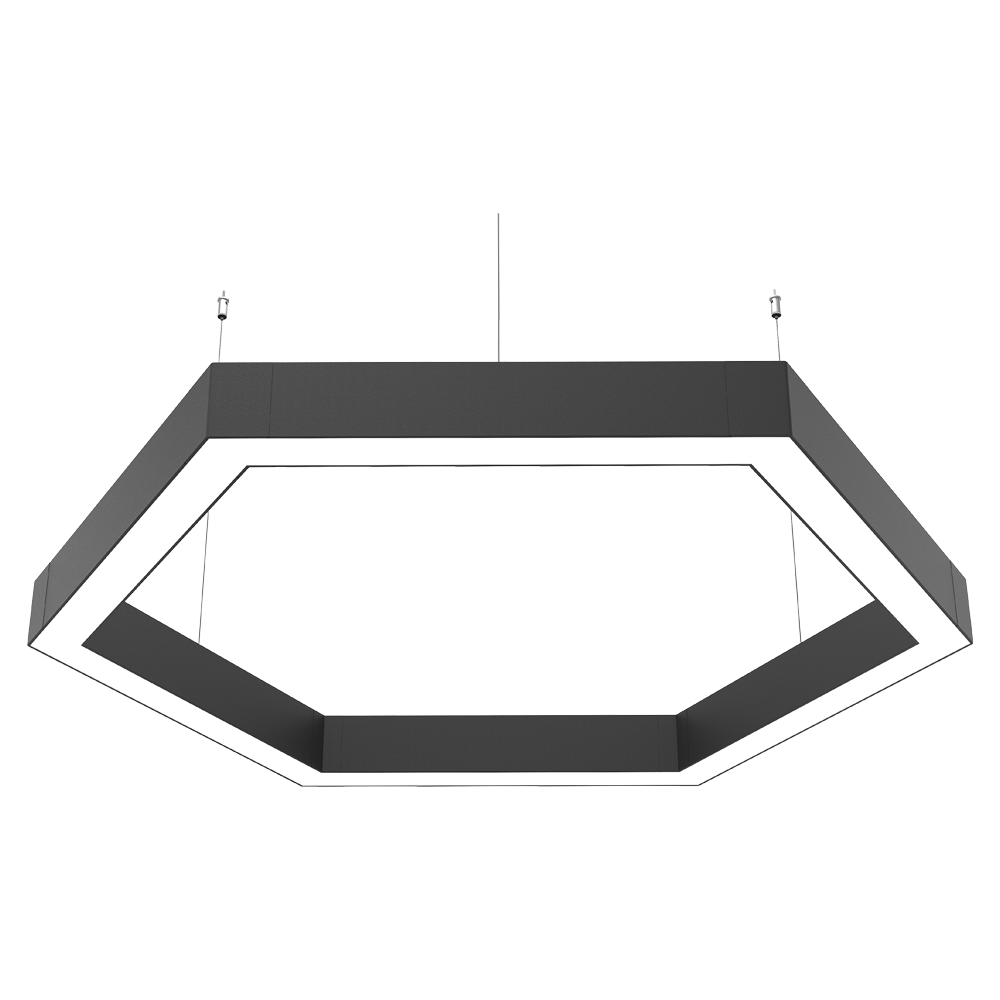
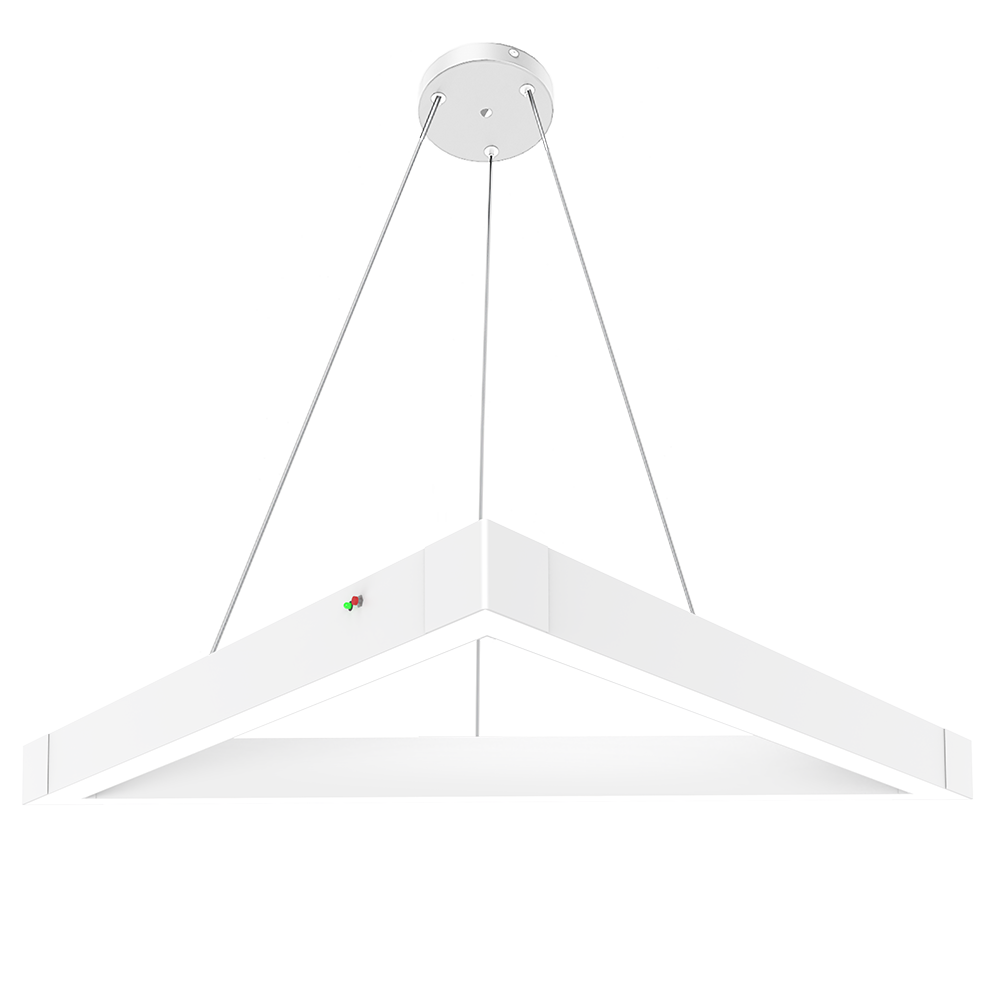
Helian's Série de puzzles intelligents Les produits permettent une personnalisation intelligente et offrent une plus grande flexibilité dans la conception des formes :
Conclusion
The value of commercial lighting has long transcended the basic function of "space illumination". From scenario-adaptive luminous efficacy to improve operational efficiency, to the LaaS model to optimize cost structure, and then to compliance practices to shape brand value, every investment is generating quantifiable returns. For contemporary commercial operators, lighting is no longer a "cost item" but a "strategic investment" that leverages efficiency, experience, and brands — choosing the right lighting means choosing the underlying logic of sustainable growth.
We design and supply LED aluminum profiles and linear lighting — over 200 profiles with matched diffusers and fittings, serving customers in more than 100 countries since 2007.
Related reading

Send the strip width, the run length and the destination — we will match the profile, the diffuser and the fittings, and quote within 1 business day.
Start your inquiry