



Why Is Commercial Lighting So Important? The Triple Value Revolution: From Fixture Procurement to Strategic Investment
In the operation of commercial spaces, lighting was once merely seen as a "tool for environmental illumination". However, with the iteration of LED technology and the deepening of
In the operation of commercial spaces, lighting was once merely seen as a "tool for environmental illumination". However, with the iteration of LED technology and the deepening of green development concepts, its value has transcended basic functions and become a core strategic fulcrum for improving efficiency, optimizing experiences, and shaping brands. Driven by both cost pressures and experience demands, redefining the importance of commercial lighting is key to achieving high-return operations.
I. From "Energy Saving" to "Efficiency": The Reconstruction of Light Value
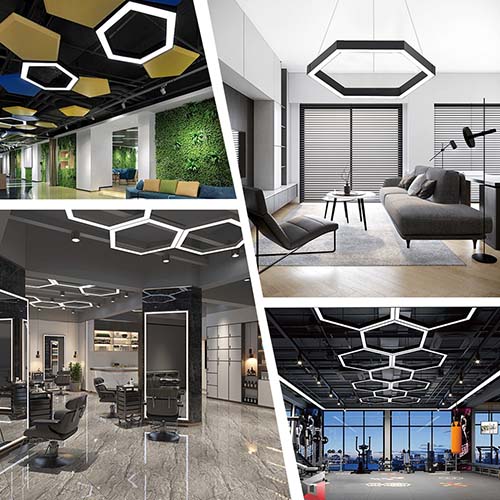
In den letzten zehn Jahren hat sich die Kernnachfrage nach kommerzielle Beleuchtung has focused on "high luminous efficacy (lm/W)" and energy-saving rates. Yet, the simple pursuit of "brighter and more energy-efficient" can no longer meet the needs of complex commercial scenarios. Today, "scenario-adaptive luminous efficacy" has become the core of value — providing exactly the required light at the right time and place to achieve the dual goals of "experience enhancement" and "extreme energy conservation".
A typical transformation of an office building in a science and technology park shows: originally, 36W T8 fluorescent lamps were used, with an annual lighting energy consumption of 86,000 kWh, and full replacement was needed every 3 years. After switching to 18W full-spectrum LED panel lights (luminous efficacy 160lm/W, Ra95) paired with a dual-sensor system, "lights on when people are present, lights off when people leave + natural light compensation" was realized. The illuminance in meeting rooms was maintained at ≥500lx, while that in corridors was ≤100lx. As a result, annual energy consumption dropped to 29,000 kWh (energy saving rate of 66%), employee complaints about eye fatigue decreased by 40%, and task completion efficiency increased by 15%.
Anonymer Fallbeispiel zur industriellen Transformation (zusammengefasst aus öffentlichen Daten zu LED-Beleuchtungsprojekten).
Im Einzelhandel wurde in einem 100.000 m² großen Einkaufszentrum ein dynamisches Dimm-System eingeführt, mit dem die Helligkeit der öffentlichen Bereiche morgens und abends je nach Bedarf angepasst wurde. Markengeschäfte konnten die Lichtfarben wechseln, und das System schaltete nach Ladenschluss aus Sicherheitsgründen automatisch auf eine Helligkeit von 10% um. Nach der Umstellung sank der Anteil des Energieverbrauchs für die Beleuchtung von 35% auf 18% (eine Einsparung von 1,2 Millionen kWh pro Jahr), und die durchschnittliche Verweildauer der Kunden stieg um 12%.
Anonymous retail property renovation case (extracted from China Commercial Real Estate Association's 2024 Lighting Efficiency Report).
This model solves three core problems: reducing fatigue by matching the biological clock with a dynamic light environment to improve employee efficiency; avoiding "over-illumination" through precise light supply, with an energy saving rate of up to 60% or more; and highlighting product advantages through directional light efficacy to enhance attractiveness.
II. From "Product Procurement" to "Service Subscription": The Subversion of Business Model

A "ownership revolution" is underway in the lighting industry — enterprises no longer need to purchase luminaires in one go, but can subscribe to light environments through "Lighting as a Service (LaaS)". This model turns "one-time transactions" into long-term service cooperation, which not only lowers the threshold for initial investment but also optimizes full-cycle benefits.
The core of LaaS is "pay-for-performance". The "pay-per-light" model launched by global lighting enterprise Bedeuten is representative: enterprises sign a 5-year contract with service providers, who are responsible for the installation, operation, maintenance, and update of the lighting system. Customers only pay monthly fees based on "guaranteed illuminance" or "actual electricity savings", and the ownership of the luminaires remains with the service providers .
Signify Official Website. "LaaS (Lighting as a Service) Business Model Introduction", 2024.
Nachdem der Flughafen Amsterdam Schiphol dieses Modell eingeführt hatte, sank sein Energieverbrauch für die Beleuchtung um 50%, und die Reaktionszeit bei Ausfällen von Leuchten verkürzte sich von 48 Stunden auf 4 Stunden. Die National Union of Students (Großbritannien) reduzierte durch dieses Modell ihren Beleuchtungsstromverbrauch auf 5,9 W/m² (weit unter dem Branchendurchschnitt von 8–12 W/m²) und sparte damit jährlich über 300.000 GBP an Stromkosten ein. .
National Union of Students (UK). "Campus Lighting Energy-Saving Project Report", 2023.
Für gewerbliche Betreiber kann LaaS die Fixkosten für die Anschaffung von Geräten in variable Kosten umwandeln, wodurch keine hohen Anfangsinvestitionen mehr erforderlich sind. Die Verantwortung für Betrieb und Wartung wird auf Dienstleister übertragen, wodurch der Druck des Facility Managements verringert wird. Nach Ablauf des Vertrags können Unternehmen flexibel verlängern oder zu anderen Tarifen wechseln, um sich an die Anforderungen der Geschäftsausweitung anzupassen.
III. Über die Einhaltung von Vorschriften hinaus: Beleuchtung als Verstärker des Markenwerts
Against the backdrop of the advancement of the "dual carbon" goal and the tightening of environmental regulations, compliance in commercial lighting has evolved from a "bottom line to avoid penalties" to a "brand bonus point". Adopting advanced green lighting solutions is essentially a way to convey the concept of sustainable development to consumers and partners, and shape a responsible brand image.
Die Praxis von NVC-Beleuchtung ist aufschlussreich: Es integriert ESG-Konzepte in die gesamte Industriekette, baut Energiemanagementsysteme in Standorten auf, realisiert den Ersatz durch erneuerbare Energien, verwendet recycelte Materialien in Produkten (mit einem Anteil von ≥30%) und ermöglicht durch sein modulares Design eine Recyclingquote von über 85%. Diese Maßnahmen trugen dazu bei, dass der Markenwert des Unternehmens im Jahr 2025 67,9 Milliarden Yuan überstieg. Im Rahmen seiner gemeinnützigen Projekte wurden mehr als 200 Klassenzimmer in über 30 Schulen renoviert, wovon mehr als 40.000 Jugendliche profitierten und die Beliebtheit bei den Verbrauchern weiter gesteigert wurde. .
NVC Lighting Official Release. "2025 ESG Report and Brand Value Evaluation", 2025.
The brand premium brought by compliance is tangible: after a chain coffee brand adopted its full-spectrum LED system, it displayed the data "12 tons of annual carbon reduction" in stores. 78% of consumers said they would prioritize eco-friendly brands, and the repurchase rate increased by 20%. Conversely, in 2024, a supermarket was fined 150,000 yuan for using non-energy-saving luminaires, triggering negative public opinion of "weak environmental awareness", and its customer flow dropped by 8% that month .
Ein Leitfaden für rentable Investitionen in gewerbliche Beleuchtung
Entscheidungsträger in Unternehmen können die Modernisierung der Beleuchtung in folgenden Schritten vorantreiben:
- Szenario-Diagnose: Use an illuminance meter to test the existing light environment and identify core pain points — focus on "efficiency and health" for office scenarios, "experience and conversion" for retail scenarios, and "energy saving and safety" for public spaces;
- Modellauswahl: Prioritize LaaS solutions if the budget is limited; for long-term property ownership, adopt the combination of "smart luminaires + operation and maintenance services" to balance initial investment and full-cycle benefits;
- Anpassung an Compliance-Vorgaben: Bevorzugen Sie Marken, die nach ISO 50001 zertifiziert sind und recycelte Materialien verwenden, und beantragen Sie gleichzeitig lokale Energiesparzuschüsse (der Anteil liegt in einigen Regionen bei 30%) ;
- Wirkungsüberprüfung: Establish a KPI monitoring system — track "efficiency improvement rate" for office scenarios, focus on "customer unit price and stay time" for retail scenarios, and monitor "energy consumption reduction rate" for all scenarios.
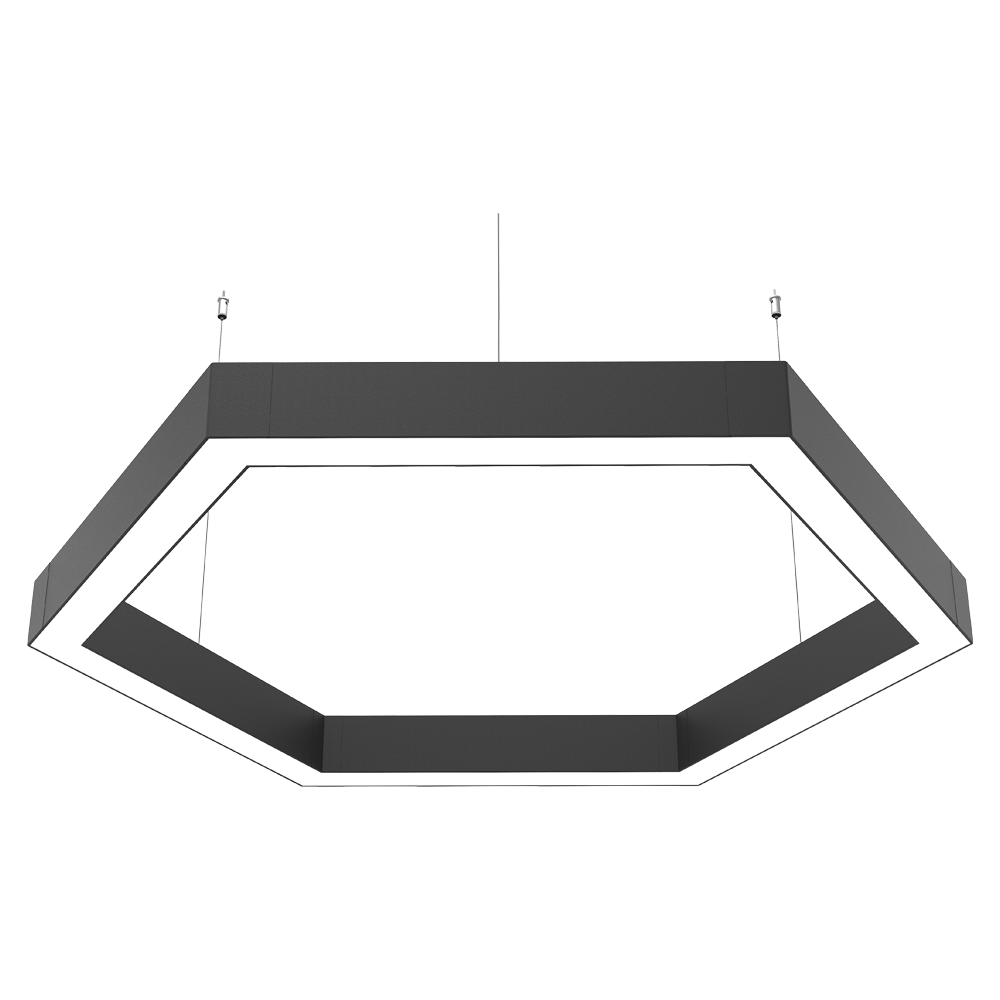
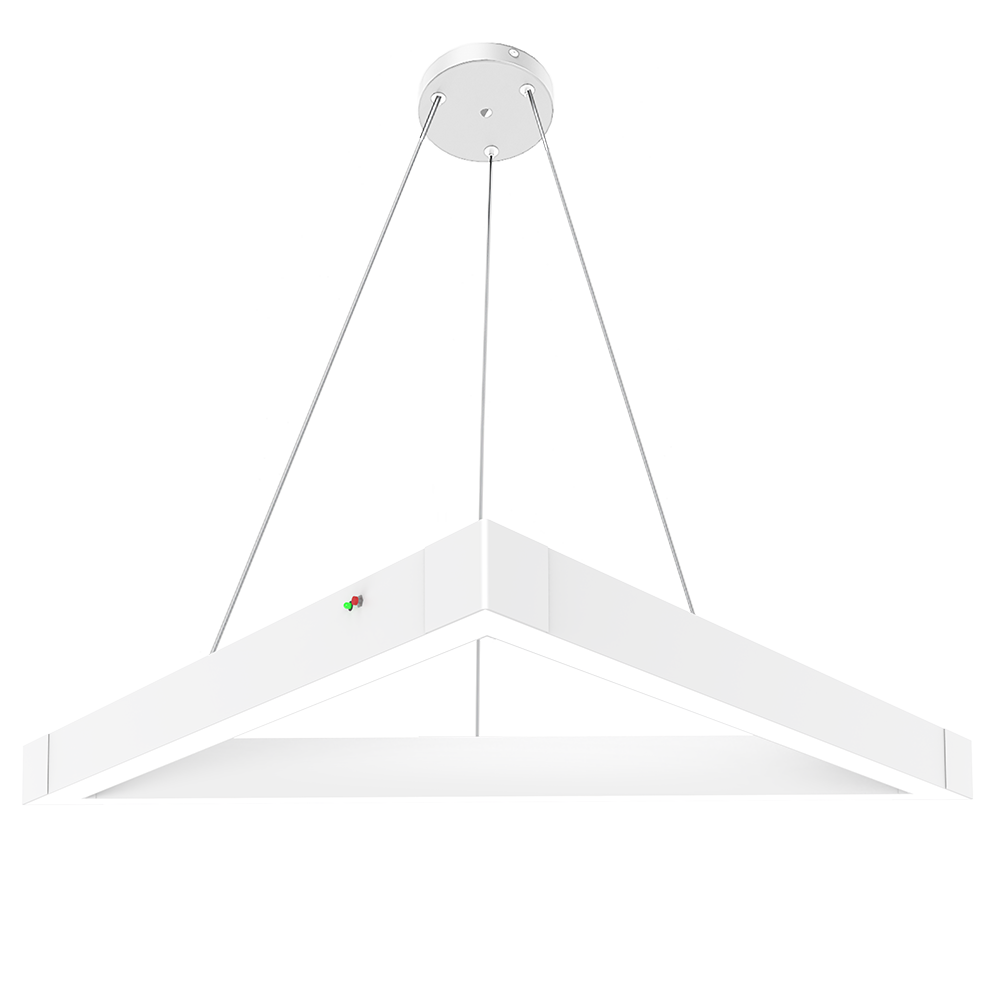
Helian's Smart Puzzle Serie Produkte ermöglichen eine intelligente Anpassung und bieten mehr Flexibilität beim Formendesign:
Fazit
The value of commercial lighting has long transcended the basic function of "space illumination". From scenario-adaptive luminous efficacy to improve operational efficiency, to the LaaS model to optimize cost structure, and then to compliance practices to shape brand value, every investment is generating quantifiable returns. For contemporary commercial operators, lighting is no longer a "cost item" but a "strategic investment" that leverages efficiency, experience, and brands — choosing the right lighting means choosing the underlying logic of sustainable growth.
We design and supply LED aluminum profiles and linear lighting — over 200 profiles with matched diffusers and fittings, serving customers in more than 100 countries since 2007.
Related reading

Send the strip width, the run length and the destination — we will match the profile, the diffuser and the fittings, and quote within 1 business day.
Start your inquiry