



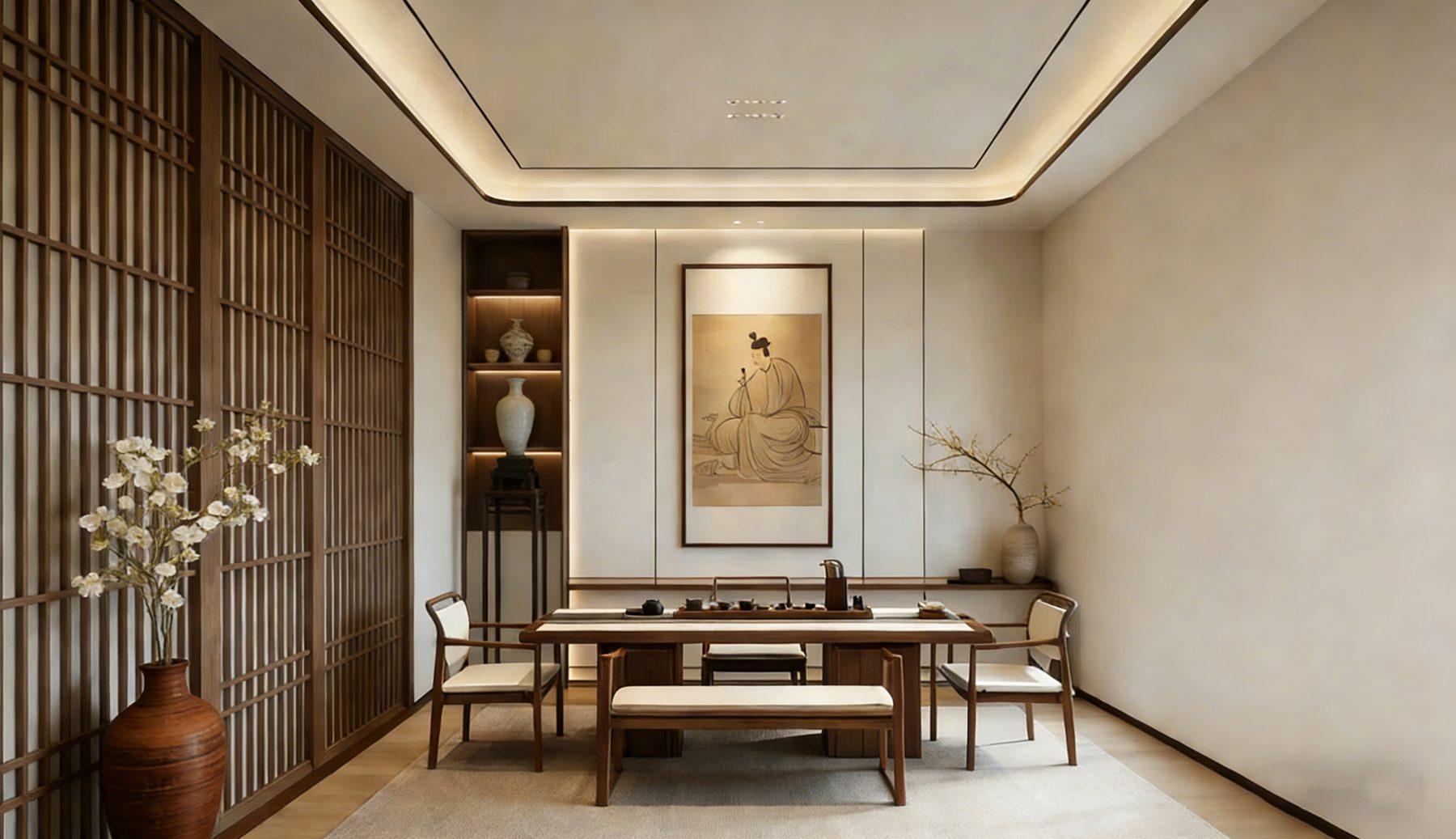
LED Ceiling Profiles For coves & dropped ceilings
A ceiling profile is a pocket, a channel and a line of light in one detail. The channel fixes into the reveal you build and throws its output across the surface — so what the room reads is a wash of light, not a strip. Everything on this page is tooled for that job.
A ceiling line is three details, not one product
The channel only does a third of the work. What decides whether the ceiling reads as clean light or as a visible fixture is the pocket, the section and the way the output is aimed.
The source stays out of sight
Output is aimed up and across, so the strip sits above the sight line. The eye reads brightness on the surface, not a row of diodes.
The pocket sets the reveal
A drop or shadow gap decides how much of the channel is seen. Plaster-in bodies bury their flange; only the opening stays visible.
The section sets the evenness
The diffuser is what turns a row of LEDs into a wash. The width and depth of the section decide how flat that wash reads along a long run.
All 20 ceiling profiles
En direct depuis le catalogue de produits : ajoutez un profil dans l'administration et il apparaîtra ici sans que vous ayez à modifier cette page.
Where these profiles actually end up
Six ceiling conditions this range is specified into. The cove line is the same detail in all of them — what changes is the pocket, the run and the surface around it.

Office & workplace ceilings
Continuous recessed lines run between service bulkheads — the light stays one line while the ceiling takes the services.
Recessed range
Kitchen & joinery ceilings
A recessed line kept tight to the joinery above, so the ceiling stays clean over the worktop.
Recessed range
Corridors & lift lobbies
Long, uninterrupted runs where the ceiling is the only surface left to light.
Full range
Stairwells & double-height spaces
Perimeter coves that wash a tall wall without putting a visible source at eye level.
Suspended range
Hospitality & hotel lobbies
Concentric and stepped ceilings read as one continuous gradient when the cove line is unbroken.
Suspended range
Residential perimeters
A shadow-gap perimeter where the ceiling appears to float — the detail most interior schemes are drawn around.
Recessed rangeHow to narrow 20 profiles down to one
Three numbers decide it, in this order. The counts below are this range, not the whole catalogue.
The channel is tooled for a band of strip widths. If your strip does not fit, nothing else about the profile matters.
—
Plaster-in, flanged or suspended decides the reveal and how much of the body stays in sight — and how easy it is to service later.
—
Outer height has to clear the pocket you can build. Where the drop is shallow, a shallower body is the only one that will sit inside it.
—
Quatre façons de fixer cette cuisinière au plafond
Regroupés en fonction du mode de montage. Les chiffres sont mis à jour à partir de l'index du catalogue ; chaque groupe renvoie vers la page complète consacrée au montage.
The ceiling details these profiles are drawn into
Four standard plasterboard details. If your ceiling already has one of these sections, we almost certainly run a profile that drops into it — send the sketch and we will confirm which.
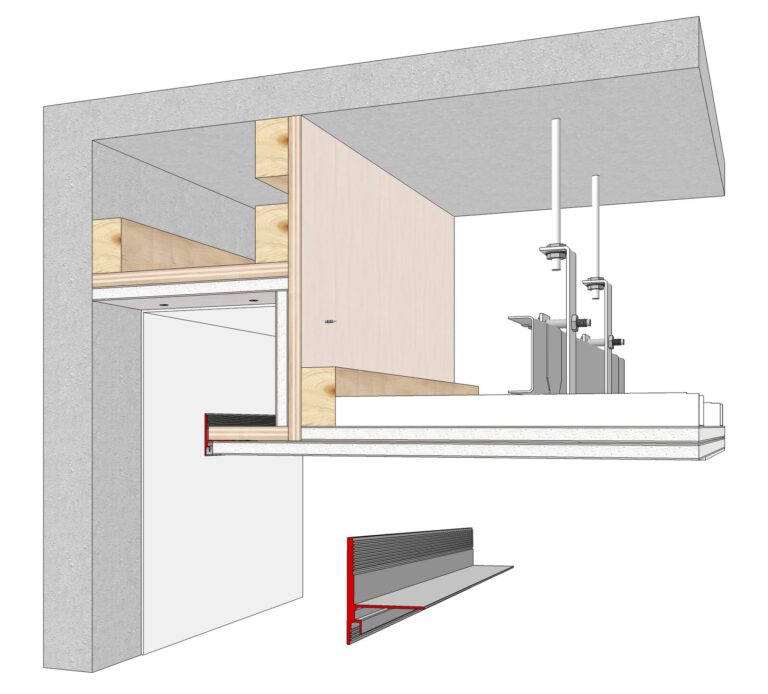
Reverse cove, straight edge
The profile sits behind the ceiling edge, so the light grazes back across the plaster and the source never enters view.
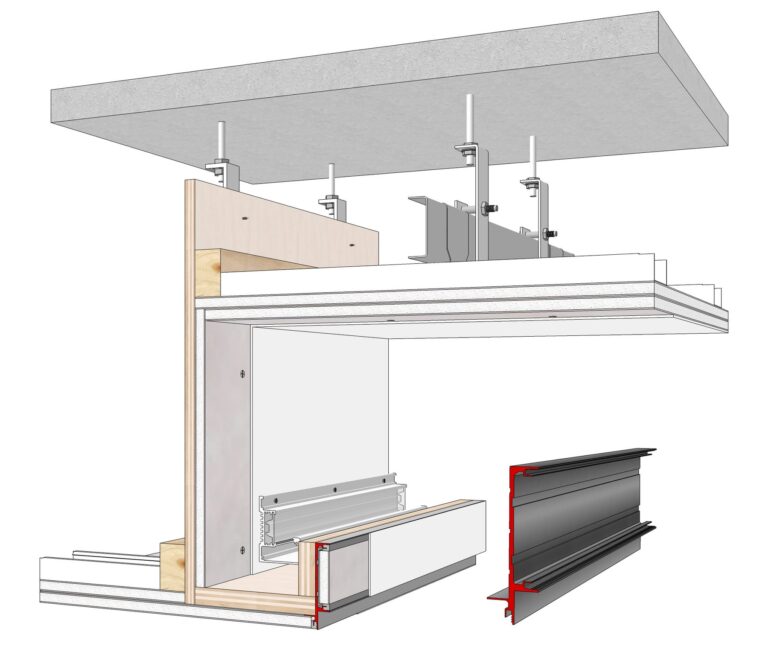
Cove line meeting an L corner
How the cove is carried around a corner without breaking the light line — the detail that decides whether a room reads as one continuous wash.
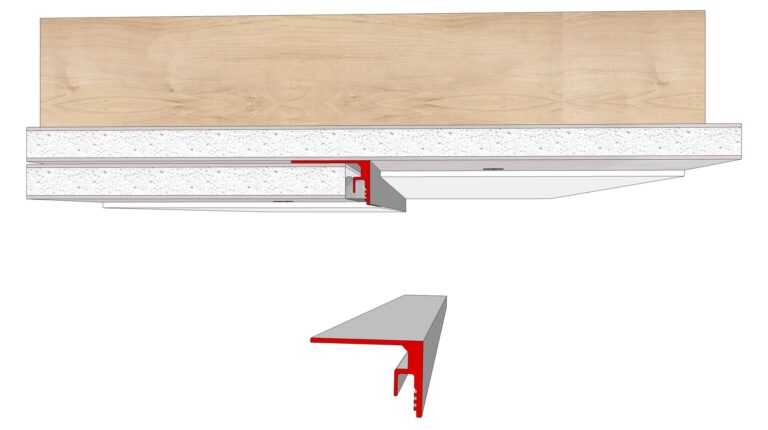
Stepped edge
For ceilings with a change of level: the profile is set into the step, which hides the body and deepens the shadow line.
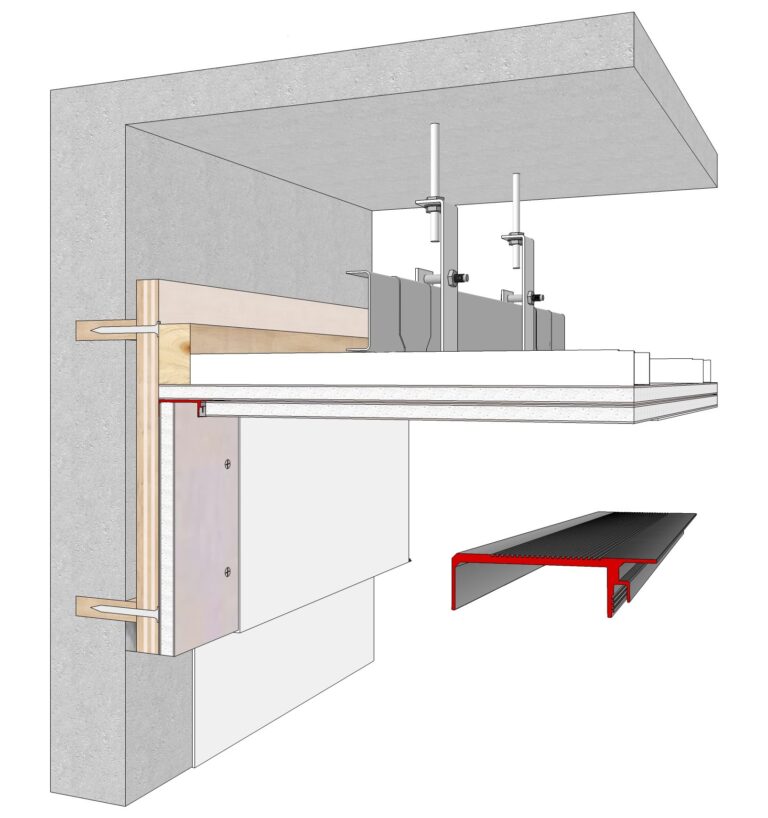
Internal corner groove
A groove worked into the ceiling itself, used where a perimeter cove will not fit the available drop.
Qui réalise cette section, et qu'est-ce qui se cache derrière ce dessin ?
Les certifications ci-dessous ont été délivrées à la société Shenzhen Helian Electronics Co., Ltd. Les numéros de certificat et les normes d'essai sont indiqués dans leur intégralité ; vous pouvez donc vérifier chacun d'entre eux auprès de l'organisme émetteur avant de passer commande.
Systèmes de gestion
ISO 9001:2015 et ISO 14001:2015
- Certificat
- 73025Q05190113R1S · 73025E05190046R1S
- Support
- Shenzhen Helian Electronics Co. Ltd
- Champ d'application
- R&D et commercialisation de luminaires à LED (exportation)
- Publié
- 12 juin 2025 — valable jusqu'au 16 juin 2028
- Corps
- Shenzhen Zhonghuan International Certification Co., Ltd
CE — sur le profil lui-même
PROFIL LED, CEM et LVD
- Certification CEM.
- XDD04260780041502FDC
- Norme CEM
- EN CEI 55015 · EN CEI 61547 · EN CEI 61000-3-2 · EN 61000-3-3
- Certificat LVD.
- XDD04260780041501FAC
- Norme LVD
- EN CEI 60598-1:2024/A11:2024
- Publié
- 15 avril 2026 · BST Testing (Shenzhen)
Conformité des matériaux
RoHS · REACH · diffuseur
- Profil RoHS
- rapport TQT0780K01EC (série CEI 62321)
- aluminium 6063
- déclarations RoHS et REACH distinctes
- Diffuseur pour PC
- SGS RoHS selon la norme EN / CEI 62321
- Diffuseur en PMMA
- Déclaration REACH relative aux substances extrêmement préoccupantes (SVHC)
Droits sur les dessins et modèles
25 certificats de brevet
- Brevet d'invention
- méthode de commande intelligente pour luminaires
- Éclairage de contour
- ZL 2018 2 1588485.0 · adhésion libre
- Lumière linéaire anti-éblouissante
- ZL 2017 2 0569226.2
- Projecteur mural de plafond
- modèle d'utilité + brevet de dessin ou modèle
- Par ailleurs
- les brevets de dessin ou modèle et l'enregistrement d'un dessin ou modèle au niveau de l'Union européenne
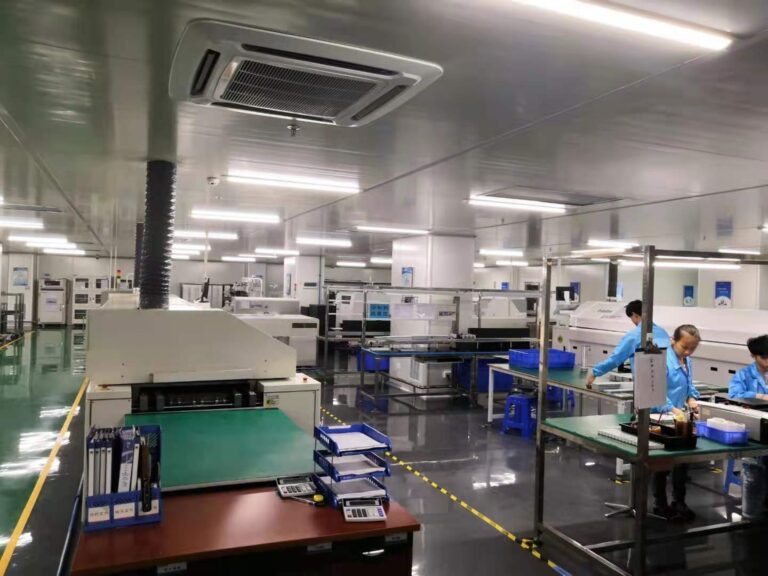
- GATE 0%d Marchandises entrantes Une norme de contrôle à la réception et un procès-verbal de contrôle à la réception, pour chaque livraison.
- GATE 0%d Premier article Fiche d'approbation du premier article conservée avant le lancement de la production.
- GATE 0%d Vieillissement et illumination Une fiche technique écrite relative au vieillissement, ainsi qu'un registre consignant le vieillissement et l'allumage de chaque lot.
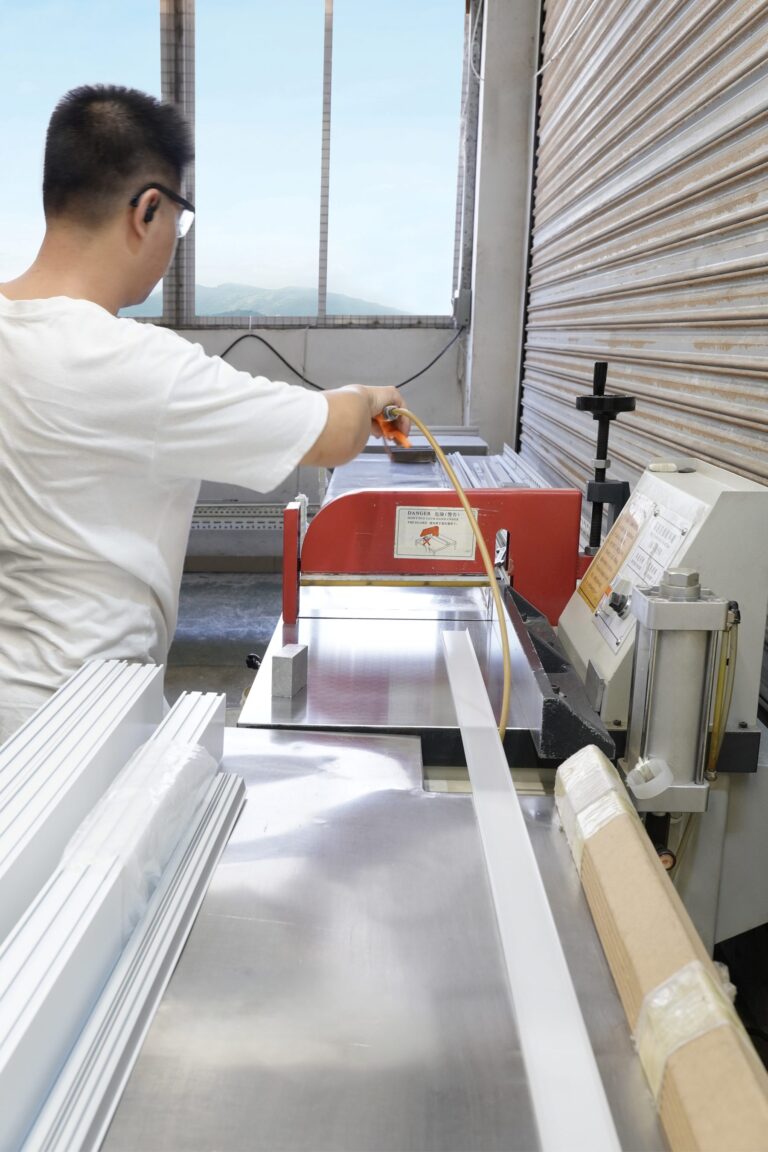
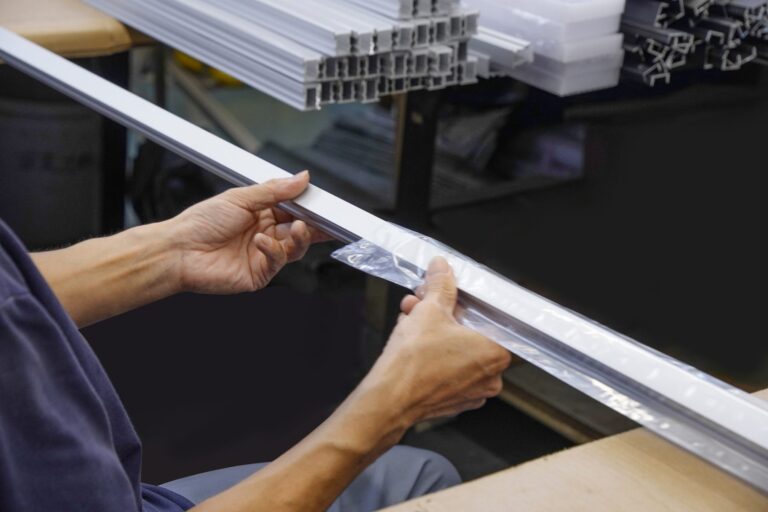
- GATE 0%d Contrôle de sortie Rapports d'inspection de sortie spécifiques pour le profilé extrudé et pour le diffuseur.

Choisissez la contrainte à laquelle vous êtes réellement confronté(e)
Quatre des choix qui apparaissent en premier, chacun correspondant à l'une des options proposées ci-dessus : en fonction de la hauteur extérieure, de la bande que vous achetez déjà et de la manière dont la carrosserie doit être fixée.
Ceiling profile, recessed profile, surface profile — what changes
Same material, same extrusion process. What changes is where the light goes and what stays visible.
| Détail | Ceiling / cove profile | Recessed profile | Surface profile |
|---|---|---|---|
| Where it sits | In a pocket above the ceiling plane, or recessed into the board | Flush in the plasterboard itself | Fixed against a finished surface |
| What you see | A gradient on the ceiling; the diffuser stays hidden | The diffuser, as a defined line | The whole body and the diffuser |
| Aiming | Indirect — thrown up and across the surface | Usually down, or straight out of the board | Whatever direction the body faces |
| Typical ceiling work | Perimeter coves, shadow gaps, dropped ceilings, bulkhead edges | Linear runs set into a flat ceiling | Retrofit ceilings with no pocket available |
| Serviceability | Plaster-in bodies are buried — clip and flanged bodies keep access | Depends on the flange and diffuser detail | The body stays accessible |
| In this catalogue | 20 profiles on this page | See the recessed range | See the surface range |
Ce que vous devez nous envoyer, et ce que vous recevrez en retour
La plupart des détails concernant les plafonds sont fixés sur le plan, et non lors d'un appel téléphonique.
-
ÉTAPE 01
Envoyez le détail du plafond
Un croquis en coupe, une photo du résultat final, ou simplement la profondeur de la poche et la bande que vous comptez utiliser.
-
ÉTAPE 02
Nous l'associons à une section
Nous vérifions les outils que nous utilisons déjà avant de proposer quoi que ce soit de nouveau — la plupart des détails correspondent à un profil existant.
-
ÉTAPE 03
Tu comprends le dessin
Le plan coté du modèle correspondant, indiquant la largeur (W), la hauteur (H) et la largeur de bande qu'il peut accueillir, afin que vous puissiez vérifier la découpe.
-
ÉTAPE 04
Essayez-le, puis commandez-le
Les longueurs de découpe et les finitions sont vérifiées par rapport au plan avant que la production ne démarre.
Ceiling profiles — common questions
The six questions that come up most often before a cove detail is signed off.
What is the difference between a trimless and a standard recessed body?
Trimless means no flange is left showing once the plaster goes on, so the opening is the only thing you see. A standard recessed body keeps a flange that covers the cut edge. Both are in this range — the installation tag on each card says which one that model is.
Can the strip be replaced later if it fails?
Yes — the diffuser comes out and a new strip goes in, so the ceiling does not have to be opened up. How it comes out differs by body: on some it is a push fit, on others it slides from the end. The section drawing on each model shows which.
What is an LED ceiling profile?
It is an extruded aluminium channel that carries an LED strip and fixes into a ceiling — either into a pocket formed by a drop or shadow gap, or recessed into the plasterboard itself. The channel holds the strip and takes a diffuser; the pocket and the section decide how the light reads once it is up.
What is the difference between a ceiling profile and a cove profile?
Both are aluminium channels. A encastré ceiling profile sits in the board itself, so the diffuser stays in view as a defined line. A cove channel hides in a pocket above the sight line and throws its output across the ceiling, so the strip is never visible. The choice is whether you want the source expressed or hidden.
How do I pick the right strip width?
The channel is tooled for a band of strip widths, and that number is the first hard limit. In this range the accepted strip width runs from 7 to 63 mm. Filter by the strip you already buy, then check the outer height against the pocket you can build.
Can these profiles be used in a plasterboard or false ceiling?
Most of this range is recessed, and the majority of those are plaster-in bodies — the flange is buried in the board and only the opening remains visible. The drawing for each model gives the outer dimensions the cut-out has to clear.
Do the profiles come with a diffuser and end caps?
Diffuser and accessory options differ by model. What each channel ships with is listed on its specification sheet — use the PDF button on any card above to check before you specify.
What if nothing here matches my ceiling detail?
Send us the section you are working to. We hold the tooling for the range, so matching an unusual reveal or strip width is usually a question of which existing section it maps onto. For wet or exterior ceilings, start from the waterproof range instead.
Other mounting ranges, and the guide
If the ceiling detail is not settled yet, start with the guide. If the mounting is already fixed, go straight to that range.
How coves work, what a pocket has to clear, and where a visible line of light is the better answer.
Read the guideFlush in the board, trimless or flanged — the range behind most flat-ceiling linear runs.
Recessed rangeHung from the slab on suspension, so the ceiling plane drops below it.
Suspended rangeFixed onto a finished substrate — for ceilings already closed, with no pocket available.
Surface rangeFor the junction where a ceiling meets a wall or a bulkhead.
Corner rangeWhen the reveal is fixed and nothing in the range clears it, the section can be tooled to suit.
Custom profilesÉtape suivante
Send us the ceiling detail
Tell us the pocket depth, the strip you plan to use and the run length. We will come back with the section that fits and its drawing.