



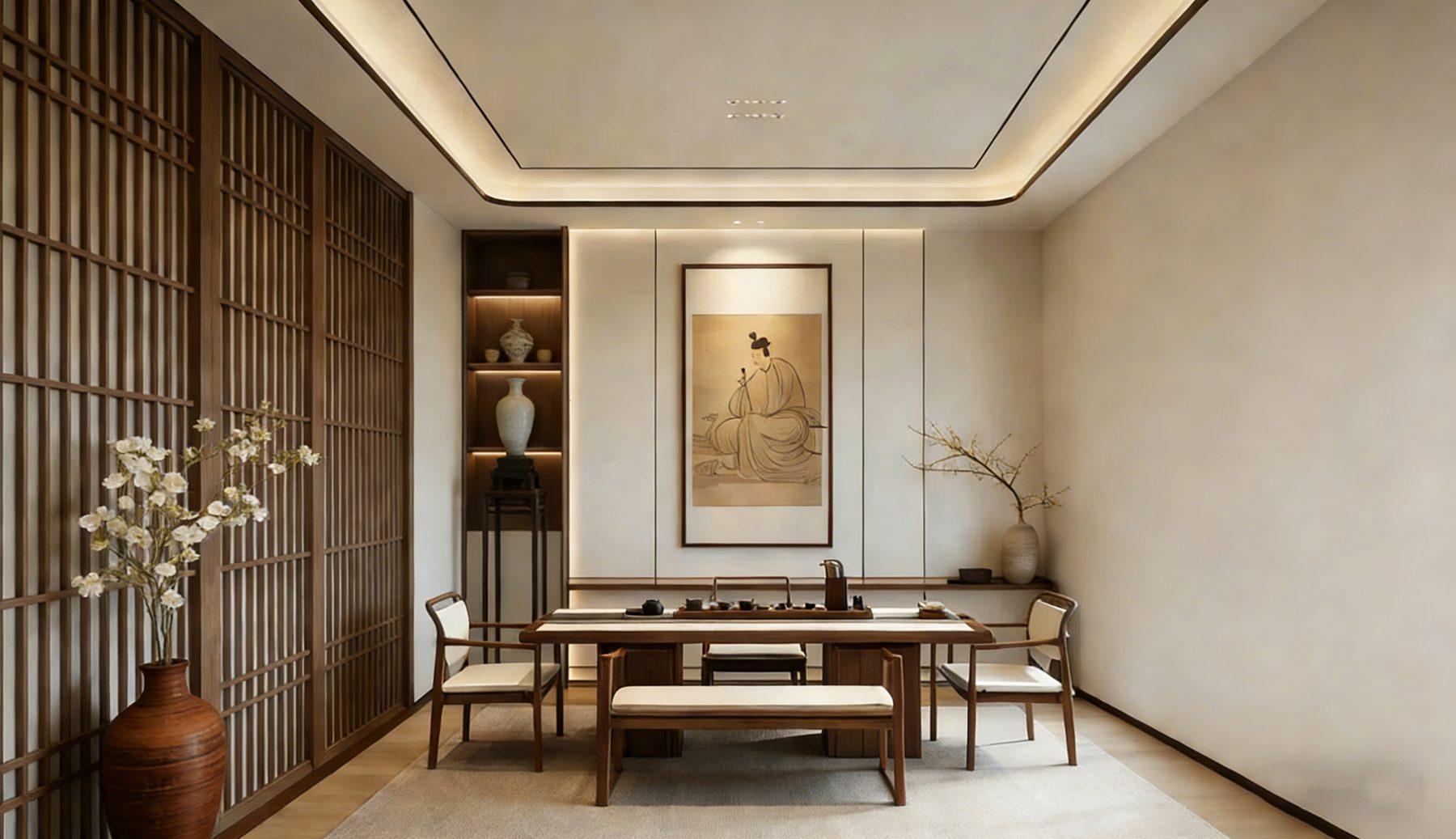
Perfiles de techo LED For coves & dropped ceilings
A ceiling profile is a pocket, a channel and a line of light in one detail. The channel fixes into the reveal you build and throws its output across the surface — so what the room reads is a wash of light, not a strip. Everything on this page is tooled for that job.
A ceiling line is three details, not one product
The channel only does a third of the work. What decides whether the ceiling reads as clean light or as a visible fixture is the pocket, the section and the way the output is aimed.
The source stays out of sight
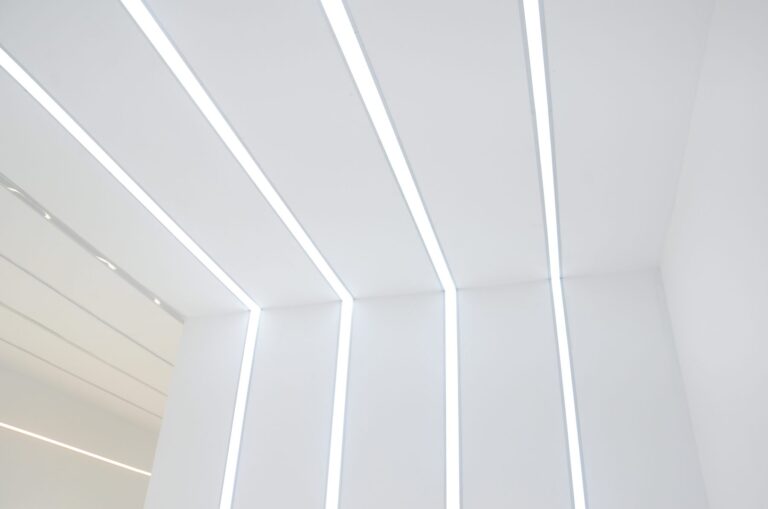
Output is aimed up and across, so the strip sits above the sight line. The eye reads brightness on the surface, not a row of diodes.
The pocket sets the reveal
A drop or shadow gap decides how much of the channel is seen. Plaster-in bodies bury their flange; only the opening stays visible.
The section sets the evenness
The diffuser is what turns a row of LEDs into a wash. The width and depth of the section decide how flat that wash reads along a long run.
All 20 ceiling profiles
En directo desde el catálogo de productos: añade un perfil en el panel de administración y aparecerá aquí sin necesidad de modificar esta página.
Where these profiles actually end up
Six ceiling conditions this range is specified into. The cove line is the same detail in all of them — what changes is the pocket, the run and the surface around it.

Office & workplace ceilings
Continuous recessed lines run between service bulkheads — the light stays one line while the ceiling takes the services.
Recessed range
Kitchen & joinery ceilings
A recessed line kept tight to the joinery above, so the ceiling stays clean over the worktop.
Recessed range
Corridors & lift lobbies
Long, uninterrupted runs where the ceiling is the only surface left to light.
Full range
Stairwells & double-height spaces
Perimeter coves that wash a tall wall without putting a visible source at eye level.
Suspended range
Hospitality & hotel lobbies
Concentric and stepped ceilings read as one continuous gradient when the cove line is unbroken.
Suspended range
Residential perimeters
A shadow-gap perimeter where the ceiling appears to float — the detail most interior schemes are drawn around.
Recessed rangeHow to narrow 20 profiles down to one
Three numbers decide it, in this order. The counts below are this range, not the whole catalogue.
The channel is tooled for a band of strip widths. If your strip does not fit, nothing else about the profile matters.
—
Plaster-in, flanged or suspended decides the reveal and how much of the body stays in sight — and how easy it is to service later.
—
Outer height has to clear the pocket you can build. Where the drop is shallow, a shallower body is the only one that will sit inside it.
—
Cuatro formas de fijar esta cocina al techo
Agrupados según la forma de instalación del cuerpo. Las cifras se actualizan a partir del índice del catálogo; cada grupo incluye un enlace a la página completa sobre el montaje.
The ceiling details these profiles are drawn into
Four standard plasterboard details. If your ceiling already has one of these sections, we almost certainly run a profile that drops into it — send the sketch and we will confirm which.
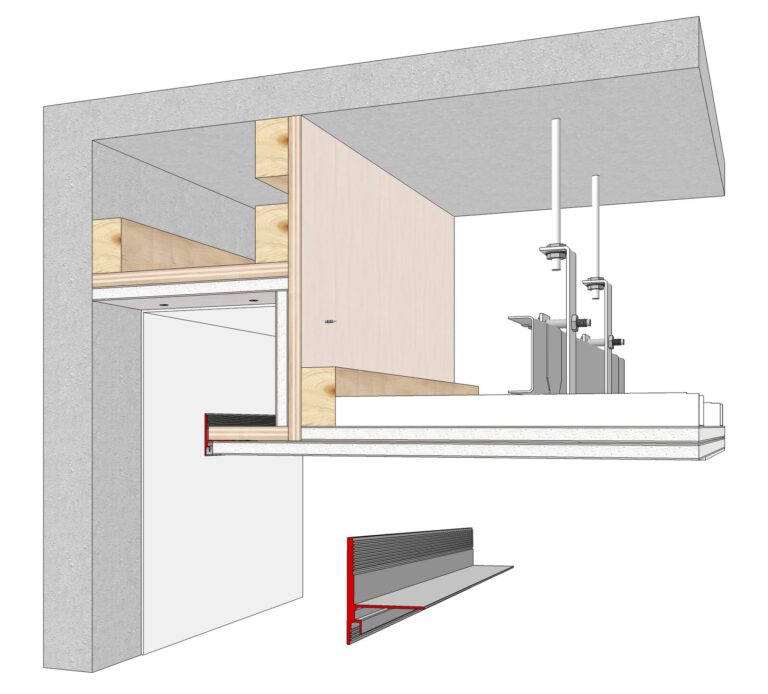
Reverse cove, straight edge
The profile sits behind the ceiling edge, so the light grazes back across the plaster and the source never enters view.
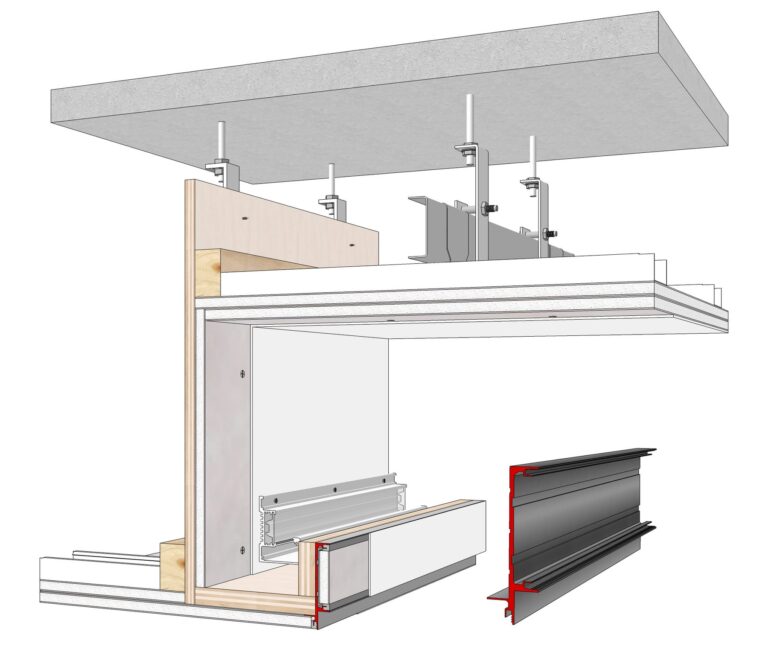
Cove line meeting an L corner
How the cove is carried around a corner without breaking the light line — the detail that decides whether a room reads as one continuous wash.
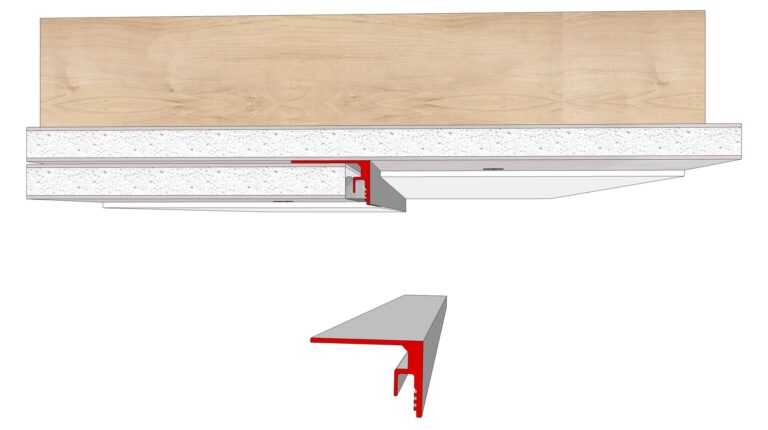
Stepped edge
For ceilings with a change of level: the profile is set into the step, which hides the body and deepens the shadow line.
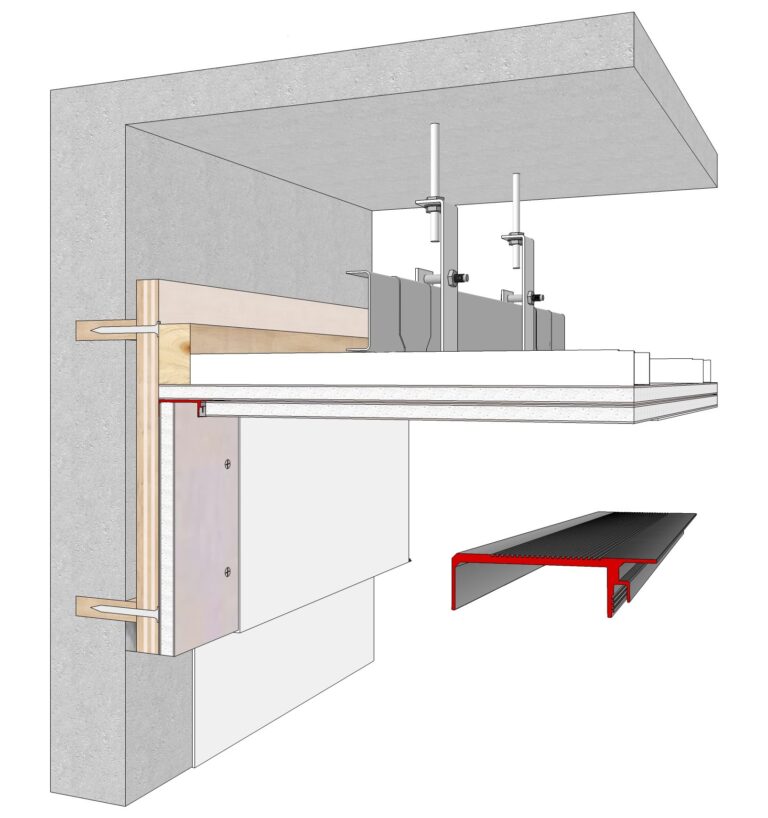
Internal corner groove
A groove worked into the ceiling itself, used where a perimeter cove will not fit the available drop.
¿Quién construye la sección y qué hay detrás del plano?
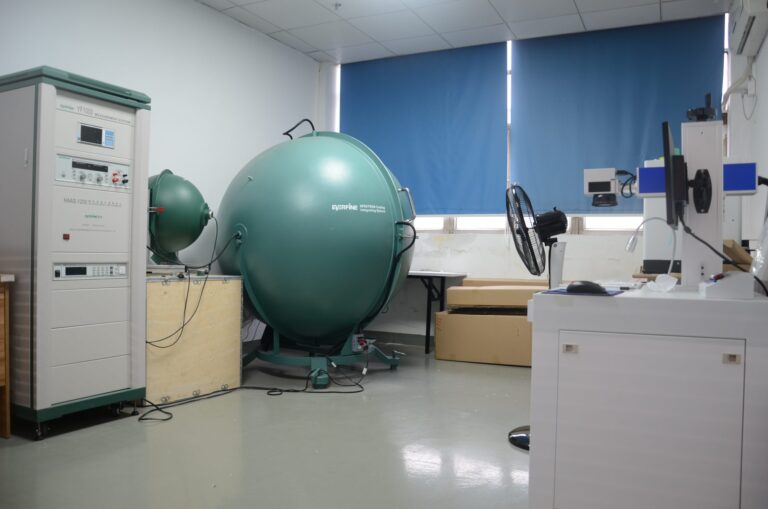
Las certificaciones que figuran a continuación han sido expedidas a Shenzhen Helian Electronics Co., Ltd. Se indican los números de certificado y las normas de ensayo en su totalidad, por lo que puede verificar cualquiera de ellos con el organismo emisor antes de realizar su pedido.
Sistemas de gestión
ISO 9001:2015 e ISO 14001:2015
- Certificado
- 73025Q05190113R1S · 73025E05190046R1S
- Titular
- Shenzhen Helian Electronics Co., Ltd
- Ámbito de aplicación
- I+D y venta de luminarias LED (exportación)
- Publicado
- 12 de junio de 2025 — válido hasta el 16 de junio de 2028
- Cuerpo
- Shenzhen Zhonghuan International Certification Co., Ltd.
CE — en el propio perfil
PERFIL LED, EMC y LVD
- Certificación EMC.
- XDD04260780041502FDC
- Norma EMC
- EN IEC 55015 · EN IEC 61547 · EN IEC 61000-3-2 · EN 61000-3-3
- Certificado LVD.
- XDD04260780041501FAC
- Norma LVD
- EN IEC 60598-1:2024/A11:2024
- Publicado
- 15 de abril de 2026 · BST Testing (Shenzhen)
Conformidad de los materiales
RoHS · REACH · difusor
- Perfil RoHS
- Informe TQT0780K01EC (serie IEC 62321)
- Aluminio 6063
- declaraciones independientes de RoHS y REACH
- Difusor para PC
- SGS RoHS según la norma EN/IEC 62321
- Difusor de PMMA
- Declaración de sustancias extremadamente preocupantes (SVHC) según el reglamento REACH
Derechos sobre diseños industriales
25 certificados de patente
- Patente de invención
- método de control inteligente para luminarias
- Luz de perfil
- ZL 2018 2 1588485.0 · participación libre
- Luz lineal antirreflejos
- ZL 2017 2 0569226.2
- Foco de pared para techo
- modelo de utilidad + patente de diseño
- Además
- patentes de diseño y un registro de diseño de la UE
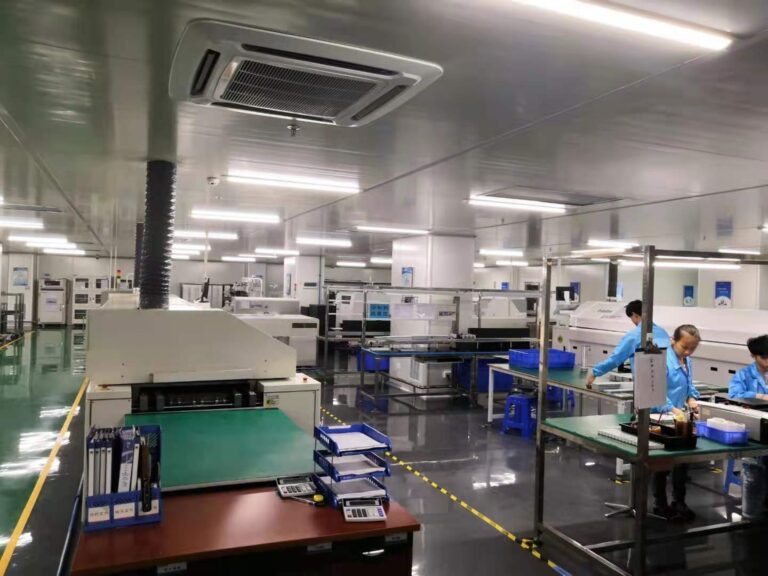
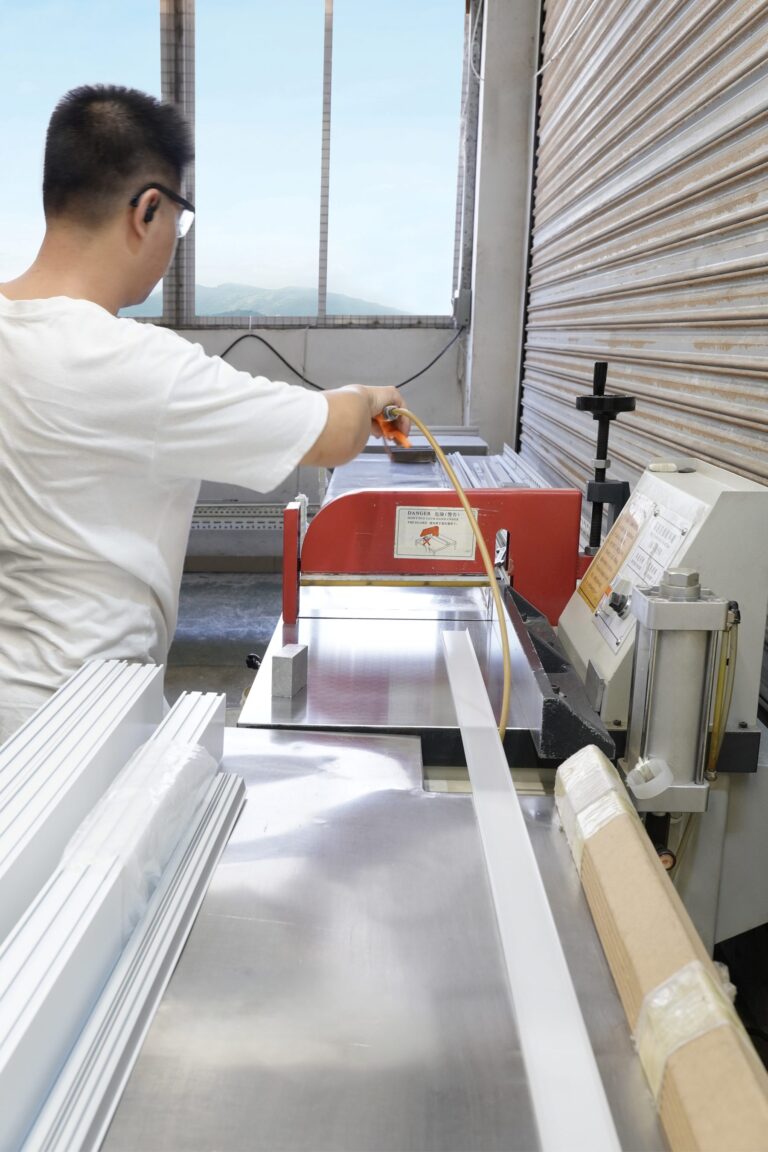
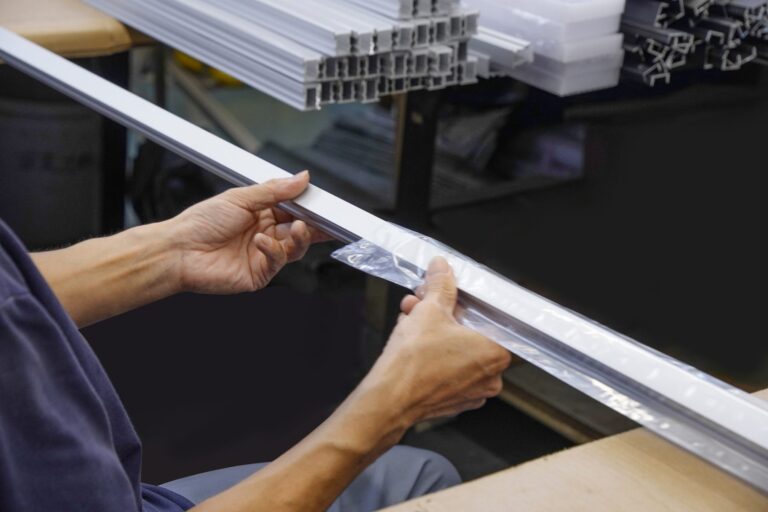
- GATE 0%d Material recibido Norma de inspección a la entrada y un registro de inspección de recepción por cada entrega.
- GATE 0%d Primer artículo Hoja de aprobación del primer artículo que se revisa antes de dar luz verde a una tirada.
- GATE 0%d Envejecimiento y iluminación Una especificación por escrito sobre el envejecimiento, además de un registro del envejecimiento del lote y de su encendido.
- GATE 0%d Control de salida Informes de control de calidad de salida específicos para el perfil extruido y para el difusor.
Elige la limitación con la que te enfrentas realmente
Cuatro de las decisiones que surgen en primer lugar, cada una de ellas resuelta a partir de la gama anterior —según la altura exterior, según la tira que ya compras y según cómo haya que fijar la carrocería—.
Ceiling profile, recessed profile, surface profile — what changes
Same material, same extrusion process. What changes is where the light goes and what stays visible.
| Detalle | Ceiling / cove profile | Recessed profile | Surface profile |
|---|---|---|---|
| Where it sits | In a pocket above the ceiling plane, or recessed into the board | Flush in the plasterboard itself | Fixed against a finished surface |
| What you see | A gradient on the ceiling; the diffuser stays hidden | The diffuser, as a defined line | The whole body and the diffuser |
| Aiming | Indirect — thrown up and across the surface | Usually down, or straight out of the board | Whatever direction the body faces |
| Typical ceiling work | Perimeter coves, shadow gaps, dropped ceilings, bulkhead edges | Linear runs set into a flat ceiling | Retrofit ceilings with no pocket available |
| Serviceability | Plaster-in bodies are buried — clip and flanged bodies keep access | Depends on the flange and diffuser detail | The body stays accessible |
| In this catalogue | 20 profiles on this page | See the recessed range | See the surface range |
Qué debes enviarnos y qué recibirás a cambio
La mayoría de los detalles del techo se acuerdan en el plano, no por teléfono.
-
PASO 01
Envía el plano detallado del techo
Un boceto de la sección, una foto del acabado o, simplemente, la profundidad del hueco y la tira que piensas utilizar.
-
PASO 02
Lo asignamos a una sección
Antes de proponer nada nuevo, revisamos las herramientas que ya utilizamos; la mayoría de los detalles se ajustan a un perfil ya existente.
-
PASO 03
Ya te haces una idea
El plano de dimensiones del modelo correspondiente, con las medidas de anchura (W) y altura (H), así como la anchura de la tira que admite, para que puedas comprobar el recorte.
-
PASO 04
Prueba el producto y luego haz tu pedido
Las medidas de corte y los acabados se comprueban con respecto al plano antes de que nada pase a producción.
Ceiling profiles — common questions
The six questions that come up most often before a cove detail is signed off.
¿Cuál es la diferencia entre un cuerpo empotrado sin marco y uno estándar?
«Sin reborde» significa que, una vez aplicado el yeso, no queda ningún reborde a la vista, por lo que lo único que se ve es la abertura. Un cuerpo empotrado estándar conserva un reborde que cubre el borde cortado. Ambos se incluyen en esta gama; la etiqueta de instalación de cada ficha indica de qué tipo es cada modelo.
¿Se puede sustituir la tira más adelante si falla?
Sí, el difusor se extrae y se coloca una nueva tira, por lo que no es necesario abrir el techo. La forma de extraerlo varía según el modelo: en algunos se encaja a presión, mientras que en otros se desliza desde el extremo. El esquema de cada modelo muestra cuál es el procedimiento.
¿Qué es un perfil de techo LED?
Se trata de un perfil de aluminio extruido que aloja una tira de LED y se fija al techo, ya sea en un hueco formado por un saliente o una junta de sombra, o empotrado en la propia placa de yeso. El perfil sujeta la tira y aloja un difusor; el hueco y la sección determinan cómo se percibe la luz una vez instalado.
¿Cuál es la diferencia entre un perfil de techo y un perfil cóncavo?
Both are aluminium channels. A empotrado ceiling profile sits in the board itself, so the diffuser stays in view as a defined line. A cove channel hides in a pocket above the sight line and throws its output across the ceiling, so the strip is never visible. The choice is whether you want the source expressed or hidden.
¿Cómo elijo el ancho adecuado de la tira?
The channel is tooled for a band of strip widths, and that number is the first hard limit. In this range the accepted strip width runs from 7 to 63 mm. Filter by the strip you already buy, then check the outer height against the pocket you can build.
¿Se pueden utilizar estos perfiles en placas de yeso o en falsos techos?
La mayor parte de esta gama es empotrada, y la mayoría de estos modelos son cuerpos para empotrar en yeso: la brida queda oculta en el tablero y solo queda visible la abertura. El plano de cada modelo indica las dimensiones exteriores que debe respetar el hueco.
¿Los perfiles incluyen un difusor y tapas de cierre?
Las opciones de difusores y accesorios varían según el modelo. En la ficha técnica de cada canal se indica qué incluye de serie; utiliza el botón «PDF» de cualquiera de las fichas anteriores para consultarla antes de realizar tu pedido.
¿Y si nada de lo que hay aquí encaja con el diseño de mi techo?
Send us the section you are working to. We hold the tooling for the range, so matching an unusual reveal or strip width is usually a question of which existing section it maps onto. For wet or exterior ceilings, start from the waterproof range instead.
Other mounting ranges, and the guide
If the ceiling detail is not settled yet, start with the guide. If the mounting is already fixed, go straight to that range.
How coves work, what a pocket has to clear, and where a visible line of light is the better answer.
Read the guideFlush in the board, trimless or flanged — the range behind most flat-ceiling linear runs.
Recessed rangeHung from the slab on suspension, so the ceiling plane drops below it.
Suspended rangeFixed onto a finished substrate — for ceilings already closed, with no pocket available.
Surface rangeFor the junction where a ceiling meets a wall or a bulkhead.
Corner rangeWhen the reveal is fixed and nothing in the range clears it, the section can be tooled to suit.
Custom profilesSiguiente paso
Send us the ceiling detail
Tell us the pocket depth, the strip you plan to use and the run length. We will come back with the section that fits and its drawing.