


How to Install Recessed Profiles in Drywall
The slot is cut to the body, not the aperture. Sizing steps from our own section drawings, where the driver goes, and the four mistakes that show after paint.


The slot is cut to the body, not the aperture. Sizing steps from our own section drawings, where the driver goes, and the four mistakes that show after paint.
A joint is a design decision, not a site fix. Three ways to join, why only 71 of 219 profiles take a connector, and where a joint should sit.
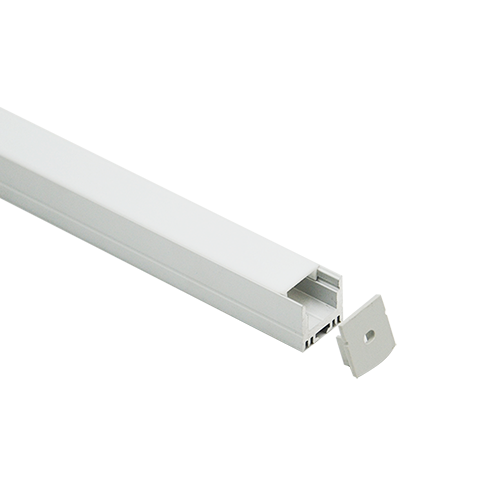
Two limits decide how many runs one driver can carry: total load and voltage drop. How each behaves, and which parts must be left to a qualified electrician.
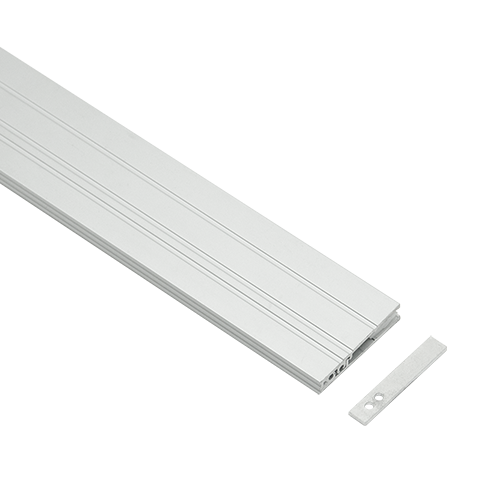
The profile is not the problem — the substrate is. How to fix into concrete, why tile must never take a fixing on its own, and what changes when you recess.

A lens does not make a line brighter — it puts the light inside a fixed angle. Why working distance decides whether it works.

Most profile sections have no fins. Cooling comes from metal mass, exposed surface and airflow — and the third one is decided by how you mount it.

6063 is the alloy; T5 is the temper. One decides how it extrudes, the other decides whether it bends. How to verify the pair before you order.
6061 is stronger and that is rarely the deciding factor. What each alloy demands in wall thickness, anodizing and die design — and when 6061 is right.
Slim is about presence, wide is about aperture and heat. The figure that decides whether a slim body is usable is not its width — it is the strip inside.

An angled body does not make more light — it changes where the light goes. When that matters under a cabinet, and why it cannot be re-mounted flat.

Custom is not one decision but four, and only the last needs a new die. What each level adds in time, and what a die takes away in freedom to change.

A clear cover passes most of the light and shows every diode. What that trade really costs on a glossy counter, and the three figures that decide it.
Fin du contenu
Fin du contenu
Obtenir un devis