


What Is a Lens Profile and When Does It Pay Off
A lens does not make a line brighter — it puts the light inside a fixed angle. Why working distance decides whether it works.


A lens does not make a line brighter — it puts the light inside a fixed angle. Why working distance decides whether it works.

Most profile sections have no fins. Cooling comes from metal mass, exposed surface and airflow — and the third one is decided by how you mount it.

6063 is the alloy; T5 is the temper. One decides how it extrudes, the other decides whether it bends. How to verify the pair before you order.
6061 is stronger and that is rarely the deciding factor. What each alloy demands in wall thickness, anodizing and die design — and when 6061 is right.
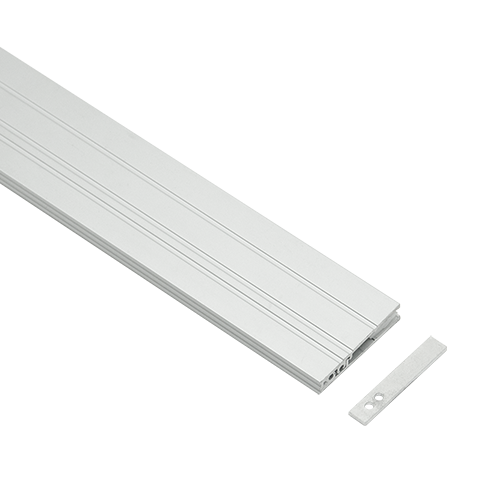
Slim is about presence, wide is about aperture and heat. The figure that decides whether a slim body is usable is not its width — it is the strip inside.

An angled body does not make more light — it changes where the light goes. When that matters under a cabinet, and why it cannot be re-mounted flat.

Custom is not one decision but four, and only the last needs a new die. What each level adds in time, and what a die takes away in freedom to change.

A clear cover passes most of the light and shows every diode. What that trade really costs on a glossy counter, and the three figures that decide it.
MOQ is a band, not a number, and there are two lead times. How each one behaves, and the three assumptions that most often move a delivery date.
Three checks in the first hour decide whether a claim is possible later: count and accessories, key dimensions, and straightness along the bar. What each catches.
Three numbers decide the quote; everything else is a modifier. What to send so it comes back right the first time, and what causes the second email.
Eleven blocks, and most spec sheets are missing three of them. What ours contain, using HL-A065 as the example, and which omission causes the most site problems.
Ende des Inhalts
Ende des Inhalts
Angebot einholen