


This article follows the content creation and review process of het Helian Expert Team. Every figure is checked against our own test records before publication.
Whether you are a lighting designer planning a facade project or a contractor installing garden accents, one question always surfaces: “Are LED lights waterproof?”
The short answer is: Not by default. Their water resistance depends on encapsulation and sealing techniques. Commercial products come with different IP ratings (such as IP65/IP68), so you should choose based on the intended environment. If you’re looking to source waterproof LED strip lights, keep reading.
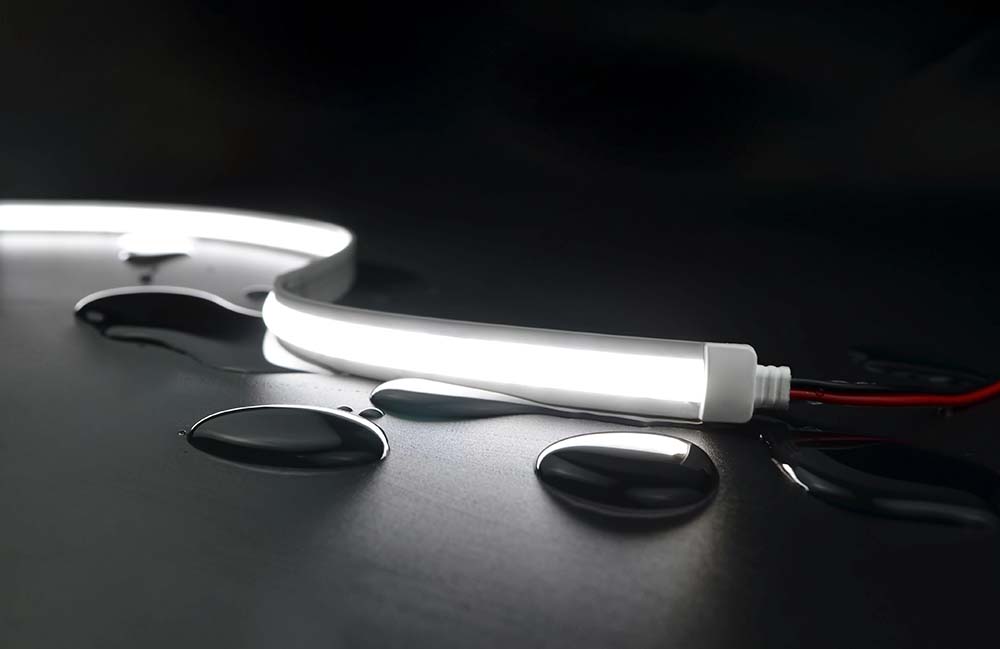
Understanding the Language of Protection: IP Ratings
When browsing for lighting, you will encounter the IP (Ingress Protection) rating. This is an international standard that defines how well an enclosure protects the electronics inside from solids and liquids.
The rating consists of two digits:
- The First Digit (0–6): Protection against solids (dust, dirt).
- The Second Digit (0–9): Protection against liquids (water).
Breaking Down the Levels for Your Project
For most commercial and architectural applications, you will primarily focus on IP65, IP67, and IP68 ratings. These are the most widely used options. Of course, you can also learn more details:
| IP-classificatie | Protection Level for Liquids / Solids (First Digit / Second Digit) | Toepassingsscenario's |
| IP20 | No water resistance; protection against solid objects larger than 12.5mm (fingers). | Indoors (Dry Areas): Living rooms, bedrooms, and offices where there’s no contact with water. |
| IP44 | Resistant to splashing water from any direction; protection against solid objects larger than 1mm (e.g., wires, small tools). | Bathrooms & Kitchens: Places with humidity and splashes, but should not be directly sprayed with water. Also suitable for sheltered outdoor areas like eaves or patios. |
| IP54 | Resistant to splashing water; protection against dust (dust protected, but not completely dust-tight). | Outdoors (Sheltered): Ideal for semi-outdoor locations like entrance porches, building corridors, or any place that requires better dust and splash protection than IP44. |
| IP65 | Resistant to low-pressure water jets from any direction; completely dust-tight. | Outdoors (General): Perfect for most outdoor uses like gardens, terraces, building exteriors, and parking lots, where the light can withstand direct rain. |
| IP66 | Resistant to powerful water jets (e.g., from heavy seas or for cleaning); completely dust-tight. | Harsh Outdoor Environments: Used near marine/coastal areas or in industrial settings that require high-pressure washing. |
| IP67 | Protection against temporary immersion in water (up to 1 meter for 30 minutes); completely dust-tight. | Temporary Submersion: Suitable for locations prone to occasional flooding, garden ponds, or temporary water features. |
| IP68 | Protection against long-term, continuous immersion in water beyond 1 meter; completely dust-tight. | Permanent Underwater Applications: Essential for underwater lighting in swimming pools, fountains, aquariums, and landscape ponds. |
Beyond the Strip: The Role of Aluminum Profiles
Many people assume that buying a “waterproof LED strip” is enough. However, in professional B2B applications, the strip is only half the story. To ensure longevity, the strip needs a home.
At HLLED, we specialize in LED Aluminium Profielen that act as a first line of defense. Using high-grade 6063-T5 aluminum, these channels provide two critical benefits for waterproof setups:
- Heat Dissipation: Waterproof coatings (like silicone or epoxy) tend to trap heat. Aluminum profiles pull that heat away, preventing the LEDs from burning out prematurely.
- Structural Shielding: A profile protects the waterproof seal of the LED strip from physical damage, UV rays, and corrosive elements.
The HLLED Advantage: Advanced Sealing Technologies
When selecting waterproof lighting, the materials used for sealing are just as important as the IP rating itself. Not all “waterproof” solutions are created equal.
Recommended waterproof profiles
For outdoor waterproofing, a combination of waterproof profiles and LED strips is typically used, though wall-washer lights can also be used directly.
Silicone Extrusion vs. Traditional PVC
Most cheap waterproof LEDs use PVC or basic glue dripping. Over time, these materials yellow, crack, and become brittle under the sun.
We utilize Silicone Extrusion technology. Silicone remains flexible in extreme temperatures (-50°C to 200°C) and offers superior UV resistance. When combined with our anti-glare silicone covers, you get a seamless, “dot-free” light effect that remains crystal clear for years, even in harsh Western European winters or high-UV environments.
The Power of PU Potting
For projects requiring IP67 or IP68 ratings, we often recommend PU (Polyurethane) Potting. This process involves filling the aluminum profile with a specialized resin. This creates a solid, airtight block that is virtually impenetrable by water, making it perfect for high-traffic outdoor walkways or wet-room installations.
Best Practices: Where to Use Which Protection?
To help you choose the right configuration for your next project, consider these common scenarios:
- Outdoor Building Facades: Use an IP67 rated aluminum profile system with silicone end caps. This protects against heavy driving rain and wind.
- Pools and Water Features: Only IP68 submersible solutions should be used. Ensure all connections and power supplies are housed in remote, dry locations or specialized waterproof junction boxes.
- Indoor “Wet Zones” (Kitchens/Bathrooms): IP65 is generally sufficient. Our slim-line profiles with frosted covers protect against steam and occasional splashes while maintaining a sleek, minimalist aesthetic.
Pro Tip: Don’t Forget the Connections
A common point of failure in “waterproof” installations isn’t the light itself—it’s the connection.
- Seal the Ends: When you cut a waterproof LED strip to fit a profile, you break the seal. Always use professional-grade silicone sealant and dedicated end caps to re-seal the cut point.
- Voltage Drop & Safety: For outdoor runs, we recommend 24V systems over 12V to reduce voltage drop and ensure consistent brightness across long architectural runs.
Conclusion: Investing in Reliability
So, are LED lights waterproof? They can be, but “waterproof” is a spectrum. For a project to last, you must match the IP rating to the environment and support the LEDs with high-quality housing.
By combining precision-engineered aluminum profiles with advanced silicone covers, HLLED provides the durability required for modern architectural lighting. Don’t let a little rain ruin a great design—choose materials that are built to weather the storm.