



UL vs CE for LED Linear Lighting: What Each One Actually Certifies
CE and the North American system answer different questions. What each one certifies, which document opens which market, and the files to ask for before you quote.
The question usually lands forty minutes into a quote review, from someone who has not spoken yet. Are you UL?
The sales engineer says yes — they have CE, and an ETL certificate, and ISO 9001. The buyer writes down "UL: yes". Eight weeks later, the submittal comes back from the electrical reviewer, and nobody in the chain can say what was certified, by whom, for which market, on which part number.
That is not a paperwork failure. It is a translation failure. CE and the North American system were built by different institutions for different purposes, and the vocabulary used in the meeting quietly assumes they are two versions of the same thing. Getting it straight costs an hour and saves a rejected submittal or a line of fixtures that cannot be energized on handover.
This guide is for the person who has to buy the thing: the contractor preparing a submittal, the distributor building a stock line, the specifier defending a choice at a design review.
1. Two Systems, Two Questions
CE answers a legal question: may this product be placed on the market in the EU? It is the manufacturer's signed statement that the applicable directives are met, backed by a technical file that has to survive inspection.
UL answers an evaluation question: has an independent laboratory tested this against a US safety standard, and does the result appear in a certification record? It is a third-party mark, issued by a laboratory, tied to a file number.
One is a precondition for sale. The other is evidence of testing issued by someone other than the seller. They do not compete, and neither is the higher grade — asking which is better is like asking whether a passport or a driving license is better. A product can legitimately carry both, only one, or neither and still sell somewhere.
What it cannot do is carry one and be treated as if it carried the other — a CE file offered in place of a listing, or a listing offered as proof of European conformity.
Watch out for this: "UL certified" is not a term the North American system uses. There is UL Listed, UL Recognized, and a certificate of compliance. The difference decides whether a mark may go on the carton.
2. What CE Actually Covers
The CE mark is not issued by a laboratory, and it is not a certificate. It is applied by the manufacturer once conformity assessment is done, and its legal backing is the EU Declaration of Conformity — a signed document, not a plaque.
For a linear luminaire connected to mains, three instruments normally apply:
| Directive/regulation | Harmonized standards usually cited | What it actually proves |
|---|---|---|
| Low Voltage Directive 2014/35/EU | EN IEC 60598-1, with the relevant part 2 for the luminaire type | Electrical safety: insulation, creepage and clearance, earthing, thermal limits, mechanical strength |
| EMC Directive 2014/30/EU | EN 55015 (emission), EN 61547 (immunity), EN 61000-3-2 and -3-3 | The product does not disturb the grid or nearby equipment, and survives normal disturbance |
| RoHS 2011/65/EU as amended by (EU) 2015/863 | IEC 62321 series | Restricted substances stay under the limits in Annex II |
For this product family, safety and EMC are self-declared; a notified body is not mandatory. This means the strongest document in a CE file is not the lab certificate — it is the DoC, because the DoC is what names the product, the directives, the standards, and the edition years the product was tested to. The laboratory certificate behind it is useful evidence. It is not the market authorization.
Since July 2021, EU market surveillance rules also expect an economic operator established in the Union to be identifiable on the product or its packaging. If you are importing, that operator is probably you — worth settling before the cartons are printed.
Watch out for this: suppliers routinely send a "CE certificate" from a lab and call the job done. Read the standards line. If the edition year is several revisions old, the presumption of conformity may no longer hold, and your technical file is weaker than it looks.
3. What UL Actually Covers
UL Solutions is a Nationally Recognized Testing Laboratory — an NRTL, recognized by OSHA to test and certify products against safety standards. For linear LED lighting, the standards that come up most are UL 1598 for luminaires and UL 8750 for LED equipment and drivers. In Canada, the luminaire standard is CSA C22.2 No. 250.0, with CSA C22.2 No. 250.13 covering LED equipment; the two are normally cited together, and the Canadian mark carries a "c" prefix.
Two things follow. First, UL is not a government body and UL 1598 is not a law: it is a standard that electrical codes and inspection practice pull in by reference. The inspector — the authority having jurisdiction, or AHJ — is looking for evidence that the equipment is listed by an NRTL, not for a particular logo. Second, UL is one NRTL among several, which is the subject of the next section.
Watch out for this: a test report is not a listing. The report is the laboratory's record of the test; the listing is the directory entry, with a file number, that the AHJ can look up. Ask for the file number and check it.
4. ETL: The Third Door
Intertek holds NRTL status and issues the ETL mark. It tests to the same standards — UL 1598 and CSA C22.2 No. 250.0 for Canada — and for code and inspection purposes the mark carries the same weight as a UL listing. OSHA recognizes the laboratory; the AHJ accepts the mark.
This is the least understood point in the comparison, and it has a commercial edge. Specification sections often say "UL listed" when the specifier means "listed by an NRTL". Where that is the intent, an ETL listing does the job. Where the wording is a genuine brand requirement — occasionally a client standard, sometimes an insurer — it may not, and you want to know that before you ship, not at the loading dock.
Our own ETL certificate is held against finished luminaires, evaluated to UL 1598:2018 and CSA C22.2 No. 250.0:2018. Note the scope in that sentence. It is not a statement about an extrusion sold by the meter, and we would rather write that here than have a purchasing team discover it at submittal.
5. Side by Side: UL, ETL, CE
| UL (Listed) | ETL | CE | |
|---|---|---|---|
| Who issues it | UL Solutions, an OSHA-recognized NRTL | Intertek, an OSHA-recognized NRTL | The manufacturer, on the strength of its own technical file; a notified body only in certain categories |
| What it rests on | UL 1598, plus UL 8750 for LED equipment; CSA C22.2 No. 250.0 for Canada | The same standards, tested by a different laboratory | EN IEC 60598-1 (safety); EN 55015, EN 61547 and the EN 61000-3 series (EMC); IEC 62321 series (RoHS) |
| Market it opens | United States and Canada with the "c" prefix | Same | EU and EEA, and the basis most other regions ask for |
| What you may apply | The UL Mark when listed; a Recognized Component mark for parts; nothing at all under a certificate of compliance | The ETL mark, or cETL for Canada | The CE mark, applied by the manufacturer |
| How to verify it | UL Product iQ, searched by file number or company | Intertek's certification directory | No public register: ask for the DoC and the matching test reports |
| What it is not | Not an EU market access document | Not a lower grade of UL | Not a quality grade, and not a third-party certificate |
The row that causes the most damage is "what you may apply".
Listed means the complete product has been evaluated and may bear the UL Mark. Recognized means a component — a driver, a connector, a plastic — has been evaluated for use inside something else; it is not a complete product and is not intended for field installation on its own. A certificate of compliance states that a sample was tested to a standard. It does not authorize the mark, and the document usually says so in small print nobody reads.
A supplier who says "we have UL" may be holding any of the three. The question that resolves it: is this a listing or a certificate of compliance, and may the mark be applied to the units shipped to us?
Watch out for this: a certificate of compliance for a bare profile is not a listing of a luminaire — because a bare profile is not a luminaire.
6. Whose Certificate Is It? The Profile and the Luminaire
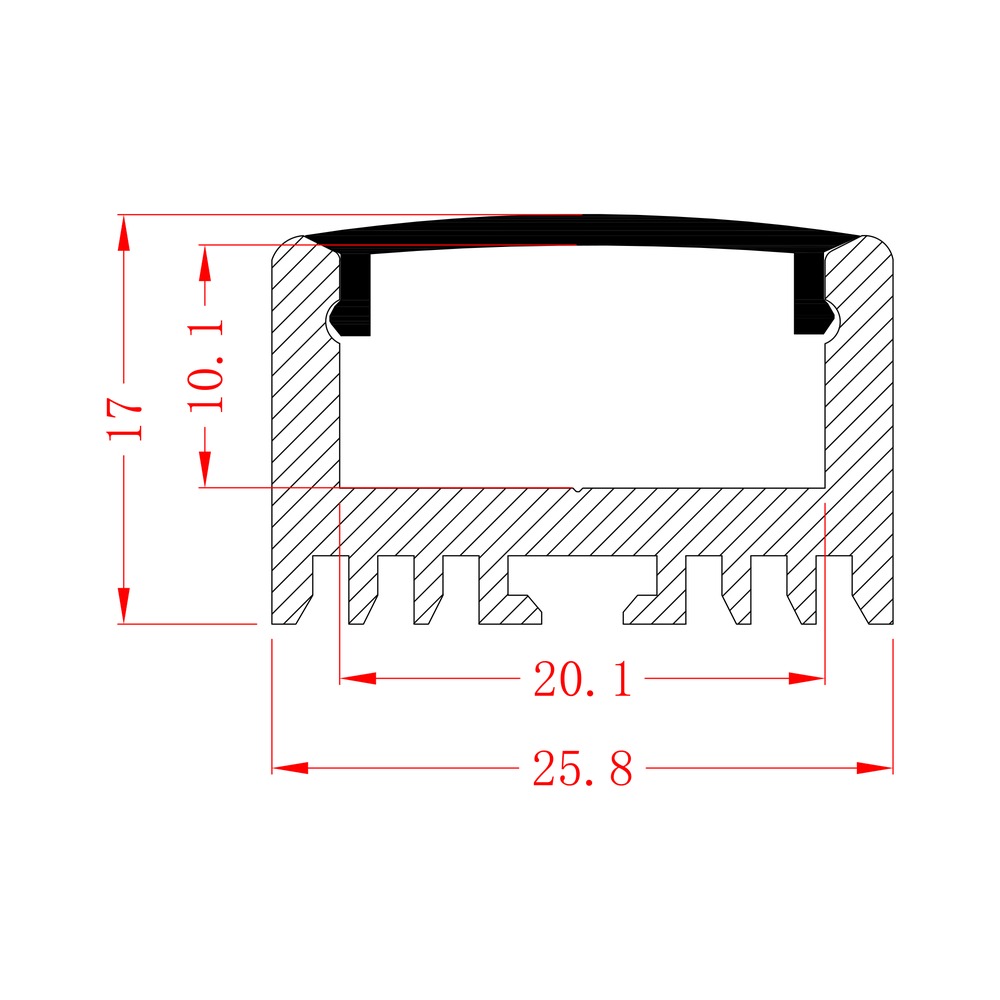
A certificate attaches to an article. An aluminum extrusion is a housing: a component. A luminaire exists once a light source, a driver, and terminations are inside a body, the assembly is completed, and the finished thing goes on the market.
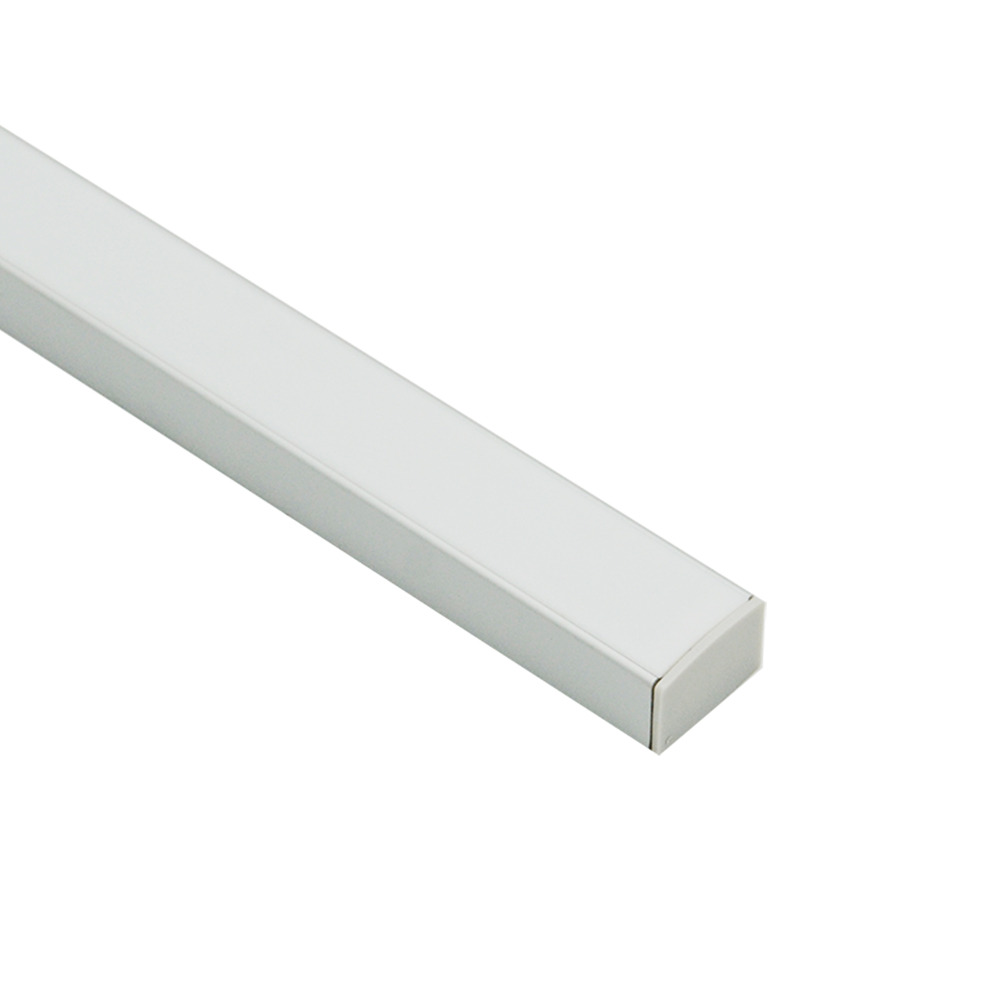
The party who completes that last step is the manufacturer of the luminaire in the regulatory sense, and that party carries the declaration or certification duty for what gets installed. Depending on how you buy, it is us (finished luminaires), your own workshop (you assemble), or the installing contractor (built on site).
Here the certification conversation turns into a procurement decision. Buy extrusion, strip and driver separately and assemble on site, and no certificate on the extrusion covers your finished line — not because anyone is withholding something, but because nobody has evaluated that combination. The reverse is equally true: a CE DoC for a finished assembly does not turn a roll of strip into a CE-marked product.
Two practical moves. Decide before the purchase order who is the manufacturer of the installed article, and put the answer in the contract. And if the answer is you, ask your supplier for the component-level documents that support your own declaration — the driver's own listing, the RoHS reports, the safety reports on the parts you are combining. What that file should contain is set out in what a spec sheet should include.
For our part, the CE documentation on the profile range is three documents issued on the same date: safety to EN IEC 60598-1:2024/A11:2024, EMC to EN IEC 55015:2019+A11:2020 and EN IEC 61547:2023 with the EN 61000-3 series, and RoHS to the IEC 62321 series. The RoHS certificate states that it covers the HL-BAPL and HL-A series, with the full model list inside the certificate. Check the part number you were quoted against that list; it is the only honest way to use a certificate, and any supplier should be willing to have you do it.
7. The Documents to Ask For, and the Email That Gets Them
Ask by name, not by category. "Your certificates" gets you a folder of PDFs with no model numbers in it.
For the EU: the signed Declaration of Conformity naming your part number; the LVD and EMC test reports it references, with standard numbers and edition years; the RoHS report and declaration. Then read the DoC's standards line against the reports. If they do not match, ask why in writing.
For North America: the certificate and the file number; a clear statement of whether it is a listing, a recognized component or a certificate of compliance; and the installation instructions as evaluated, because marking and instructions are part of what was certified.
A short email that works:
Please send, for the model we are quoting: (1) the EU Declaration of Conformity naming the model, with the standards and edition years; (2) the LVD and EMC test reports referenced on it; (3) your North American certificate and file number, stating whether it is a listing or a certificate of compliance, and whether the mark may be applied to the units shipped to us.
Then verify. UL file numbers are searchable in UL Product iQ; Intertek marks are searchable in its own directory. Ten minutes, and it is the difference between holding a document and holding evidence. Every certificate we hold is published on our certificates page with the issuing body, the date, and the scope written on it — including the narrow ones, which are the ones most worth reading.
One note on form. A Declaration of Conformity and a test certificate are not the same document, and a purchasing file may need the first. Ask which forms the supplier can currently issue for that model.
8. Five Misreads That Cost Time
- "It has CE, so we can ship to the US." CE is a European market access document and has no standing with an AHJ in North America.
- "CE is a quality grade." There are no classes or levels. The mark says the applicable directives were met, nothing about how well the product performs.
- "The certificate is current, so we are fine." A new edition being published is not the same thing as it being cited. Whether a DoC still carries weight turns on the edition it names and whether the EU Official Journal still lists that edition — which is a thing you can look up, not a thing you guess at. Check the edition on the DoC, then check the harmonised standards list behind it.
- "ISO 9001 covers the product." It does not. Our ISO 9001 and ISO 14001 certificates cover research, development and sale of LED lighting for export — a management system scope, not a product scope, and explicitly not a manufacturing scope. We say that on the certificates page because a purchasing team should not have to find it out later.
- "They said they can do UL." Capability is not a certificate. The question is what exists today, for which part number, and whether the mark may be applied.
9. Destination Market: What You Actually Need
| Destination | What the authority expects | Documents to hold | The trap |
|---|---|---|---|
| United States | A luminaire listed by an NRTL; the electrical code and the inspector decide acceptance | Listing certificate, file number, instructions as evaluated | A CE file offered as a substitute; a certificate of compliance described as a listing |
| Canada | The same evaluation with Canadian scope, under CSA C22.2 No. 250.0 and No. 250.13 | Certificate showing the "c" prefix and its file number | A US-only mark on a unit installed in Canada |
| EU / EEA | CE mark, DoC, technical file, an identifiable EU economic operator | DoC naming the model, LVD and EMC reports, RoHS file | A DoC citing a superseded standard edition; no operator named on the packaging |
| Great Britain | Either CE or UKCA for luminaires, with no end date; Northern Ireland takes CE or CE+UKNI | The DoC, plus the registration your importer actually holds | Printing UKCA on goods bound for Northern Ireland |
| GCC states | A regional mark required for low-voltage electrical equipment across the six GCC states, luminaires included | IEC-based test reports assessed by a GSO-recognised body, plus national registration such as SABER in Saudi Arabia | Assuming the CE mark alone clears customs |
| EU and US on the same project | Two systems applied to one article | Both sets, both naming the same part number | Treating one as covering the other |
| Already wired, product unlisted | Field evaluation by an NRTL, where the AHJ permits it | Field evaluation report for that installation | Charged per unit and per visit, and it does not follow the product to the next job |
The pattern is the same in every row: a certificate is worth what its scope says and nothing more. Scope means the model list, the standard and its edition, and the mark you may apply. Once those three are pinned to a part number, the conversation stops being an argument and becomes a checklist.
Two rows deserve a sentence each, because they are where quotes go wrong.
Great Britain. As of November 2026, Great Britain accepts either CE or UKCA for luminaires with no end date, so the question is no longer "which mark is current" — both are. Your importer's registration details decide the label, not the other way round. Northern Ireland is the part people miss: it takes CE or CE+UKNI, and UKCA has no standing there. The residual risk is not a deadline; it is that CE keeps its standing based on EU rules as they stand. If the EU revises a standard and the UK does not mirror it, a gap opens for that product — which is why the label question belongs to whoever handles your registration, not to the printer.
The GCC. The mark is not an optional extra on top of CE. It rests on IEC-based test reports assessed by a GSO-recognised body, where your CE file is background rather than the basis, and it usually comes with national registration on top — SABER in Saudi Arabia being the one buyers ask about most. Budget the lead time for it; it does not move at the speed of a photocopier.
Final Expert Advice: Before comparing two quotes, ask each supplier for three things and put the answers side by side: the DoC or certificate that names the exact part number you are buying, the standard editions it was tested to, and one sentence stating which mark you may apply, on which market. A supplier who answers all three quickly is telling you how their files are kept. One who sends a folder of PDFs with no model numbers is telling you something too.
Want the file set before the quote? Tell us the destination market and the model family, and we will send the certificate that names it, with the standard editions and the scope as written — and tell you plainly which document forms we can currently issue for that model. You can read everything up front on our certificates page, browse the full aluminum profile range — over 200 sections with published dimensions — then send the model list and destination to our team through Contact Us. If you are still shaping the specification, the office linear lighting guide covers the mounting decisions, and what to send for an accurate quote covers the rest.
FAQ
Is an ETL listing as good as a UL listing?
For code and inspection purposes in the US, yes. Intertek is an OSHA-recognized NRTL, and the ETL mark is evidence of listing by a recognized laboratory, tested to the same standards — UL 1598 and CSA C22.2 No. 250.0 for Canada. An inspector or fire marshal is looking for NRTL evidence, not a specific logo. The exception is a project whose written specification names the UL mark itself, which does happen. Raise a substitution request before you ship rather than after.
Can we use a CE-marked product in the United States?
Not on the strength of the CE mark. CE is a European market access statement and carries no standing with a North American authority having jurisdiction. A product can hold CE and be installed in the US, but the installation is accepted because the unit is listed by an NRTL, not because it is CE-marked. Ask for both files, and check that the North American certificate names the model you are actually buying rather than a sister product.
What is an EU Declaration of Conformity, and who signs it?
It is the document that makes the CE mark meaningful: a signed statement naming the product, the directives applied, the standards with their edition years, and the person responsible. The manufacturer or its authorized representative signs it, not a laboratory. For luminaires, safety and EMC are self-declared, so no notified body signature is required. Behind the signature sits the technical file — test reports, design data, RoHS evidence — which has to be available if a market surveillance authority asks.
If we assemble the profiles ourselves, whose certificate covers the finished line?
Yours. The party that completes the assembly and places the luminaire on the market takes on the obligations of the manufacturer for that article, which usually means the declaration and the listing path for the installation. Neither the extrusion's documents nor the strip's documents transfer automatically. Confirm in writing, before ordering, who is the manufacturer of the installed article; if it is you, ask your supplier for the component-level reports and listings that support your own declaration.
How do we check that a certificate is genuine?
Use the issuing body's own records. UL file numbers and company names are searchable in UL Product iQ; Intertek marks are searchable in its certification directory. For CE, there is no public register, so the check is internal: confirm the Declaration of Conformity names your part number, that its standard numbers and edition years match the attached test reports, and that the laboratory behind those reports is traceable. If any of the three cannot be produced, treat the claim as unverified.
UL, ETL, UKCA and G-Mark are marks of their respective owners; references here are descriptive only. Nothing on this page is legal advice, and the position on any market can move between quotes.
We design and supply LED aluminum profiles and linear lighting — over 200 profiles with matched diffusers and fittings, serving customers in more than 100 countries since 2007.
Translation and copy review — terminology, clarity and consistency of the English text.
Related reading
Send the strip width, the run length and the destination — we will match the profile, the diffuser and the fittings, and quote within 1 business day.
Start your inquiry