


Note: To ensure and accuracy, this article follows the content creation and review process of the Helian Expert Team.
Basic Understanding – What is an LED Bulb?
LED stands for light-emitting diode, a common light-emitting device that converts electrical energy into light energy. It is widely used in the field of lighting.
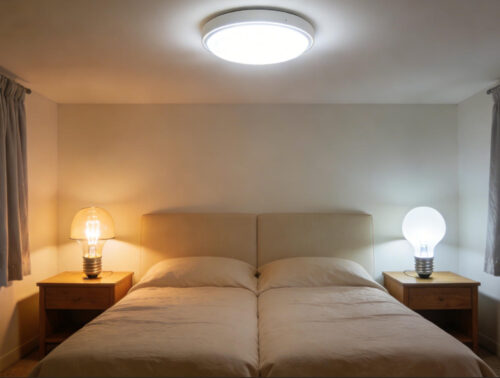
Think of it like this: an old incandescent bulb is like heating a piece of metal until it’s red-hot (producing mostly heat and some light), while an LED is like a digital device that directly converts electricity into light with incredible efficiency.
Key Components of an LED Bulb:
- LED Chip(s): The heart of the bulb. This tiny solid-state semiconductor emits light.
- Heat Sink: The fins or casing that draw heat away from the chip. Proper heat management is crucial for LED’s long life.
- Driver: A small internal circuit that converts your home’s AC power to the DC power the LED chip needs. It acts as the bulb’s “brain” and power regulator.
- Optics/Lens: The plastic dome that evenly distributes and sometimes focuses the light from the chip.
The Ultimate Showdown — A Complete Comparison of Three Lighting Technologies
To make an informed choice, let’s see how traditional incandescent, compact fluorescent (CFL), and modern LED bulbs stack up across key factors.
| Comparison Item | Incandescent | CFL (Energy-Saving) | LED |
| How It Works | Heats a filament until it glows. | Electric current excites mercury vapor. | Semiconductor emits light directly. |
| Energy Efficiency | Very Low. ~90% energy wasted as heat. | Medium. Saves ~70% vs. incandescent. | Excellent. Saves 85%-90% vs. incandescent. |
| Lifespan | Short. ~1,000 hours. | Moderate. ~8,000 hours. | Very Long. 25,000 – 50,000 hours. |
| Cost Over 10 Years (Example for 60W equivalent) | Highest (Bulb cost + High electricity cost). | Medium (Bulb cost + Medium electricity cost). | Lowest (Higher bulb cost + Very low electricity cost). |
| Environmental Impact | High carbon footprint. | Contains mercury; requires special disposal. | No toxic elements; fully recyclable. |
| Light Quality & Flexibility | Warm light, instant full brightness. Not dimmable. | Light can be harsh; slow to brighten. Most not dimmable. | Warm to cool options; instant on. Fully dimmable (if specified). |
Key Takeaways:
- Think Total Cost, Not Just Price Tag: LED wins on Total Cost of Ownership. Its higher upfront cost is quickly offset by massive energy savings and a lifespan that means you may not have to replace it for over a decade.
- The Mercury Issue: CFL bulbs contain a small amount of mercury, requiring careful disposal if broken. LED bulbs contain no toxic materials, making them safer for your home and the environment.
- Performance & Convenience: LEDs offer the instant, bright light of incandescents, combined with superior energy efficiency. They also provide greater flexibility in color temperature and dimming capabilities.
The Practical Guide — LED Wattage & Brightness Equivalents
“What LED wattage do I buy to replace my old bulb?” Have you often asked yourself this? Actually, you don’t need to consider wattage—instead, pay attention to lumens. You can also read our article “how many watts of led light for a room”?
The Core Concept: Lumens, Not Just Watts
- Watts (W) measure energy consumption (how much electricity a bulb uses).
- Lumens (lm) measure light output (how bright a bulb is).
Old Way
“I need a 60W bulb.”
(Focused on energy input)
New Way
“I need an 800-lumen bulb.”
(Focuses on light output)
LED Wattage Conversion Chart
Use this table to find your perfect match.
| Desired Brightness (Light Output) | Old Incandescent Wattage | Typical CFL Wattage | Recommended LED Wattage |
| ~450 lumens (Soft, ambient light) | 40W | 9W – 13W | 4W – 6W |
| ~800 lumens (Standard room light) | 60W | 13W – 15W | 7W – 10W |
| ~1,100 lumens (Bright light for tasks) | 75W | 18W – 20W | 11W – 14W |
| ~1,600 lumens (Very bright, large spaces) | 100W | 23W – 30W | 15W – 20W |
To replace a traditional incandescent bulb, divide the old wattage by 8 to 10 to get the approximate LED wattage needed for the same brightness.
Example: A 60W incandescent → 60 ÷ 10 = a 6W LED (or a 7-10W LED as shown in the table).
Quick Shopping Tip: When buying LED bulbs, ignore the “W” and look for the “lm” (Lumen) number on the packaging to compare brightness accurately.
How to Choose the Right LED Bulb for Every Room?
Choosing the perfect LED isn‘t just about brightness. The right color temperature and features create the ideal atmosphere and function for each space.
1. Choose by Color Temperature (Light Color)
Color temperature is measured in Kelvins (K). It determines whether the light feels warm and cozy or cool and energizing.
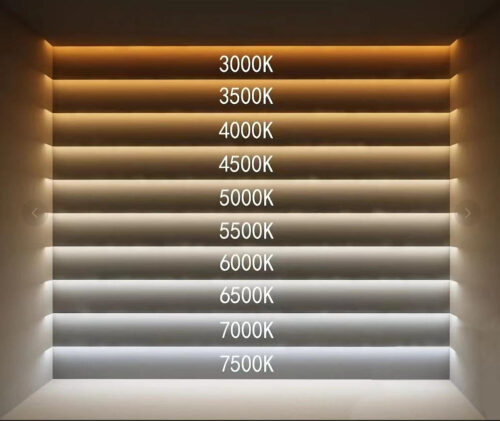
| Kelvins (K) & Name | Light Feel & Color | Best For |
| 2700K – 3000K (Warm white light / soft light) | Warm White / Soft White Yellowish, cozy, relaxing light. | Bedrooms, Living Rooms, Dining Rooms |
| 4000K – 4500K (Cool white light / natural light) | Cool White / Natural White Neutral, clean, focused light. | Kitchens, Bathrooms, Home Offices, Studies |
| 5000K – 6500K (sunlight) | Daylight Bluish, very bright, simulating daylight. | Garages, Basements, Workshops, Retail Stores |
2. Choose by Room & Function
Living Room / Bedroom
Recommendation: Choose warm white light (2700K-3000K) to create a relaxing and cozy atmosphere.
Tip: Consider using dimmable bulbs to adapt to different activities like watching movies or reading.
Kitchen & Bathroom
Recommendation: Choose natural white light (4000K-4500K) to ensure clear, accurate vision during food preparation and personal care.
Tip: Opt for bulbs with a high Color Rendering Index (CRI >90) to make food and skin tones appear more true to life.
Home Office & Study
Recommendation: Choose natural white light around 4000K to help maintain focus and reduce eye strain.
Tip: Ensure sufficient brightness (high lumen output) and consider adding task lighting with desk lamps.
Garage, Laundry & Utility Areas
Recommendation: Opt for daylight-colored bulbs around 5000K for maximum brightness, facilitating tasks and locating items.
Tip: Consider LED products with higher dust and moisture resistance ratings to withstand varying environmental conditions.
3. Don‘t Forget These Key Specs
- Base Type: Identify your lamp base type. The most common are E27 (standard screw base) and E14 (small screw base). Spotlights typically use GU10 (bayonet base) and similar types.
- Color Rendering Index (CRI): Measures a light source’s ability to accurately reproduce the true colors of objects, rated on a scale of 0-100. Choose CRI >80; for reading, makeup application, or kitchen areas, CRI >90 is optimal.
- Dimmability: If using a dimmer switch, you must purchase LED bulbs explicitly labeled “Dimmable.” Not all LEDs are dimmable.
Tip: Check the packaging for a list of compatible dimmers.
Whether replacing old bulbs or renovating, LED is the top choice for modern lighting. Just remember: Look at lumens for brightness, check color temperature for ambiance, and verify certifications for quality.