



ما يجب أن تتضمنه ورقة المواصفات
أحد عشر عنصرًا، ومعظم أوراق المواصفات تفتقد ثلاثة منها. ما الذي تتضمنه أوراقنا، باستخدام HL-A065 كمثال، وأي عنصر من العناصر المُغفلة يتسبب في معظم المشاكل في الموقع.
A profile spec sheet is not a brochure. It is the document used to determine part compatibility and later verify receipt. Ours runs to two pages with eleven sections. Some sheets are missing three of them, and the same three every time.
What are the eleven blocks?
Using HL-A065 as the example, a recessed body at 15.5 × 12.5 mm with a 6 mm strip:
| # | Block | What it carries |
|---|---|---|
| 1 | الطراز | The exact reference, and the drawing it belongs to |
| 2 | الميزات | What the section is for, in four lines or fewer |
| 3 | المواد | Alloy, and what the cover is made of |
| 4 | السطح | Anodized or painted, and the color |
| 5 | عرض الشريط | The PCB width the body is built around |
| 6 | الطول | The supply basis |
| 7 | التطبيق | Where it is normally used |
| 8 | Section drawing | Every dimension, with what each one measures |
| 9 | الإكسسوارات | End cap, cover, clip, rope, connector, all named |
| 10 | Cover options | Which covers fit, and what each does to the light |
| 11 | Wiring | Polarity and any control conductor |
Two more often sit on separate pages: a structural image of the assembly, and an effect image showing the light.
Which three are usually missing?
The strip width. Without it, the sheet describes a shape, not a product. A section drawing tells you the channel. Only a stated strip width tells you what the body is for.
The accessory names. "End caps included" is not a specification. Which cap, in which material, closed or with a cable entry: those are the questions that come back at the packing stage.
The cover options. A section may accept four covers, and each one changes the light line. A sheet that says "with diffuser" has left the most visible decision unstated.
What does each block need to say?
Model and drawing. The reference has to be unambiguous, and it has to match the drawing beside it. Most confusion in a profile order comes from a sheet and a drawing revised on different dates.
Features. Four lines is enough. Ours reads:
- sharp lines, professional industrial design
- imported PC or PMMA diffuser, uniform soft light
- AL6063, good heat dissipation
- closed-fitting end cap without screws
That last one is a specification, not a selling point. It tells the installer there is no screw to lose.
Material. Alloy and cover material together. HL-A065 is AL6063 + PC/PMMA. HL-A092 is AL6063 + silicone strips, because that section takes a silicone cover instead of a rigid diffuser. The two are not interchangeable, and the sheet shows that.
Surface. Anodized or painted, and the color. Our range is anodized or painted throughout, and the color is a separate callout. A matched color runs on a different schedule from a standard one.
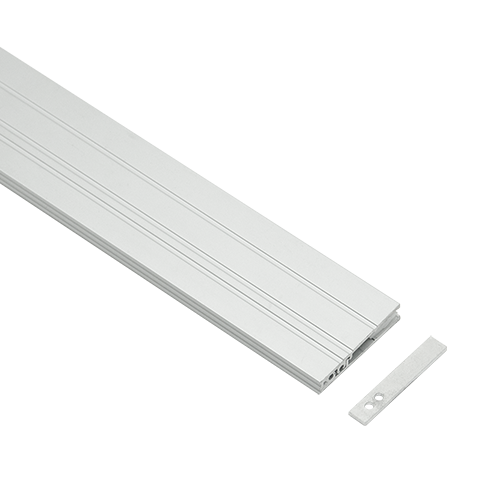
Strip width. One figure, stated as the PCB width. HL-A065 takes a 6 mm strip, HL-A092 takes 4 mm, HL-BAPL067-F takes 8 mm. This is the number that decides whether a project can use the profile at all.
Length. The supply basis. Our profiles come in any length up to 4 m, cut to your size, so the sheet should say that. "Standard lengths" tells the buyer nothing on a project with a 3.8 m run.
Application. Where the section is normally used. It is the fastest way for a buyer to check whether their details are the ones the profile was designed for.
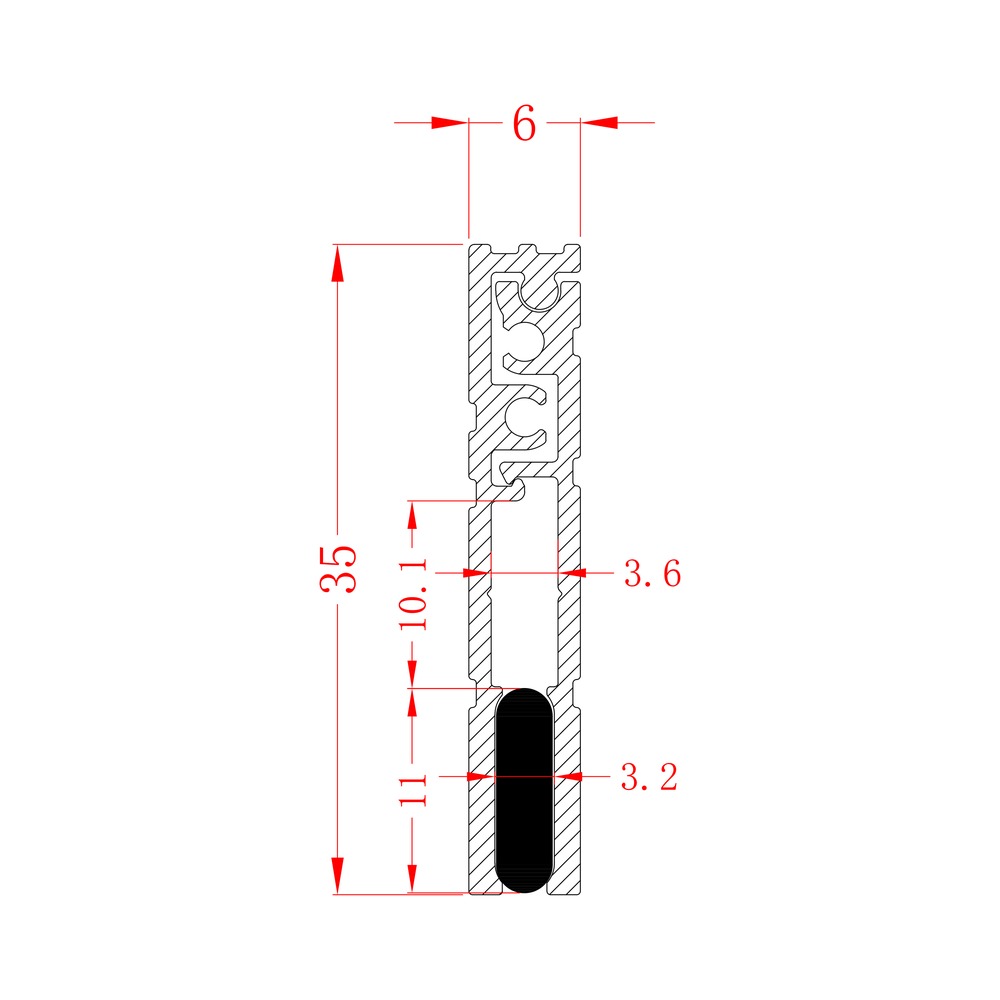
Section drawing. Every dimension, and what each dimension measures — the part most drawings omit. On HL-A065 that means a 15.5 outer width, 12.5 outer height, 9.7 aperture, 9.7 cavity depth and 7 channel width. Five numbers, five different jobs.
Accessories. Named, not described. The HL-A065 sheet lists end cap BAPL002S in plastic, a stainless steel clip, and no connector. That last blank is information: the section is for short runs.
Cover options. Which covers fit, and what each does. HL-A065 accepts PC and PMMA in opal matte, clear, semi-clear and opal. Four options that produce four different light lines from the same body.
Wiring. Polarity and any control conductor. The HL-A065 sheet shows 24V+/24V-/Tc, and A092 shows the same without the control conductor. A buyer wiring a dimmed circuit needs to know which of those the section provides.

What belongs on the second page?
The parameters fill page one. Page two answers a different question: what the assembly looks like, and what it looks like lit.
Three items belong there.
A structural image of the section with cover and strip in place. A section drawing shows an empty extrusion. The structural image shows it assembled, which tells an installer how the cover seats and how far the strip sits below it.
An effect image. Not a render of the product, but the light from it: the line as it reads on a surface. It is the only item on the sheet that shows what the buyer is specifying.
A wiring diagram. Polarity, and any control conductor the section carries. Small, and the item most often left out of a two-page sheet, which is why it ends up being asked for by email.
Two things do not belong on page two: a photograph of the factory, and a logo wall of certifications. Neither helps anyone decide whether the profile fits. The certificates themselves belong in a separate document, where a buyer can check them.
What should not be on a spec sheet?
Three things that appear often and belong elsewhere.
Commercial terms. A spec sheet describes a product, an order covers supply, and mixing them makes both harder to revise.
Claims without a basis. "Best heat dissipation in the industry" is not a specification. A section drawing, an alloy callout and a wall thickness are.
An IP rating, on a bare profile. Water resistance comes at assembly: cover seated, ends capped, cable glanded. A sheet that implies the extrusion is IP65 describes an assembly it does not show.
What does a complete sheet let you do?
Three things, all before ordering.
- Check the fit: strip width against channel, outer height against available depth.
- Check the accessories: whether a connector exists, whether clips come with it.
- Check the light: which cover, and therefore what the line will look like.
If a sheet cannot answer those three, the inquiry will, but it takes a day. Our range carries all three per model, and the contact page answers what a sheet leaves out.
How long should a spec sheet be?
Two pages are enough for a catalog section: one for parameters and accessories, one for structural and effect images. Longer sheets usually repeat instead of adding.
Is a PDF drawing better than a table?
Both, and they answer different questions. The table lets you compare models. The drawing lets you check one against your detail.
Why does the sheet list a strip width instead of an inner width?
Because the strip width is what the buyer has. The channel in the drawing is wider: 7 mm of channel for a 6 mm strip on HL-A065.
Should accessories be on the same sheet?
Yes, including the ones that are not supplied. Knowing that a section has no connector is as useful as knowing it has clips.
What is missing from most sheets you receive?
The cover options and the accessory names, the two blocks that decide whether the delivery is usable on site.

نقوم بتصميم وتوريد مقاطع الألمنيوم المزودة بمصابيح LED والإضاءة الخطية — ما يزيد عن 200 مقطع مع موزعات الضوء والتركيبات المطابقة لها، ونقدم خدماتنا للعملاء في أكثر من 100 دولة منذ عام 2007.
مقالات ذات صلة
أرسل لنا عرض الشريط وطول المسار والوجهة — وسنقوم بمطابقة المقطع الجانبي والناشر والتجهيزات، ونقدم لك عرض الأسعار في غضون يوم عمل واحد.
ابدأ استفسارك