



LED Profile Sourcing: The Order of Operations
A working timeline for buying LED profiles: what to settle before price, what a sample proves, what to check at delivery, and where projects slip.
A profile project rarely fails at the drawing stage. It fails after the drawing is approved and the sample passes, somewhere between the purchase order and the ceiling. The section arrives, the diffuser will not seat, the second batch reads a shade off the first, and nobody can name the decision that caused it. This page outlines the order of operations that keeps those failures off-site.
1. Decide What You Are Actually Buying
Two quotes for the same ceiling can describe two different products, and the difference is not the price per meter.
Buying profile by the meter is buying a bill of materials: extrusion, diffuser, strip, end caps, clips, driver. Assembly happens in your workshop or on-site, so the pairing and electrical safety of the finished luminaire remain with you.
Buying a finished fixture is buying a part number. Body, board, driver, and diffuser arrive as one tested unit with one declaration behind it.
The project that mixes the two without saying which is which is the one that argues about who signed what.
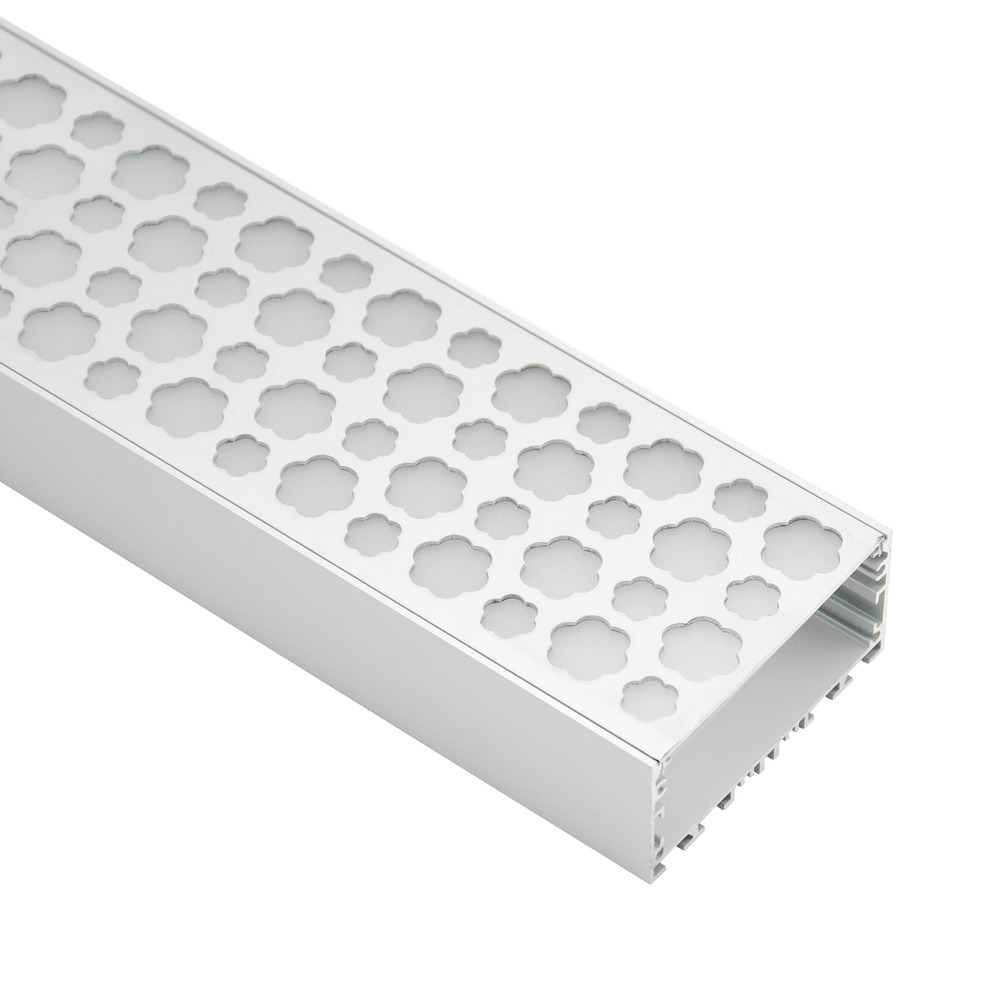
"Custom" adds a second decision, and it usually gets phrased badly. It covers four things: cutting a stock bar to length, changing finish or diffuser, machining an existing section, cutting a new die. Only the last changes the geometry, and only the last locks you to one source for the life of the building. Most projects asking for custom need one of the first three. Custom profile vs standard stock sets out the four levels.
2. Pin the Section Before You Talk Price
A section drawing carries a handful of unlabeled numbers. Four decide whether the order works.
العرض الخارجي is what the room sees. عرض القناة is the gap at the base where the strip sits, and it is the number that stops orders. Visible height is how far the body drops below the ceiling or sits inside the void. عرض الشريط is what your PCB actually is, and it needs clearance for adhesive, flat seating, and solder pads.
A strip a millimetre too wide does not fit "tightly": it sits proud, lifts the diffuser at the groove, and will not close under an end cap.
"Same size" is not a shared language. One listing quotes outer width, another the channel, another the strip width the body was built around. HL-BAPL031 at 19.6 × 33.4 and HL-BAPL033 at 19.6 × 38.5 both read 19.6 mm outside, at different depths and for different strips.

At the other end, HL-B7535A is 75 × 35 mm with a hollow-out body sized for strip up to 64 mm, and HL-BAPL019 is 42.3 × 34.7 mm on a 32 mm platform. A wide body is not automatically a wide channel, and a wide channel is not automatically the right optic.
Ask which figure a listing quotes before you compare price. How to read a profile drawing walks through one number by number.
3. The Finish Decision Comes Earlier Than People Think
Finish gets treated as a colour choice made at the end. It is a dimensional and scheduling decision that belongs with the section.
Anodizing converts the surface into an oxide layer that is part of the metal. It does not peel, it barely changes geometry, and a properly sealed layer is the more durable answer on a coast. A quote that says "anodized" with no thickness and no sealing method is a word, not a specification.
Powder coating lays a cured film on top. It gives you any RAL colour and covers a trimless body that has to disappear into a painted wall. Two costs come with it. The film adds thickness on every face, including the diffuser groove and the cap recess, so a tight section can stop accepting its cover. And the colour has to be batched.
Batch consistency is where projects get surprised. Dye lots shift and powder batches shift. If the line will be read as continuous, ask how the finishing batch will be held.
Write finish as three parts, not one word: process, thickness, treatment. Then add the sentence that prevents the assembly problem. Confirm the groove and cap recess are masked or sized to take the film. Anodized vs powder-coated aluminum covers the coastal argument, which turns on sealing rather than process name.
4. What Goes in the RFQ
Most quotes come back incomplete because the inquiry missed the three numbers the quote depends on: strip width, cut length per run, quantity with a unit. Everything else is a modifier.
The cut list is not. Bars are cut to your lengths, so someone has to decide what those lengths are. A cut list arriving after confirmation stops cutting, not extrusion.
Table 1. The RFQ checklist
| Item | What to state | Why it matters |
|---|---|---|
| Section | Model plus the three key dimensions | Confirms you mean the same body |
| Strip | PCB width and watts per meter | Decides which sections are possible |
| Lengths | A cut list per run, with the total | Cutting is scheduled from this |
| Quantity | Meters or pieces, stated | A number without a unit is not an order |
| ناشر | Material and finish: opal PC, opal PMMA, clear, prismatic | Each changes the light line |
| الانتهاء | Process, colour reference, thickness, masking | Turns a colour word into a spec |
| الإكسسوارات | End caps, clips, connectors, by name | Not every section has a connector |
| التعبئة | Carton or pallet, maximum length labelling | Sets freight and site storage |
| Destination | City, country, mode | Without it, a quote is not a delivered figure |
What to send for an accurate quote shows a complete inquiry you can copy. What a spec sheet should include shows what the reply ought to contain. Two lines decide whether the delivery is usable: the diffuser and the connector, which may not exist for the section you chose.
5. Samples: What a Sample Can and Cannot Prove
Sample approval is the most over-read signature in the process. A sample is a statement about a design. It is not a release of a production batch.
What it does well: shows the section, the diffuser seating, how the end cap engages, whether the strip lies flat at the depth you planned. Held under the light in the actual room, it tells you whether the line reads the way the render promised.
Table 2. What a sample proves, and what it does not
| Question | A sample answers it | Only the run answers it |
|---|---|---|
| Section matches the drawing | On one cut length | Whether every bar holds tolerance |
| Diffuser seats without force | On one body | Whether the groove stays consistent |
| Strip sits at the right depth | Yes | Whether LED pitch and binning hold |
| Finish is the approved colour | On that bar, under that light | Whether the next batch matches |
| The run is straight | No | Whether twist and bow stay inside tolerance |
| Packing survives freight | No | Whether cartons and pallets hold up |
The gap is closed by paperwork, not by more samples. Put diffuser material, finish specification, tolerance and packing into the order, so the batch is measured against a document instead of a memory. If the line is colour-critical, hold a signed approval bar from the run.
6. Volume, Tooling and the Honest Conversation About MOQ
Minimums annoy buyers because they look arbitrary. They mark the point where a batch process stops losing money.
Extrusion starts with a press. Die mounted, billet heated, first lengths checked before anything sellable exists. That setup costs the same on a short run as a long one, so a section that must be set up carries a floor and a running section does not.
Anodizing is a tank. Parts are racked and run as a load, so a small order still takes rack space and a slot. A standard colour joins a scheduled load; a match colour waits until there is enough material to fill one.
Powder adds a colour change: cleaning the booth and the gun train, so colours run when the schedule says.
Two consequences follow. The minimum belongs to the section and finishes together, not to "profiles" in general. And several sections in one order share setup and finishing, which is why a mixed order often clears the floor when one line does not.
Below the minimum, take a sample length rather than a discounted production order. Volume will not buy speed on a new die: a larger order does not make tooling faster, and may take longer to run. MOQ and lead time explain why the two figures move independently.
7. Inspection and Acceptance
Acceptance is where the paper meets the pallet. Do it before the material goes up, against the approved drawing, the spec sheet, the order, and the packing list.
Check the section at both ends of a bar, not the middle. A body inside every cross-sectional tolerance still leaves a gap at a joint if the end was not cut square.
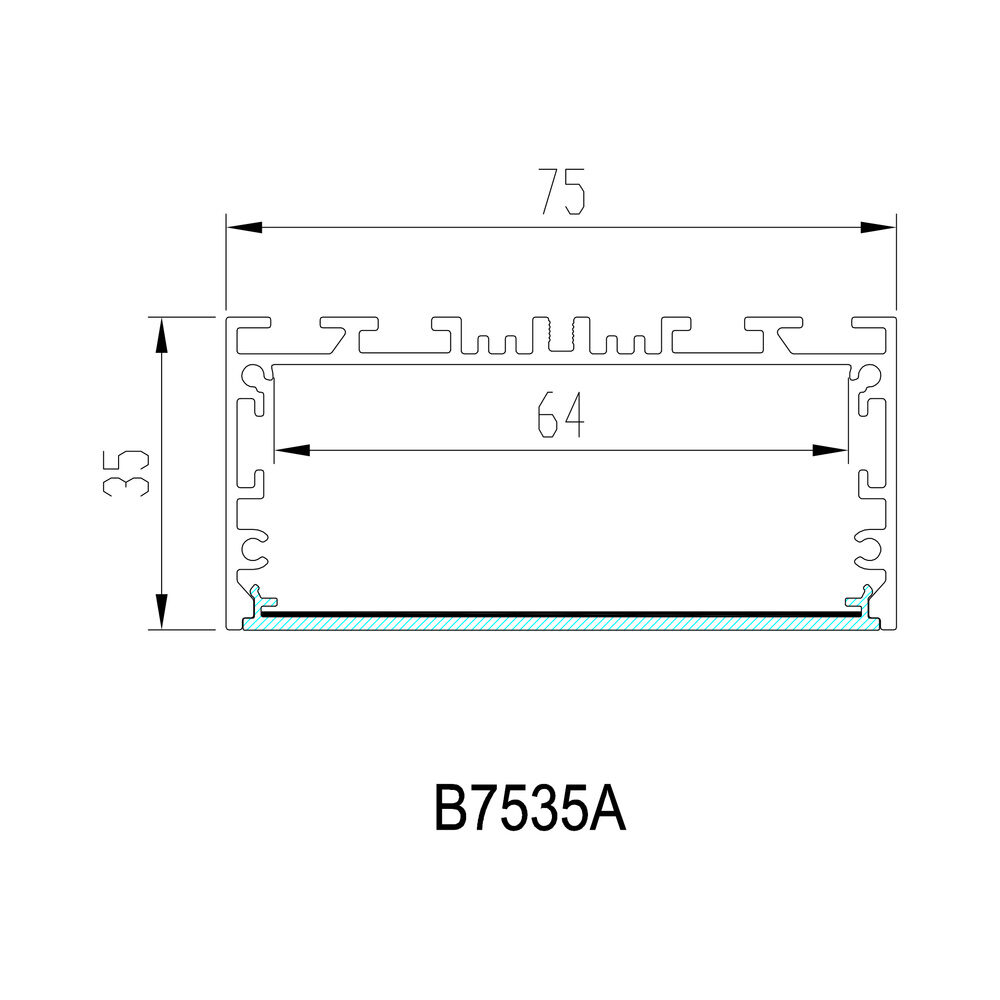
Table 3. Incoming inspection checklist
| تحقق | كيف | Send it back if |
|---|---|---|
| Section profile | Both ends of a bar against the drawing | Channel or aperture is out |
| Wall thickness | At the points named on the drawing | Below the drawing minimum |
| Cut length and squareness | Tape and square at the ends | Out of length, or the joint will not close |
| الاستقامة | Sight along the bar in daylight | Twist or bow shows at viewing distance |
| الانتهاء | Inspect under the light it will live in | Scratches, bare metal, shade across cartons |
| Groove and cap fit | Seat a diffuser and cap from the delivery | Cover will not seat, cap stands proud |
| Diffuser consistency | One length per carton, laid in a line | Visible transmission difference |
| Accessories and packing | Count against the packing list | Short, wrong revision, crushed cartons |
8. Where Projects Actually Slip
Four failures account for most of the delays we see, and none is a manufacturing defect.
The drawing version was never locked. A section drawing gets revised, the spec sheet does not, and two documents circulate, one to the factory and one to site. Prevention: give every drawing a revision block, put that revision on the PO, and confirm production is working from it and not any other.
The diffuser changed late. Someone substitutes an "equivalent" material to protect a date or a budget. It seats, it looks close in a photo, and it changes the line. Prevention: name the material and finish in the order, and treat any substitution as a written change with a new approval.
The packing was never counted. Long bars set pallet dimensions, container loading, and site access. A late cut list can push the longest bar past what the agreed pallet takes. Prevention: agree packing and maximum packed length with the order, then check carton dimensions against the lift and the door.
Destination requirements were asked at the end. Documents, marking and conformity are easier to meet before production than after. Prevention: ask in the first email, then confirm the document name, the model you bought,t and the version you bought. Not the company. Not a sister product.
9. Questions to Ask Before the PO
Copy these into an email. Each answer closes a gap that otherwise reopens on site.
- Which figure on your listing is the channel width, and which is the strip width the body was designed around?
- Which diffusers fit this section, and what does each do to the light line?
- Can the groove and cap recess be masked or sized to take the coating?
- What thickness and what sealing or curing does the finish carry, in writing?
- Does a connector exist for this section, and if not, how is a long run joined?
- What is the minimum for this section in this finish, and how does it change across a mixed order?
- What is the cut list deadline, and what happens if it changes after confirmation?
- How will the bars be packed? What is the longest packed length? How is the pallet labelled?
- Which drawing revision will production work from, and can you confirm it against our PO?
- What documents arrive with the shipment, and do they name the exact model supplied?
Question six is the one people avoid. It tells you whether your order is a production run or a sample length.
10. The Sequence, Compressed
- Pick the buying model, and the level of custom.
- Fix the section against the strip, the detail, and the void.
- Fix the finish, thickness, and masking.
- Send the RFQ: cut list, quantity basis, destination.
- Approve a sample; put the approval in the order.
- Confirm the minimum for that section and finish.
- Inspect on arrival against the documents.
- Hold one spare length per long run.
Every item on that list is a decision, not a duration. Sourcing problems rarely come from a factory being slow. They come from a decision made twice, in two places.
Ready to price a run? Browse the aluminum profile range — over 200 sections, each listed with outer dimensions and strip width. If nothing matches your detail, send the drawing and the strip width, and we will tell you which sections come closest.

نقوم بتصميم وتوريد مقاطع الألمنيوم المزودة بمصابيح LED والإضاءة الخطية — ما يزيد عن 200 مقطع مع موزعات الضوء والتركيبات المطابقة لها، ونقدم خدماتنا للعملاء في أكثر من 100 دولة منذ عام 2007.
Translation and copy review — terminology, clarity and consistency of the English text.
مقالات ذات صلة
أرسل لنا عرض الشريط وطول المسار والوجهة — وسنقوم بمطابقة المقطع الجانبي والناشر والتجهيزات، ونقدم لك عرض الأسعار في غضون يوم عمل واحد.
ابدأ استفسارك