


Note: To ensure and accuracy, this article follows the content creation and review process of the Helian Expert Team.
Up and Down LED Linear Lights: How to Eliminate Low-Ceiling Oppression with Light
If you have ever stepped into a modern office and felt an instant weight on your shoulders, the ceiling is probably to blame—not the work. Low ceilings and poor lighting can make any commercial space feel cramped and unwelcoming. The good news is that a smart lighting choice can fix this.
This article will show you how up-and-down linear lighting removes that heavy, closed-in feeling and turns ordinary rooms into open, comfortable spaces.
Why Traditional Commercial Spaces Feel So “Heavy”
1. Low Ceilings and the “Cave Effect”
In most commercial buildings, the distance from floor to ceiling is only about 2.6 to 2.8 meters. This meets building rules, but it does not feel spacious. When the ceiling sits in darkness, it creates what architects call a “cave effect.” The unlit surface seems to press down on everyone underneath it. This phenomenon can trigger real psychological stress in occupants.
The problem is not the ceiling height itself. It is the darkness. A ceiling that traps no light becomes a visual dead zone, and the brain interprets that blankness as confinement.
2. The Flaws of Standard Flat-Panel Lighting
For years, the default solution in offices and retail spaces has been the recessed panel light or the grid troffer. These fixtures push all their output straight down. The result is predictable: the floor glows bright while the ceiling stays in shadow. The contrast between the illuminated work surface and the dark overhead plane is harsh. For employees staring at screens all day, their eyes must constantly adjust between a bright task area and a gloomy upper field. Eye fatigue builds up, and the whole room feels flat and lifeless.
The Solution: What “Up & Down” Linear Lighting Actually Is
1. A Two-Way Light Engine
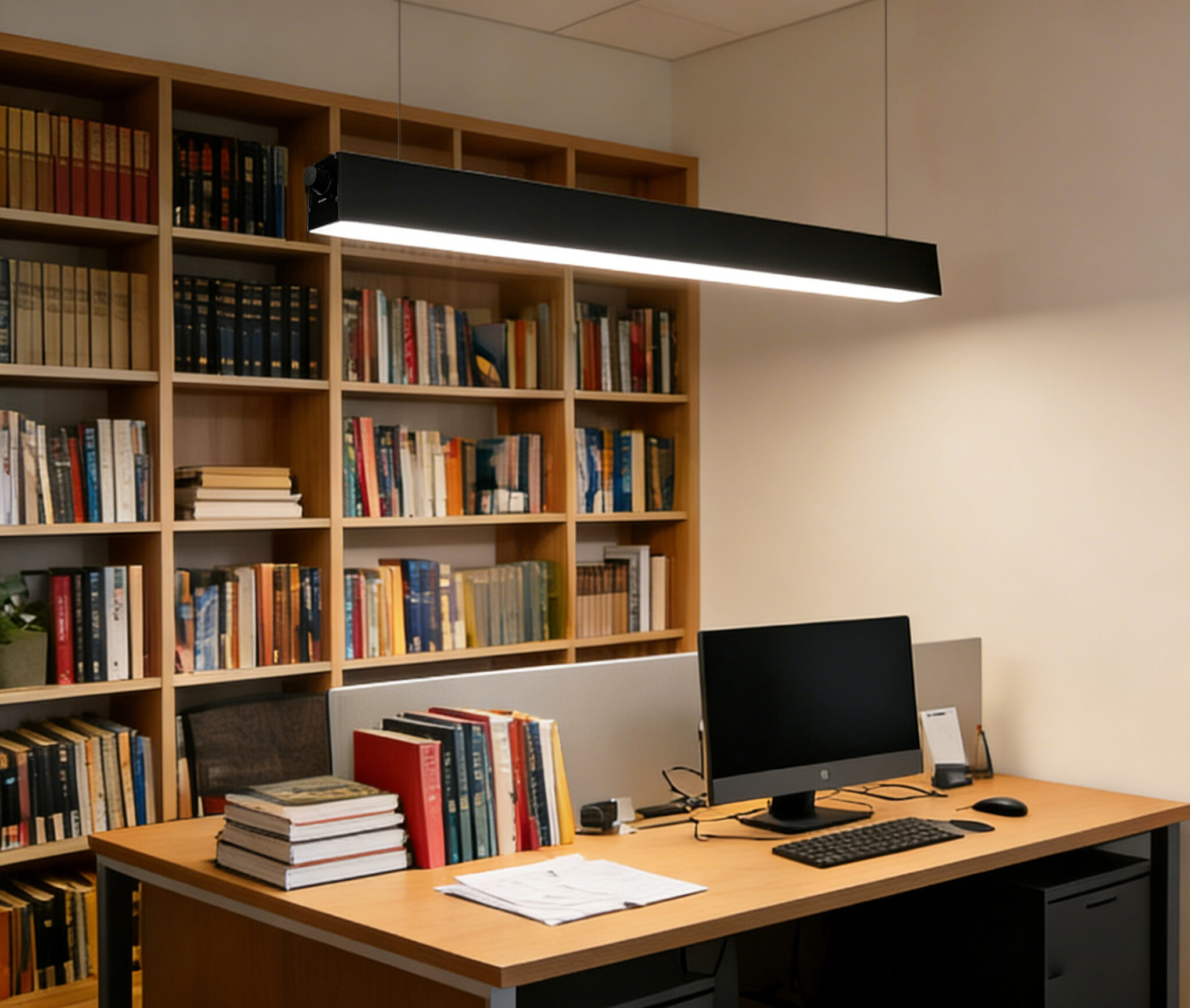
A bi-directional linear fixture does what a standard panel light cannot: it sends light in two directions at the same time. Take the HL-NA072-L12 as an example. One portion of its output aims downward to deliver task illumination onto desks and counters. Another portion fires upward, washing the ceiling surface with ambient light.
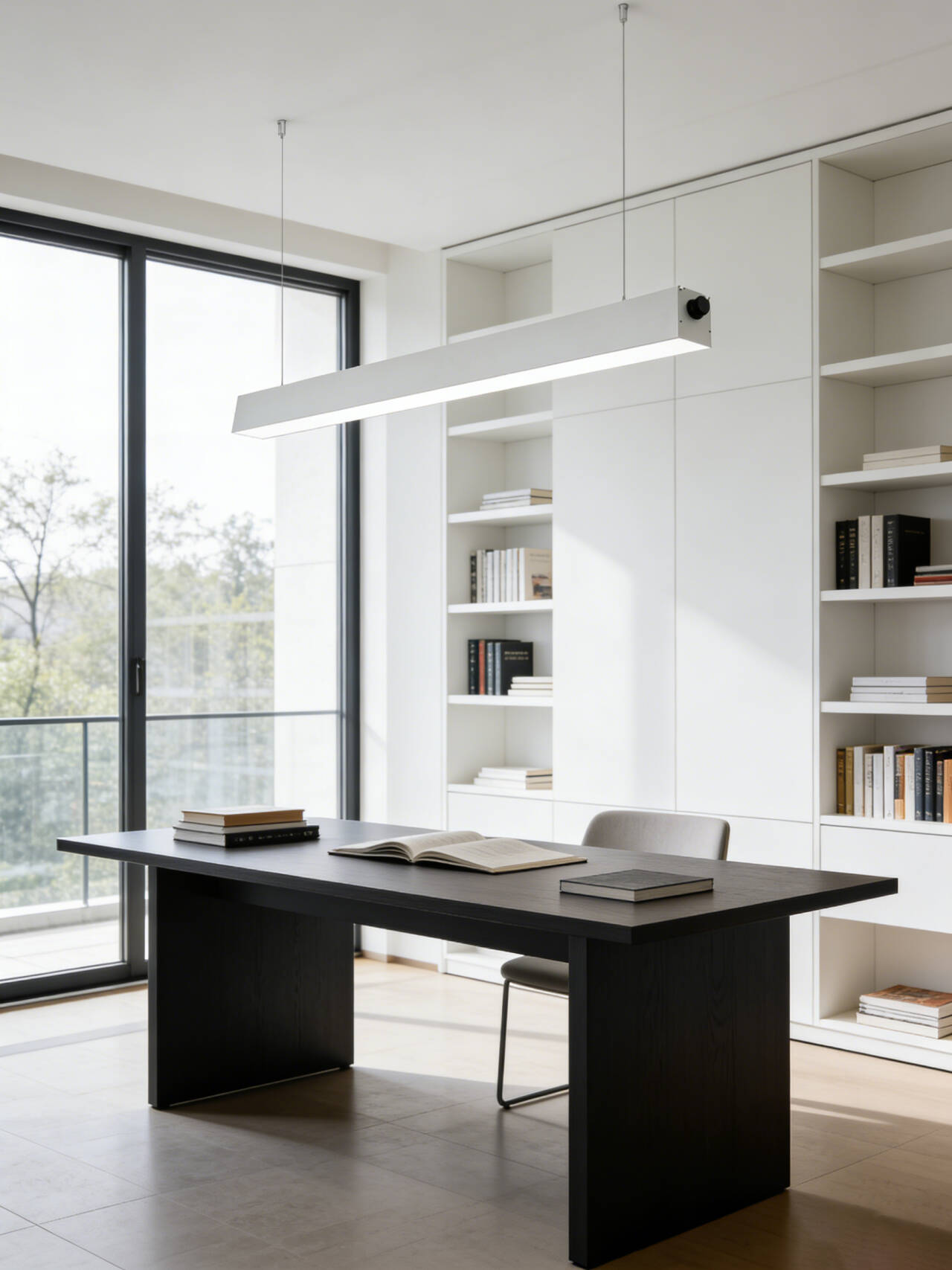
The upward light bounces off the ceiling and diffuses back into the room as a soft glow. This creates a layered lighting effect—bright where you need it for work, and gentle everywhere else.
2. The Right Beam Ratio for Comfort and Function
Not all up-down splits are the same. The HL-NA072-L12 uses a 40W downward / 10W upward power distribution. Other configurations in the industry range from a 70/30 split to a 60/40 split, depending on the space. The point is balance. The light aimed downward provides enough brightness for desk work (around 500 lux is a common target). The light aimed upward keeps the ceiling bright, so it feels welcoming instead of dark and heavy.
How Bi-Directional Linear Lights Solve Real-World Problems
1. Visual Lift: Borrowing Ceiling Height That Is Not There
When uplight hits a ceiling, the surface becomes a reflector. The light spreads across the entire plane and eliminates the dark void that makes a room feel short. From a visual psychology standpoint, a bright ceiling produces a sensation of upward buoyancy. The room feels taller—often by a perceived 20 to 30 centimeters—without any change to the physical structure. The “cave effect” disappears because the ceiling no longer behaves like a cave roof. It behaves like a sky.
2. Reducing Glare and Eye Strain
A space lit only by direct downlights forces the eye to shuttle between extremes: a bright screen, a bright desktop, and a dark ceiling. That constant re-adjustment drains focus and contributes to afternoon fatigue. With two-way lighting, the soft upward light fills the upper part of the room with a gentle glow. The contrast ratio between the task area and the surrounding environment drops. Employees looking up from their monitors encounter a soft, even brightness instead of a black hole. The result is lower visual stress and a workspace that feels calm rather than aggressive.
3. Clean Lines That Hide the Clutter
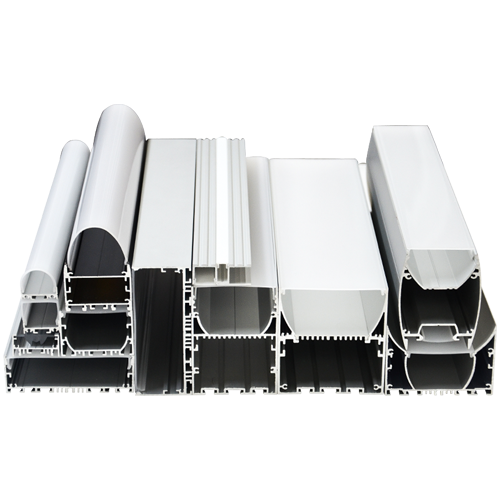
Many contemporary offices go with exposed ceilings or minimal suspension grids. This look can be striking, but exposed ductwork, pipes, and cable trays create visual noise overhead. A suspended linear light like the HL-NA072-L12 solves two problems at once. Its slim aluminum body comes in black, white, or silver. It creates a clean line that pulls your attention along the fixture, not toward the messy ceiling above. The steady upward glow hides the uneven ceiling, and the fixture itself becomes a design feature. You can connect multiple units end to end, creating a continuous line of light that makes the ceiling look organized.
Where Up-Down Linear Lighting Delivers the Biggest Impact
1. Open-Plan Office Zones
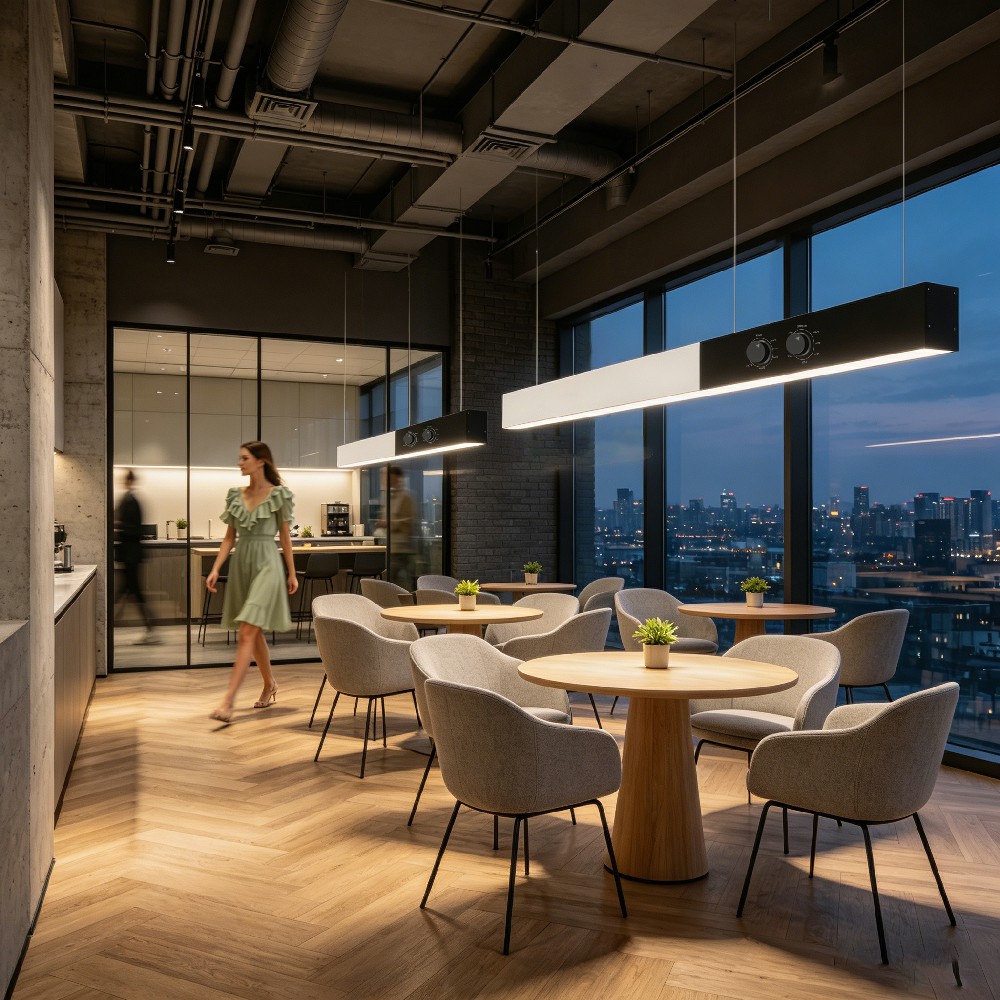
Open offices thrive on a sense of shared energy, but a low, dark ceiling can make collaboration feel draining. Bi-directional linear lights open up the space and give it an airy, transparent quality. Studies show that indirect uplight helps lower stress at work. If a company wants to create a lively, modern workplace like Google’s offices, this type of lighting is now a must-have, not just a nice extra.
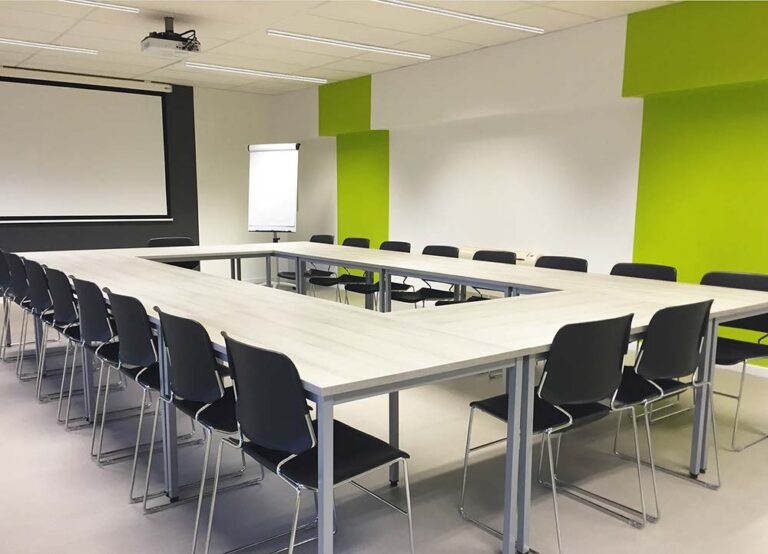
2. Boardrooms and Executive Suites
A conference room is a stage for client impressions. Linear pendants with both upward and downward output create depth and dimension that single-direction fixtures cannot match. The ceiling brightens, the walls feel taller, and the whole room looks polished and high-end. The HL-NA072-L12 offers four color temperature settings, from warm white (3000K) to cool white (6000K). This lets you change the room’s mood—warm and inviting for a morning meeting, crisp and focused for an afternoon work session.
3. Corridors and Transitional Areas
Hallways and elevator lobbies tend to be narrow, windowless, and poorly lit. They are “dead zones” that people pass through as fast as possible. A continuous run of up-down linear lights changes that equation. The upward light widens the perceived space, and the downward light provides safe, even illumination at floor level. A boring hallway turns into a design highlight that links different areas of the building with a steady flow of light.
Start with the Right Beam of Light
Good lighting design is about more than delivering lumens to a task area. It shapes how people feel inside a space. A dark ceiling that feels heavy, harsh glare from flat panels, messy exposed pipes—all these problems come from one thing: light that only shines downward.
Up-and-down linear lighting solves this by treating the ceiling as something to light up, not something to ignore. The room feels taller. The light feels softer. The architecture looks cleaner. For commercial spaces that need to perform for the people inside them, this is not a cosmetic upgrade. It is a fundamental shift in how the space works.
Planning an office or commercial project? Our team can help you choose the right up-and-down linear lighting for your space—including options with adjustable color temperature and connectable units. Reach out to us at [email protected] for a custom proposal or to request a sample evaluation.