



LED Profile vs Surface-Mounted Fixture: Which Linear System Fits Your Project
One quote lists extrusion, strip and diffuser separately; the other is a sealed luminaire. What each path asks of you on spares, optics and sign-off.
A 40-meter ceiling run gets quoted twice. The first quote is broken down by the meter: extrusion, diffuser, LED strip, end caps, clips, driver. The second is one part number for a sealed 4-foot fixture, multiplied by ten. In the render, both read as a single clean line. On the budget sheet, they land close enough that the decision gets made on price per meter.
That is the wrong door to walk through. One is a system you assemble on site; the other is a finished luminaire. They differ in who owns the light output, who holds spares in year four, and who signs the handover paperwork — and none of that appears in a per-meter comparison. Which way the line faces the room is a separate question; this one is about what you are buying.
This guide is for the person who has to choose: the contractor pricing a fit-out, the distributor building a stock line, the specifier defending the call at a design review.
1. Two Buying Models, Not Two Prices
What each quote actually contains
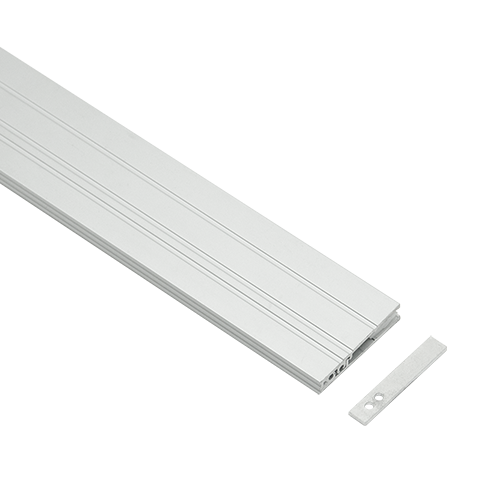
A profile quote is a bill of materials: extrusion, diffuser, LED strip, end caps, clips and driver, usually on separate lines, sometimes from two factories. The strip's width must match the internal channel of the section you picked.
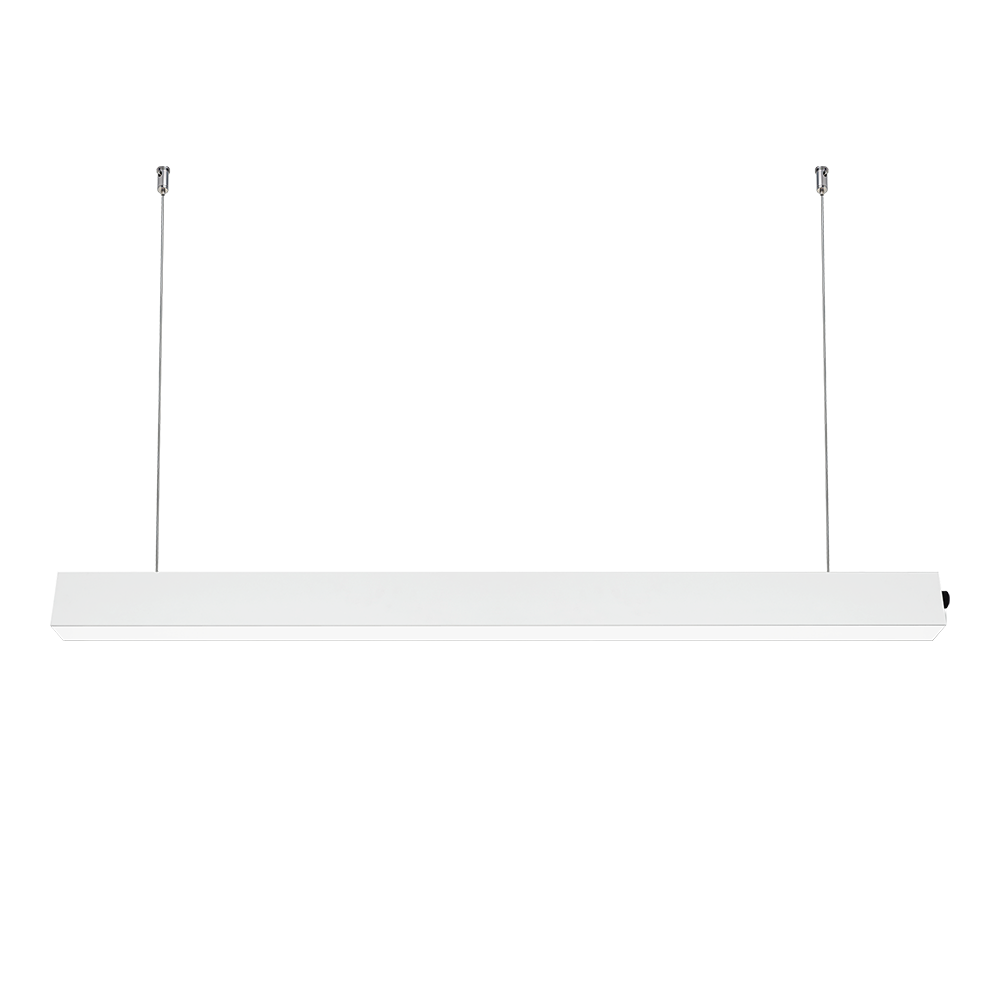
A fixture quote is a part number. Body, board, driver, diffuser, and mounting hardware are already inside it, tested as one assembly, packed as one carton.
Best fit for each
The profile model suits geometry that is not standard, sections whose visible width has to match an architect's detail, and installers who would rather cut on site. It also suits distributors holding extrusion in stock and pairing it with whatever strip a project calls for. The fixture model suits fixed modules — 4-foot or 8-foot bays, a grid ceiling set out to those dims — and procurement teams that want one supplier, one invoice, one warranty document.
Watch out for this
The kit quote that leaves out the driver, the clips and the end caps: three items that turn a length of aluminum into a working luminaire, and the easiest things in the world to discover late. On the fixture side, it is the sealed body with a proprietary board inside, where the only spare part is a new fixture in a model that has since been discontinued.
2. Who Owns the Light Output
The big benefit of buying a system
With a profile, the optical result stays adjustable until the day it goes up. Diffuser, strip depth inside the channel, strip pitch — all choices. If the first mock-up dots, you change the diffuser or set the strip further back. You do not change the fixture.
Best places to apply it
Ceilings where the line will be judged as a line: a boardroom table, a lobby soffit, a reception desk, a corridor meant to draw the route. Also any detail calling for a visible width that no catalog fixture happens to match.
Watch out for this
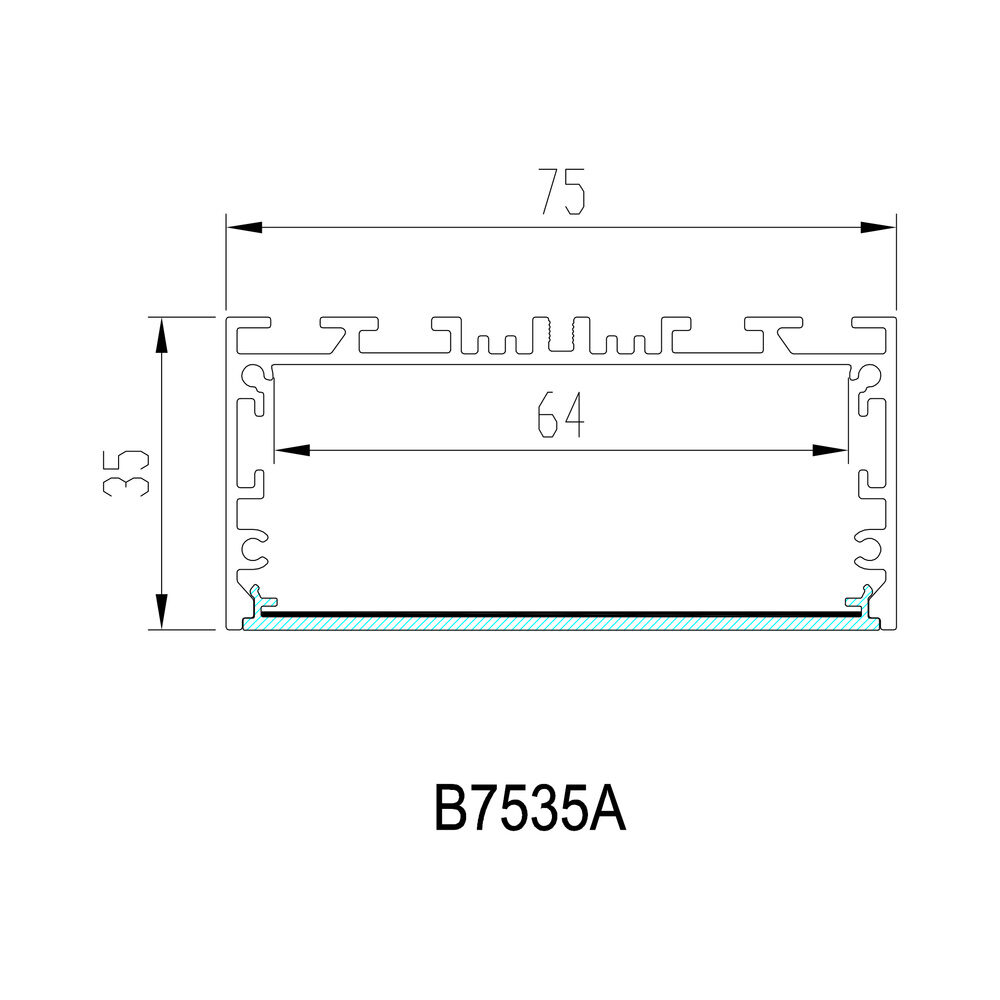
A system is only as good as the pairing. A 12 mm strip in a 64 mm channel sits far from the diffuser with nothing to bounce off: dots along the run, a dark edge at the lip. This is the most common failure we see when extrusion and strip are bought from two companies and the site is asked to make it work.
3. Spares and Repair in Year Four
Every linear installation eventually loses a driver or a section of strip. What happens next is the real difference between the two models.
With a profile, the strip is a consumable, and the extrusion is not. One failed section is replaced inside the channel while the other thirty meters of extrusion, diffuser, and clips stay exactly where they are. A failed driver is a driver, not a luminaire.

With a finished fixture, repair usually means replacing the unit, or ordering a factory board with a lead time attached. The risk is not the first failure but the third, after the model has been superseded: a run of ten fixtures with one visually different replacement in the middle reads as a defect even when every unit works.
The rule we give contractors is short. Carry a small percentage of strip and one spare driver per driver type per project. It costs little against the contract value, and it removes the phone call where nobody can help.
Watch out for this: if the spare strip comes from a different production batch, check it against the installed run before cutting it in. A close match on paper can read as a patch at night.
4. Where the System Wins: Length, Inner Width, Diffuser
Three variables decide whether a profile system can do what a finished fixture cannot.
Length. Profile is cut to the opening. Where the wall ends at 3.62 m, the section ends at 3.62 m. Sections are quoted in stock lengths — 4 m on HL-B7535A — which sets the practical limit before a joint; past that, sections are joined with connectors. Fixtures travel in fixed modules, so the last bay is short, over-lit, or filled with something that is not the same product.
Inner width. The channel sets which strip physically fits, which sets the output and the channel count available. It is the spec that gets skipped most often, and the one that cannot be fixed on site.
Diffuser. Flat, arched, deep-set or microprism. A flat PMMA diffuser on a shallow section gives a crisp narrow line; an arched diffuser spreads the source; a deep-set diffuser hides the diodes when the run is viewed from below; microprism softens a bright source in a room full of gloss.
Across the surface-mounted part of our range:
| Section | Size (mm) | Strip width it takes | Body, diffuser and mounting |
|---|---|---|---|
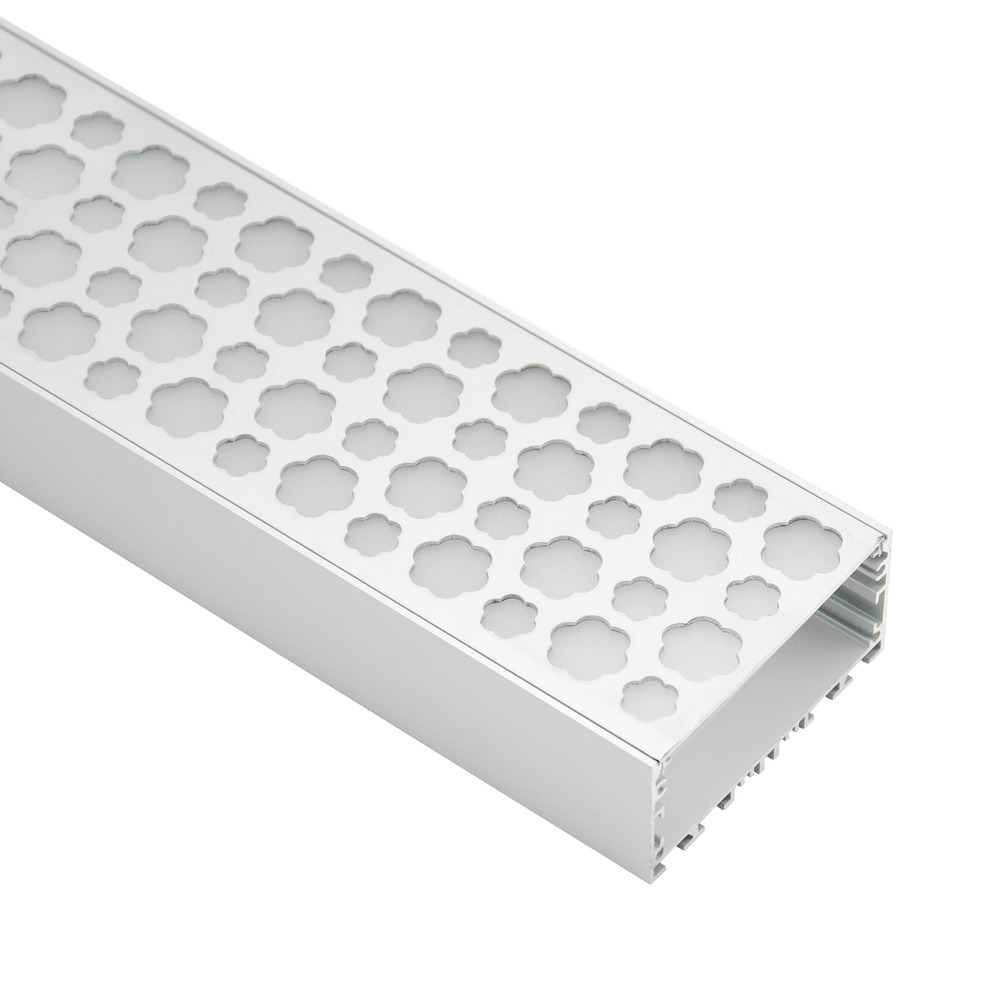
| HL-B7535A | 75 × 35 | up to 64 mm | Hollow-out body, AL6063 extrusion, anodized or painted, 4 m stock length |
| HL-B7555A | 75 × 55 | up to 32 mm | Perforated wide body |
| HL-B7580A | 75 × 80 | up to 32 mm | Perforated deep body |
| HL-BAPL019 | 42.3 × 34.7 | 32 mm platform | Microprism diffuser in clear, opal or semi-clear |
| HL-BAPL033 | 19.6 × 38.5 | up to 16 mm | Flat PMMA diffuser on a ribbed AL6063 base |
| HL-BAPL036 | 19.6 × 21.5 | up to 16 mm | Arched PC/PMMA diffuser, 16.5 mm channel |
| HL-BAPL031 | 19.6 × 33.4 | up to 16 mm | Deep-set PMMA diffuser, plastic clip mount |
| HL-BAPL022 | 48.2 × 27.9 | up to 12 mm | Stair surface section, screwless end caps |
| HL-BAPL01414H2 | 23.5 × 21.7 | up to 12 mm | Stainless steel clip mount, no drilling |
Stock length and finish are confirmed per section on the quotation.
5. Delivery and Minimums: What to Ask Before You Sign
On the kit side, one purchase order covers a whole ceiling, cut to the project's lengths, with low minimums on cut sections. The catch is coordination: if the extrusion and the strip come from different factories, the later dispatch date governs your program.
On the fixture side, standard modules ship from stock in cartons, and a site closes out quickly. The catch is change orders — once the PO is placed against fixed lengths, a change on site becomes a re-order, and a re-order on a sealed luminaire costs money that cutting a longer piece of extrusion never does.
Ask both suppliers three things before signing: where the volume break sits, what happens to the unit rate if the quantity drops, and whether uncut stock can be held for a second phase.
Watch out for this: a dispatch date quoted for the extrusion but not for the strip is not a delivery date. Get both, in writing, and compare them against your program.
6. Who Signs Off on Optics and Electrical Safety
This part of the decision gets discussed least and matters most, so it deserves a straight answer rather than a sales one.
In the kit model, the installed luminaire is assembled by you or your installer. The electrical safety of the finished assembly — driver selection, the integrity of each joint, grounding of the extrusion, ingress protection at the terminations — sits with the party doing the assembly. That is not a flaw in the model. For a contractor with an assembly bench and a documented process, it is the whole point: the assembly stays under their control.
In the fixture model, the factory ships a tested unit and issues the declaration for it. You buy one point of accountability, and inherit the factory's decisions about the board, the driver, and how serviceable the unit is.
Both work. What fails is the mixed case: a kit where nobody wrote down who signs the assembly documentation, or a fixture spec that quietly becomes a kit during value engineering. Settle it before the order. Where a project requires CE-compliant options, ask for the declaration covering the assembly as installed, not the components alone.
7. Quick Decision Table
| If this describes your project | Take | Why |
|---|---|---|
| Lengths are set by the walls, not by a module | Profile + strip | Sections cut to the opening on site |
| 4-foot or 8-foot bays, grid ceiling, tight opening date | Finished fixture | Cartons to ceiling, no site assembly |
| The line is the feature — lobby, boardroom, reception | Profile + strip | Diffuser and strip depth are selectable |
| Up-and-down light, or an aim that has to be adjusted | Finished fixture | Built in on HL-NA072-L12 (4-CCT selectable), HL-UA046-L12, HL-CB2830 |
| One supplier, one warranty document, procurement that buys part numbers | Finished fixture | Single part number per unit |
| Extrusion to be held in stock and matched to different strips | Profile + strip | The channel is reusable; the strip is the variable |
| Repair has to be a strip change, not a unit change | Profile + strip | Consumable inside a permanent body |
| Shallow void, nothing can be recessed | Profile, surface-mounted | Sections from 19.6 × 21.5 mm; clip-mounted versions need no drilling |
8. Summary: Match the Buying Model to the Building
The choice is about where risk sits, not about which product is better. A system puts the optical result and the assembly under your control and keeps the body serviceable for the life of the building. A finished luminaire puts a single signature on each unit and takes assembly out of your program.
Most large projects end up using both, and that is not a compromise. A common split: finished fixtures in back-of-house and storage where a part number is enough, profile runs on the ceilings the client will actually look at.
Final Expert Advice: Before you compare the two quotes, write down three things — the exact lengths the architecture gives you, the strip width you intend to use, and the name of the party who will sign the electrical declaration for the installed assembly. Those three answers usually settle the decision before price enters the conversation.
Want a second opinion on a take-off? Send us the run lengths, the strip width you have in mind, and a section through the ceiling; our engineering team will tell you which sections fit and what the jointing looks like. Browse the full aluminum profile range — over 200 sections with published dimensions and strip-width data — see the surface-mounted profiles used above, or read the office linear lighting guide. Ready to price a line: send your schedule here.
الأسئلة الشائعة
Can a profile-and-strip assembly be substituted where a surface-mounted fixture is specified?
Usually yes, but argue it on the right grounds. What the specifier protects is the visible body width, the depth below the ceiling, and the evenness of the line at eye level. A profile assembly can match all three if you choose the section against the ceiling detail rather than against the budget. What you cannot do is claim equivalence on paper. Build one meter, photograph it in the space at night, and put that next to the specified fixture.
Which option costs less overall?
The unit price is the wrong comparison, and it often points the wrong way. A profile system carries more line items and more site labor, but the parts that fail are cheap, and the extrusion lasts as long as the building. A finished fixture carries a premium for assembly and testing you would otherwise pay for in labor, but every repair is a unit. Compare installed cost — material, cut charges, labor hours, driver commissioning, one realistic repair in year four.
Who is responsible for electrical safety when we assemble a kit?
The party that assembles it. Once a driver is joined to a strip inside an extrusion, the assembly is a luminaire, and its safety — driver matching, terminations, grounding, protection at the joints — belongs to whoever built it. If that is your workshop, document the process and keep records per project. If a third party assembles on site, agree in writing before the order that they issue the assembly declaration. The failure mode is an unclear boundary, not the kit.
Can a continuous run exceed the 4 m stock length?
Yes, with joints. A 4 m stock length sets the point where you need a connector rather than a single piece, and connectors are a normal part of the system, not a workaround. Settle two things first: how the strip is fed across the joint so diode spacing reads continuously, and how many feed points the driver arrangement allows — feeding only one end is the usual cause of uneven brightness at the far end. Ask your supplier for the maximum run per feed.
What spares should we hold for a profile installation?
A small percentage of the total strip length, one driver per driver type on the project, a handful of end caps and clips, and — if sections were cut on site — one spare uncut length of the longest section. Keep them on the project rather than at a warehouse, labeled with the run they belong to. A strip and a driver cost very little against a contract and turn a potential closure into an afternoon's work.

نقوم بتصميم وتوريد مقاطع الألمنيوم المزودة بمصابيح LED والإضاءة الخطية — ما يزيد عن 200 مقطع مع موزعات الضوء والتركيبات المطابقة لها، ونقدم خدماتنا للعملاء في أكثر من 100 دولة منذ عام 2007.
Translation and copy review — terminology, clarity and consistency of the English text.
مقالات ذات صلة


أرسل لنا عرض الشريط وطول المسار والوجهة — وسنقوم بمطابقة المقطع الجانبي والناشر والتجهيزات، ونقدم لك عرض الأسعار في غضون يوم عمل واحد.
ابدأ استفسارك