



How to Inspect a Profile Shipment on Arrival
Three checks in the first hour decide whether a claim is possible later: count and accessories, key dimensions, and straightness along the bar. What each catches.
A profile delivery is easy to sign for and hard to claim on later. The three checks that matter take about an hour on a normal order, and they have to happen before the packaging is broken up and the bars are distributed to site — after that, there is no way to tell a transport fault from an installation one.
What do you check first?
Count, then accessories. In that order, because the count is the only thing that can be verified against the delivery note without opening anything.
| Check | How | What it catches |
|---|---|---|
| Bar count and cut lengths | Against the cut list | A short piece, before it is installed |
| Accessory count | Line by line, not by total | The short shipment found on site |
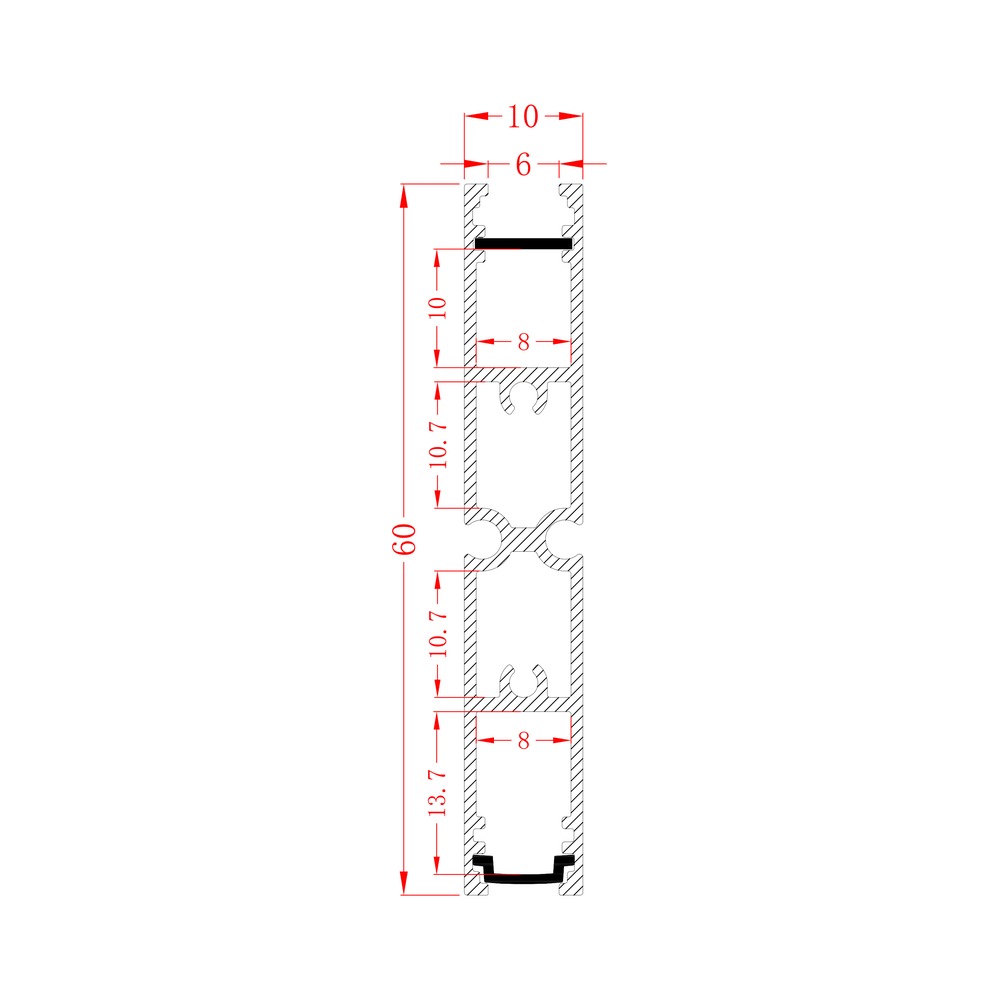
| Channel width | Caliper, three points on three bars | A strip that will not fit |
| Outer height | Caliper, several bars | A slot that will not take the body |
| Straightness | Lay flat, sight along the bar | A line that waves in the ceiling |
| Finish | Side by side, in daylight | Color difference between batches |
The bar count and lengths. Every bar should match the cut list. A bar cut 100 mm short is not a rounding error — it is a piece that cannot be used, and it is far easier to prove on the day of delivery than three weeks later.
The accessory count. End caps, clips, connectors, and ropes are small, packed separately, and the item is most often short. Count them against the order line by line, not against the total.
The packing itself. Bars are wrapped for a reason. Crushed cartons, protruding ends, or a pallet that has shifted are all evidence that something inside may be bent — and they are the evidence a claim needs if it is.
How do you check dimensions without a CMM?
With a caliper and a short list. You are not inspecting every dimension; you are checking the ones the installation depends on.
The channel width. The single most important figure on the section — it decides whether the strip fits. Measure at three points along a bar and at both ends: extrusion variation shows up as a taper or a tight spot, not as a uniform error.
The outer height. This is what the slot has to accommodate. Measure across several bars, because a die that is wearing will drift through a run rather than being wrong on every piece.
The aperture. Measure the opening between the cover grooves. It is the number that decides how the light line reads, and it is the one most likely to be assumed rather than checked.
Three bars out of a delivery is a reasonable sample for a catalog section. If any of them is out, check more — the question is whether it is one bar or the run.

Why does straightness matter more than a millimeter?
Because a millimeter on the section is a fit problem you can see at assembly, and a bow over 4 m is a line that looks wrong in the finished ceiling.
How to check it. Lay the bar on a flat surface, or sight along it against a straight reference. A bow shows as a gap in the middle or at the ends; a twist shows as the section rotating along its length — put a square against the end face and look along the groove.
What a bow does to an installation. A bar with a slight bow fixed at both ends becomes a bar with a wave in the middle. On a surface-mounted run it is visible; on a recessed one the joint at the aperture opens.
Why the length matters: Straightness is expressed over a length. A 4 m bar that is within tolerance over its first meter may still be out over its full length — so check the whole bar, not a sample cut from the end.
What does a finish problem look like?
Three defects, and they are different:
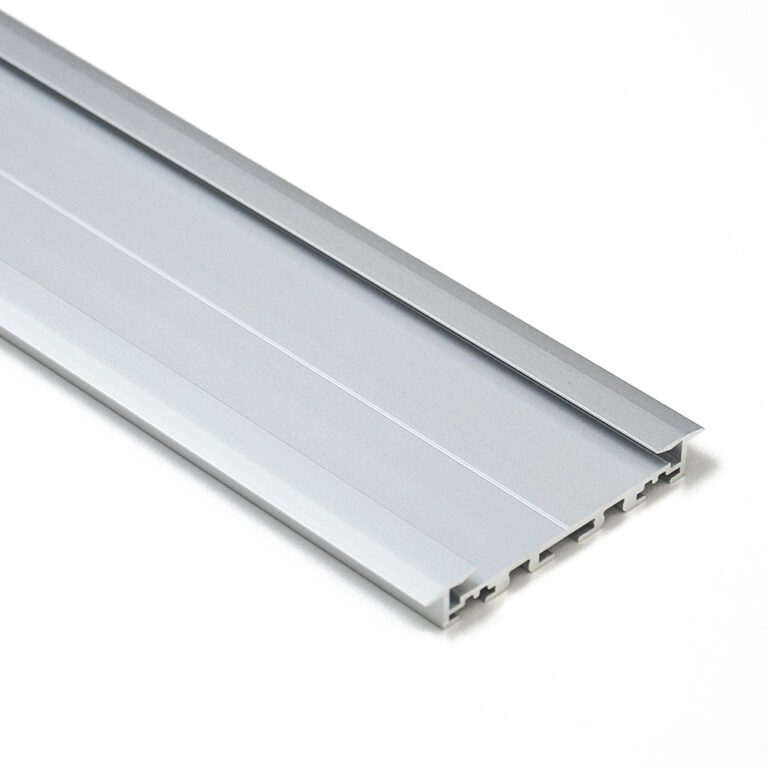
Color variation between bars. Two bars from different anodizing batches can differ visibly. Hold them side by side in daylight, not under a single lamp — a difference that is invisible under one light is obvious on a wall.
Handling marks. Scratches and scuffs along the face. These are the ones that matter on a visible profile, and they are almost always transport rather than manufacture — which is why the packing check comes first.
Anodizing defects. Patchiness, a dull area, or a spot where the film is thin. With a dyed finish, this appears as a lighter patch; with clear anodizing, it appears as a change in sheen.
The test that works without instruments: look along the bar at a low angle, in daylight. Most surface defects are invisible from directly in front and obvious from the side.
What should you keep?
Four things, all of which disappear if the delivery is broken up too quickly:
The delivery note, signed with any exception noted. "Received in good condition" is a sentence that ends a claim. If something is wrong, write it on the note before signing.
Photos, taken before unpacking. Of the packaging, the pallet and any damaged wrapping.
The mill certificate, if one was supplied. It is the only document that ties the metal to the alloy and temper.
A sample of any defective bar, kept aside. A bar that has been cut and installed cannot be used to demonstrate what was wrong.
When do you reject?
Three red lines, in order of how often they justify a rejection:
A dimension outside the agreed tolerance on the critical feature — the channel width or the outer height. A bar that will not accept the strip is not usable, regardless of how it looks.
A bow or twist that cannot be fixed by the fixing method. A slight bow can be pulled straight by clips; a twist cannot.
A finish defect on a visible face that runs the full length. A local mark can be cut out; a defect along the whole bar cannot.
What is usually not a rejection: a color slightly different from a previous order, a mark on a cut end that will be capped, or a packing problem that leaves the bars intact. Those are conversations, not claims.
What do you check before the bars go to site?
One thing: whether the accessories match the section. A box of clips for a different profile is the most common short shipment and is discovered on-site rather than in the warehouse. Fit one clip, one end cap and one length of cover before the bars leave.
Our range lists the accessories for every section so that the delivery can be checked against the same list the order was placed from. The quality assurance page sets out what we check before dispatch.
How many bars should I inspect?
Three out of a normal delivery is a reasonable sample for a catalog section. If the order is for a single long run, inspect every bar — one bad piece in a 4 m line is the whole line.
Can I check straightness without a flat surface?
Yes, by sighting along the bar against a taut line, or by laying it against another bar from the same delivery. Two bars bowing the same way is unlikely, so a gap between them indicates one of them is out.
What if the finish differs between two deliveries?
Hold a bar from each side by side in daylight. If the difference is visible, it is a batch difference and worth raising before the second delivery is installed next to the first.
Is it worth weighing a bar?
As a rough check, yes: a bar noticeably lighter than expected suggests a thinner wall. But weight is not a dimension — it cannot confirm that a groove or a wall meets its limit.
What if I signed for the delivery before checking?
Then the claim becomes harder, not impossible. Photograph everything immediately, keep the packaging, and raise it in writing the same day. The earlier the evidence is created, the better the position.

We design and supply LED aluminum profiles and linear lighting — over 200 profiles with matched diffusers and fittings, serving customers in more than 100 countries since 2007.
Send the strip width, the run length and the destination — we will match the profile, the diffuser and the fittings, and quote within 1 business day.
Start your inquiry